Pregledaj u prostoru Isprobaj u AR-u Pređi na prodaju štampanih primeraka Naručite ručno oslikano reprodukciju Podeli
Detalji Vodič Dodaj u omiljene Preuzmi sliku Slični predmeti Rendgenski snimak Automatska prezentacija Statistika

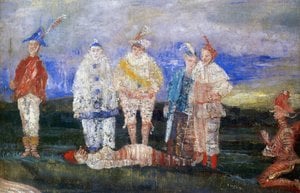
Masques regardant un negre batteleur

James Ensor's 'Masques regardant un negre batteleur' (1879) is a haunting black-and-white painting exploring themes of disguise, ritual, and social commentary through unsettling figures and masks. A masterpiece of Symbolism.

Откријте Јамес Енсор (1860-1949), белгијског сликар који је био пионер експресионизма и сюрреализма. Истражите његове узнемирујуће сцене маски, карнавала и скелета.

Kupite digitalnu sliku visoke rezolucije i poboljšanog kvaliteta, koja je znatno superiornija od onoga što vidite u online prikazu.

Svaka datoteka je pedantno pripremljena od strane naših stručnjaka koristeći napredne alate i profesionalnu ručnu retušu. Osiguravamo da svaka slika ima izuzetnu oštrinu, preciznu reprodukciju boja i fine detalje.

Konačna datoteka se dostavlja putem e-pošte u roku od 72 sata, optimizovana za neposrednu upotrebu u profesionalnim, izdavačkim i štamparskim okruženjima. To je isti kvalitet kojem veruju vrhunski studiji dizajna, izdavači i galerije.

Digitalna slika

Preuzmite datoteku visoke rezolucije za ličnu upotrebu, štampanje i kreativne projekte. ( Pređi na prodaju štampanih primeraka Naručite ručno oslikano reprodukciju)

Ukupna cena

$ 24,90

Uključeno uz svaku porudžbinu digitalne slike

Ekspertska digitalna isporuka, zagarantovana

Kada odaberete WahooArt.com, ne dobijate samo sliku – vi primate profesionalno unapređeno digitalno umetničko delo, izrađeno sa najvećom preciznošću i uz garanciju zadovoljstva. Evo svega što automatski dolazi uz vašu porudžbinu:

shipping_icon
Brza dostava putem e-pošte

Vaša digitalna slika visoke rezolucije biće vam poslata putem e-pošte u roku od 72 sata od poručivanja – spremna za trenutnu upotrebu.

canvas_icon
Digitalna datoteka unapređena veštačkom inteligencijom

Vaše umetničko delo je profesionalno optimizovano primenom naprednih AI alata i ručne obrade, čime se osiguravaju maksimalni detalji, oštrina i preciznost boja.

insurance_icon
Besplatna doživotna ponovna isporuka

Slučajno ste obrisali ili izgubili svoju datoteku? Ne brinite – poslaćemo vam je ponovo u bilo kom trenutku, potpuno besplatno.

tax_icon
Bez troškova uvoza – zauvek

Uživajte u svojim umetničkim delima trenutno, bez carine, akciza ili troškova dostave – digitalni download je uvek bez poreza.

color_icon
Garancija preciznosti boja

Uz pomoć profesionalnih alata i upravljanja bojama, osiguravamo da vaša digitalna slika što vernije odražava originalne boje.

return_icon
Garancija zadovoljstva u roku od 100 dana

Ako niste zadovoljni svojom digitalnom slikom, izvršićemo reviziju ili ćemo vam vratiti 100% novca u roku od 100 dana – bez ikakvih pitanja.

guarantee_icon
100% garancija povrata novca

Niste zadovoljni? Dobijte puni povraćaj novca u roku od 100 dana od prijema digitalne datoteke – bez suvišnih pitanja.

discount_icon
Popusti na velike porudžbine

Kupite 3 slike, uštedite 10% - Kupite 5 slika, uštedite 15% - Kupite 10+ slika, uštedite 20%. Odlično za kreativne projekte, galerije i agencije.

Brzi pregled

  • Year: 1878/79
  • Artist: James Ensor
  • Influences:
    • masks
    • carnivals
  • Notable elements: Masks, black figure
  • Medium: Oil on canvas
  • Artistic style: Surrealist, grotesque
  • Location: Private collection

Kviz o umetnosti

Svako pitanje ima samo jedan tačan odgovor.

Pitanje 1:
What is the primary subject depicted in James Ensor’s ‘Masques regardant un negre batteleur’?
Pitanje 2:
James Ensor frequently utilized masks in his artwork. What is the likely inspiration for this practice?
Pitanje 3:
The image description mentions a turtle near the bottom left corner. What might this detail suggest about the overall scene?
Pitanje 4:
James Ensor is often associated with which artistic movement?
Pitanje 5:
Which of the following best describes James Ensor’s style?

James Ensor’s Unsettling Tableau: “Masques regardant un negre batteleur”

James Ensor's "Masques regardant un negre batteleur" (Masks Watching a Black Fighter), painted around 1879, is not merely a depiction of a scene; it’s an immersion into a world steeped in theatricality, anxiety, and the unsettling gaze of observation. This powerful black-and-white artwork, currently housed within private collections but readily available through WahooArt's exquisite hand-painted reproductions, immediately confronts the viewer with a chaotic gathering – a tableau vivant brimming with figures engaged in an unseen struggle. The central focus is a man, starkly nude and positioned before a figure wielding a stick and holding a bird, suggesting a ritualistic or violent encounter. The scene unfolds within a densely populated space, filled with individuals performing various actions: some seated, others standing, all contributing to the overall sense of heightened drama and unspoken tension.

Ensor’s artistic journey was profoundly shaped by his upbringing in Ostend, a vibrant seaside resort town known for its annual carnival. His parents operated a souvenir shop overflowing with masks, costumes, and exotic objects – a veritable treasure trove that ignited his imagination and became a recurring motif throughout his oeuvre. This fascination with disguise and the theatrical is palpable here; the masks themselves are not merely decorative elements but symbols of hidden identities and concealed emotions. The very title, “Masques,” immediately establishes this core theme, hinting at a world where appearances are deliberately misleading and reality is obscured.

A Study in Contrast: Technique and Composition

The painting’s stark monochrome palette – predominantly black and white – amplifies the dramatic effect, lending it an almost photographic quality while simultaneously evoking the atmosphere of a theatrical stage. Ensor masterfully employs hatching and cross-hatching to create texture and volume, particularly evident in the figures' clothing and the bird held aloft. The composition is deliberately crowded and claustrophobic, drawing the viewer into the scene and preventing any sense of easy escape. The placement of the turtle near the bottom left corner adds an unexpected element of quiet observation, a grounding presence amidst the surrounding chaos.

Ensor’s technique reveals a deliberate rejection of academic realism in favor of expressive distortion. Figures are elongated, faces are exaggerated, and gestures are imbued with intense emotion. This stylistic choice aligns perfectly with the burgeoning Expressionist movement that would later emerge from his work, prioritizing emotional impact over strict representation. The use of negative space is also crucial; it allows the eye to wander across the scene, absorbing the details and contributing to the overall sense of unease.

Symbolism and Interpretation

“Masques regardant un negre batteleur” is rich in symbolic potential, inviting multiple interpretations. The “negre batteleur,” or black fighter, immediately raises questions about race, power dynamics, and perhaps even colonial representation – a sensitive topic that was increasingly relevant during Ensor’s time. The masks themselves can be seen as representing societal roles, hidden identities, and the performative nature of human interaction. The bird held by the fighter could symbolize freedom, captivity, or even a sacrificial offering.

Furthermore, the scene suggests a ritualistic combat, possibly a staged performance or a symbolic representation of internal struggles. The onlookers, engaged in various activities, may represent different facets of society – judgment, amusement, indifference—all contributing to the overall sense of ambiguity and unsettling observation. The painting’s power lies not in providing clear answers but in prompting viewers to confront their own interpretations and anxieties.

Emotional Resonance and Artistic Legacy

James Ensor's "Masques regardant un negre batteleur" is a profoundly disturbing yet captivating work of art. It transcends mere representation, offering instead a glimpse into the artist’s complex psychological landscape and his exploration of themes such as identity, power, and social anxiety. Reproductions by WahooArt capture the painting's intensity and detail with remarkable fidelity, allowing viewers to experience Ensor’s unsettling vision in stunning clarity. This artwork remains a cornerstone of Belgian art history and continues to resonate with audiences today, prompting reflection on the masks we wear and the hidden battles we wage within ourselves.


Biografija umetnika

James Ensor: A Pioneer of Expressionism and Surrealism

James Sidney Edouard, Baron Ensor (Ostend, 13 April 1860 – 19 November 1949) was a Belgian painter and printmaker who stands as one of the most influential figures in the development of Expressionism and Surrealism. Born into an English father and Belgian mother amidst the vibrant atmosphere of Ostend’s seaside resort town, Ensor’s upbringing instilled within him a profound fascination with observation and detail—a foundation upon which he would construct his distinctive artistic vision.

Early Influences and Artistic Training

From a young age, Ensor demonstrated an exceptional talent for drawing and painting. Encouraged by his parents' operation of a souvenir shop brimming with curiosities and carnival masks – a veritable cabinet of wonders that ignited his imagination – he pursued formal artistic training at the Académie Royale des Beaux-Arts in Brussels. Despite encountering resistance from the rigid academic conventions of the time, Ensor quickly recognized the necessity of forging his own path, prioritizing experimentation and personal expression above all else.

The Emergence of Grotesque Vision

Around 1886–87, Ensor embarked on a transformative artistic journey, rejecting Impressionistic ideals in favor of a bold embrace of grotesque imagery. Influenced by Rembrandt’s masterful use of chiaroscuro, the unsettling visions of Francisco Goya, and the evocative symbolism of Japanese woodcuts, he developed a highly personal iconography characterized by jarring juxtapositions of color and form.

Major Works and Recurring Themes

Ensor's oeuvre is marked by an unparalleled exploration of psychological complexity and social critique. Paintings like *The Oyster-eater* (1882) exemplify his meticulous attention to detail and his ability to convey profound emotional resonance, while *Christ’s Entry into Brussels* (1888–89), arguably his magnum opus, remains a monumental satire of religious hypocrisy—a painting initially met with vehement disapproval but now universally recognized as a cornerstone of Expressionist art.

Legacy and Influence

James Ensor's uncompromising artistic vision profoundly impacted subsequent generations of artists. His rejection of academic formalism, coupled with his fearless confrontation of taboo subjects and his masterful manipulation of visual language—particularly the use of bold brushstrokes and vibrant hues—established him as a pivotal figure in the genesis of Expressionism and Surrealism. Today, Ensor’s work continues to inspire awe and provoke contemplation, serving as a timeless reminder that art possesses the capacity to unsettle conventions and illuminate the darkest recesses of human consciousness.

Јемас Енсор

Јемас Енсор

1860 - 1949 , Бележија

Osnovne informacije

  • Artistic Movement Or Style: Expressionism, Surrealism
  • Artists Who Influenced This Artist:
    • Bruegel the Elder
    • Francisco Goya
    • Whistler
  • Date Of Birth: April 13, 1860
  • Date Of Death: November 19, 1949
  • Full Name: James Sidney Edouard Ensor
  • Nationality: Belgian
  • Notable Artworks:
    • The Scandalized Masks
    • Skeletons Fighting...
    • Christ's Entry into Brussels
  • Place Of Birth: Ostend, Belgium