

Giclée štampa ili print na platnu muzejskog kvaliteta uz brzu izradu i raznovrsne opcije završne obrade. ( Kupite ručno oslikano delo Pređi na digitalnu sliku)
Izaberite jednu od naših unapred definisanih veličina koje odgovaraju originalnim proporcijama umetničkog dela.

Unesite željenu širinu i visinu kako bi se štampa uklopila u vaš ram ili zid. Štampu je moguće samo iseći, ali nikada povećati iznad dimenzija originalne slike, stoga format sa drugačijim proporcijama uzrokuje gubitak dela slike. Pre početka štampe, poslaćemo vam digitalni prikaz radi potvrde. Slika prikazana na ovoj stranici ne predstavlja stvarni isrez — to pokazuje samo digitalni prikaz.
Dostava širom sveta () za 2 nedelje umesto uobičajenih 4/5 nedelja. (17 новембар)
Ensor at his Easel
Dimenzije reprodukcije
James Ensor (1860–1949), a Belgian painter who irrevocably altered the course of Expressionism, remains an artist whose work continues to provoke contemplation and fascination. “Ensor at His Easel,” completed in 1886, exemplifies his distinctive approach—a masterful blend of observation and psychological insight—that distinguishes him from many of his contemporaries.
The painting depicts Ensor himself seated before an easel, illuminated by a warm afternoon sun, alongside a canvas bearing the unmistakable imprint of his artistic endeavors. This seemingly simple composition belies a profound depth of meaning, reflecting Ensor’s preoccupation with themes of mortality and artistic creation—themes that permeate much of his oeuvre.
Ensor's style is undeniably Expressionist, prioritizing emotional intensity over realistic representation. Thick brushstrokes dominate the canvas, conveying a palpable sense of movement and energy. The artist employs bold colors—primarily reds, yellows, and oranges—to heighten the dramatic effect, mirroring the turbulent inner landscape he sought to capture.
Technically proficient, Ensor utilized oil paints on canvas with meticulous attention to detail. However, his primary aim wasn’t merely accurate depiction; it was to communicate feeling directly to the viewer. The layering of paint creates a textured surface that contributes to the painting's unsettling atmosphere—a deliberate choice designed to unsettle and provoke.
Created during the late 1880s, “Ensor at His Easel” aligns perfectly with the burgeoning Expressionist movement. Artists like Edvard Munch and Vincent van Gogh were similarly driven by a desire to express inner turmoil and confront existential anxieties—a reaction against the prevailing optimism of Impressionism.
Furthermore, Ensor’s work echoes the influence of Paul Cézanne, who championed “art for art’s sake,” rejecting academic conventions in favor of pursuing artistic truth through innovative formal experimentation. Like Cézanne, Ensor prioritized conveying emotion over adhering to traditional aesthetic standards.
The painting is laden with symbolic significance. The artist’s gaze—direct yet melancholic—suggests a confrontation with his own mortality. Alongside the easel and canvas, Ensor included a book, symbolizing knowledge and contemplation—elements that underscore the importance of artistic introspection.
As seen in other portraits by Ensor, such as “Ensor with Masks,” he frequently depicted himself wearing masks—a recurring motif reflecting his fascination with concealment and illusion. This visual language reinforces the painting’s overarching theme: a portrayal of an artist grappling with the anxieties inherent in confronting existence itself.
James Ensor’s artistic vision continues to resonate today, inspiring artists and collectors alike. His unflinching exploration of psychological complexity—coupled with his masterful technique—solidifies his position as one of the most influential figures in Belgian art history.
Autor dela "Ensor at his Easel" je Џејмс Енсор. Delo je katalogizovano pod imenom Џејмс Енсор.
Teme prisutne u delu „Ensor at his Easel”, autor Џејмс Енсор obuhvataju artist, portrait, carnival, masks, painting, belgium, expressionism, što zajedno sažima suštinu ovog umetničkog dela.
„Ensor at his Easel“ teži Golden Yellow Range tonu.

James Sidney Edouard, Baron Ensor (Ostend, 13 April 1860 – 19 November 1949) was a Belgian painter and printmaker who stands as one of the most influential figures in the development of Expressionism and Surrealism. Born into an English father and Belgian mother amidst the vibrant atmosphere of Ostend’s seaside resort town, Ensor’s upbringing instilled within him a profound fascination with observation and detail—a foundation upon which he would construct his distinctive artistic vision.
From a young age, Ensor demonstrated an exceptional talent for drawing and painting. Encouraged by his parents' operation of a souvenir shop brimming with curiosities and carnival masks – a veritable cabinet of wonders that ignited his imagination – he pursued formal artistic training at the Académie Royale des Beaux-Arts in Brussels. Despite encountering resistance from the rigid academic conventions of the time, Ensor quickly recognized the necessity of forging his own path, prioritizing experimentation and personal expression above all else.
Around 1886–87, Ensor embarked on a transformative artistic journey, rejecting Impressionistic ideals in favor of a bold embrace of grotesque imagery. Influenced by Rembrandt’s masterful use of chiaroscuro, the unsettling visions of Francisco Goya, and the evocative symbolism of Japanese woodcuts, he developed a highly personal iconography characterized by jarring juxtapositions of color and form.
Ensor's oeuvre is marked by an unparalleled exploration of psychological complexity and social critique. Paintings like *The Oyster-eater* (1882) exemplify his meticulous attention to detail and his ability to convey profound emotional resonance, while *Christ’s Entry into Brussels* (1888–89), arguably his magnum opus, remains a monumental satire of religious hypocrisy—a painting initially met with vehement disapproval but now universally recognized as a cornerstone of Expressionist art.
James Ensor's uncompromising artistic vision profoundly impacted subsequent generations of artists. His rejection of academic formalism, coupled with his fearless confrontation of taboo subjects and his masterful manipulation of visual language—particularly the use of bold brushstrokes and vibrant hues—established him as a pivotal figure in the genesis of Expressionism and Surrealism. Today, Ensor’s work continues to inspire awe and provoke contemplation, serving as a timeless reminder that art possesses the capacity to unsettle conventions and illuminate the darkest recesses of human consciousness.

1860 - 1949 , Белгија

Explore the profound psychological depth of Expressionist portraiture. From Munch to Schiele, discover how distorted forms and visceral brushstrokes unmask raw human emotion in this definitive guide for art enthusiasts and collectors.

Immerse yourself in the profound emotion of Rogier van der Weyden. Explore 25 iconic Early Netherlandish masterpieces, from intricate textures to divine pathos. Find inspiration for museum-quality art reproductions and decor. Discover all masterpieces on WahooArt.com.
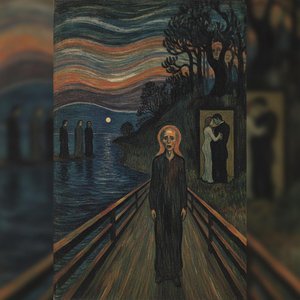
Journey through the raw emotion of Expressionism with our curated guide to Edvard Munch's top 25 masterpieces. Explore the stories behind his most iconic works and find museum-quality art reproductions for your collection. Discover all masterpieces on WahooArt.com.
 Pregledaj u prostoru
 Pošalji
 Podeli
 Detalji o delu
 Vodič
Vodič

 Preuzmi
 Slični predmeti
 Rendgenski snimak
 Automatska prezentacija
 Pitanja i odgovori
 Statistika

 Pročitaj više






































 Opcija sa staklom dostupna je samo za dimenzije manje od 110 cm


