Not Clever (1425) delo Ichidon Shōzui, ručno oslikana reprodukcija uljanog slikarstva vrhunskog umetnika
Pregledaj u prostoru AR pregled Pređi na štampu Pređi na digitalnu sliku Pošalji
Detalji o delu Vodič Dodaj u omiljene Preuzmi Slični predmeti Rendgenski snimak Automatska prezentacija Pitanja i odgovori Prezentacija Statistika

Not Clever Ručno oslikana reprodukcija uljanog slikarstva

Dimenzije
92.0 x 36.0 cm

Discover ichidon shōzui, a renowned Muromachi period Japanese artist known for exquisite ink on paper works. Trained in Kikuchi Yosai style, he captures traditional themes with masterful brushwork and cultural significance.

Umetničko delo prikazano na ovoj stranici zaštićeno je autorskim pravima, što znači da zakonski nismo u mogućnosti da kreiramo niti prodajemo identičnu reprodukciju. Ova zaštita se sprovodi u skladu sa međunarodnim sporazumima kao što su Bernska konvencija i nacionalnim zakonima, uključujući i one koji su definisani u Američki zakon o autorskom pravu – Naslov 17.

Kao poštovana i legalna alternativa, nudimo prilagođene, ručno oslikane umetničke radove inspirisane originalom. Naši stručni i profesionalni umetnici pažljivo proučavaju stil, ambijent i umetničku suštinu originala kako bi kreirali novo, unikatno delo koje budi istu emociju – ostajući pritom potpuno autentično stvaranje.

Ovaj metod je u potpunosti usklađen sa regulativama o autorskim pravima jer ne podrazumeva kopiranje ili dupliranje zaštićenih umetničkih dela. Umesto toga, reč je o kreativnoj reinterpretaciji – novom slikarskom delu koje je inspirisano originalom, ali nije identično njemu.

Ručno rađena uljana reprodukcija

Ručno oslikano uljanim bojama na platnu u dimenzijama i okviru po vašem izboru, izrađeno po porudžbini od strane naših umetnika. ( Pređi na štampu Pređi na digitalnu sliku)


Standardne dimenzije
po meri
CM
INCH

Izaberite jednu od naših unapred definisanih veličina koje odgovaraju originalnim proporcijama umetničkog dela.

širina
visina

Unesite potrebnu širinu i visinu kako bi se slika uklopila u vaš ram ili zid. Pošto je ovo ručno oslikano delo, umetnik može za dimenzije drugačijeg oblika naslikati malo više prostora oko slike ili malo skratiti ivice — izbor je na vama. Pre početka rada, poslaćemo vam digitalni prikaz radi potvrde. Slika prikazana na ovoj stranici ne predstavlja konačan rezultat — samo digitalni prikaz pokazuje stvarnu sliku.

Primeri mogućih izmena: Zamena lica fotografijom kupca; Dodavanje ljubimca (npr. zamena mačke psom); Uključivanje skrivene poruke u pozadini; Promena pejzaža ili elemenata pozadine.
Nakon narudžbine, tim WahooArt.com će klijentu putem e-pošte poslati uputstva i dostaviti prikaz predloženog rešenja

Svetska isporuka () za 3/4 nedelje umesto uobičajenih 5 nedelja. (16 новембар). Bez kompromisa po pitanju kvaliteta.

Besplatna ekspresna dostava širom sveta
Visokokvalitetno laneno platno
Potpuno osiguranje transporta
Garancija povraćaja carine i uvoznih dažbina
Garancija vernosti boja
Politika povraćaja u roku od 100 dana (samo u slučaju nedostataka)
Garancija povrata 100% novca
Popust na više proizvoda

Ukupna cena

дин 28462

Not Clever

Tehnika reprodukcije

Dimenzije reprodukcije

-

Ukupna cena

дин 28462

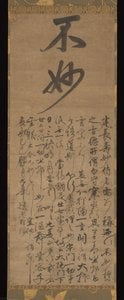
Two brusquely brushed large characters reading Fumyō 不妙, or “Not Clever”—extracted from the text below—are placed above a transcription of a missive in smaller but equally dynamic Chinese characters. The use of the phrase Fumyō (Chinese: Bumiao)—with its entirely negative connotations of “not clever,” “unremarkable,” or even “no good,”—strikes the viewer as odd at first glance, especially for a calligraphy brushed by an eminent Zen master. But upon reading the missive below, it becomes clear that it was written to pointedly criticize Monk Jūmyō Jisha 壽妙侍者 from Kenchōji Temple in Kamakura, whose name, rather grandiosely, includes the character 妙, which suggests something or someone clever, remarkable, mysterious, or sublime. In short, Ichidon is stating that Jūmyō is anything but clever or remarkable, and unworthy to use that character in his name. Ichidon cites various Buddhist sources to make the point about proper moral and spiritual behavior. The monk-calligrapher Ichidon brushed certain characters that ended with a sweeping stroke to the left with special exuberance. Note especially how the final stroke of the character myō 妙 – meaning both “cleverness” or “mysterious” depending on the context was stretched out extra long, to give a visual rhythm and excitement. This work is an especially fine example of a bokuseki, a calligraphy by a Zen monk of the medieval period. The brusque, rule-breaking calligraphy style conveys a message of spiritual transcendence or enlightenment so central to the Zen experience, and the brush writing style is meant to convey that message on a visual level.The monk Ichidon Shōzui trained in Rinzai Zen at Hōunji Temple in Hitachi, Ibaraki prefecture, under the prominent master Fukuan Sōki 復庵宗己 (1280–1358), who had trained in China and who had achieved a wide following in Japan. Shōzui achieved fame in his own right, and subsequently served as head abbot at prominent Rinzai sect temples such as Engakuji in Kamakura and at Nanzenji in Kyoto. He also used the name Kyūka Sanjin 九華山人, referred to in the signature here. Shōzui, who earned a reputation as a master of Chinese prose and poetry, also wrote an inscription on a precious painting of White-Robed Kannon by the Chinese artist Mokuan Reien.

Pitanja i odgovori

Koji je koloristički identitet dela „Not Clever”, autor Ichidon Shōzui?

„Not Clever“ karakteriše Earthy paleta u kojoj dominira Driftwood (#a38665).

Gde mogu da kupim print dela „Not Clever”, autor Ichidon Shōzui?

„Not Clever“ je dostupno kao umetnička štampa na pamučnom platnu ili arhivskom kanvas papiru. Porudžbine možete izvršiti na stranici Umetnički print, u dimenziji po vašem izboru.

Da li je delo „Not Clever”, autor Ichidon Shōzui u javnom vlasništvu?

Što se tiče autorskih prava, delo "Not Clever" je i dalje je zaštićeno autorskim pravima.


Biografija umetnika

Ichidon Shōzui (1394–1428): A Master of Zen Brushwork

Ichidon Shōzui, born around 1394 in Hitachi Prefecture, Ibaraki, Japan, stands as a pivotal figure within the Muromachi period’s artistic landscape—a time marked by profound cultural transformation and burgeoning Zen Buddhism. His legacy resides primarily in his exceptional ink paintings on paper, particularly “Not Clever,” which exemplifies the stylistic innovations of Kikuchi Yosai and embodies the core tenets of Zen aesthetics. Little is known about Shōzui's early life beyond his training under Fukuan Sōki at Hōunji Temple, a formative experience that instilled in him the disciplined rigor characteristic of Rinzai Zen practice. This dedication to meditation profoundly shaped his artistic vision—a vision rooted in spontaneity and aimed at capturing the essence of enlightenment itself.
  • Training & Patronage: Shōzui’s apprenticeship under Fukuan Sōki provided him with invaluable instruction in calligraphy and Zen philosophy, establishing a connection to influential figures who championed artistic excellence within the context of Buddhist ideals.
  • Style & Technique: Shōzui's distinctive style—often termed bokuseki—characterized by bold brushstrokes and deliberate asymmetry—was a conscious rejection of prevailing conventions. He sought to convey spiritual transcendence through visual form, prioritizing expressive energy over meticulous detail.

The Significance of “Not Clever”

“Not Clever,” created around 1425, is arguably Shōzui’s most celebrated work and serves as a compelling illustration of his artistic philosophy. The composition—featuring two large characters reading 不妙 (Fumyō)—represents a pointed critique of Monk Jūmyō Jisha, whose name deliberately incorporates the character 妙 (“marvelous”), symbolizing enlightenment. This juxtaposition underscores Shōzui’s belief that true wisdom transcends superficial brilliance and demands an honest confrontation with one's own limitations—a concept central to Zen meditation. The brushwork itself is masterful: a sweeping stroke of ink on paper conveys rhythm and dynamism, reflecting the artist’s intention to capture not merely visual beauty but also the profound spiritual experience associated with Zen practice.
  • Symbolism & Critique: The deliberate use of Fumyō—a term laden with negative connotations—highlights Shōzui's critique of conventional notions of achievement and virtue.
  • Zen Aesthetics: The bokuseki style embodies the Zen ideal of spontaneity and effortless expression, prioritizing intuitive understanding over intellectual analysis.

Influence & Legacy

Ichidon Shōzui’s work exerted considerable influence on subsequent generations of Japanese artists, establishing a precedent for stylistic innovation within Rinzai Zen calligraphy. His embrace of bold brushstrokes and asymmetrical compositions challenged established artistic norms—promoting a visual language that prioritized spiritual depth over decorative embellishment. Furthermore, his inscription on Mokuan Reien's painting exemplifies the broader cultural context of Muromachi art—a period characterized by patronage from powerful samurai clans and a fervent devotion to Buddhist principles. Shōzui’s legacy continues to inspire artists today who strive to capture the elusive essence of enlightenment through artistic expression.

Further Exploration

To delve deeper into Ichidon Shōzui's artistic contributions, consider examining his oeuvre alongside works by other prominent Zen masters of the Muromachi period—particularly Kikuchi Yosai—whose stylistic innovations profoundly shaped Japanese calligraphy and visual culture. Research resources available at The Metropolitan Museum of Art offer invaluable insights into Shōzui’s life and work, furthering our understanding of this remarkable artist's enduring impact on Japanese art history.

Osnovne informacije

  • Full Name: Ichidon Shōzui
  • Nationality: Japanese
  • Place Of Birth: Japan
  • Notable Artworks: ['Not Clever']
  • Artistic Movement Or Style: Kikuchi Yosai Style
  • Artists Who Influenced This Artist: ['Kikuchi Yosai']