Nabavite datoteku spremnu za štampu koja nudi znatno veći kvalitet od onlajn pregleda. Svaka digitalna slika koju nudimo potiče iz visokorezolucičnog master fajla iz naše baze — obično širine od 5.000 do 15.000 piksela — što vam omogućava štampu u velikom formatu, precizno kadriranje ili bezbrižnu reprodukciju najfinijih detalja.
Nijedan fajl ne napušta naš studio netaknut. Digitalni stručnjak vrši proveru boja u odnosu na originalno delo i koriguje ih po potrebi, a zatim unapređuje jasnoću i detalje pomoću profesionalnih alata za retuširanje — uvek ostajući veran umetnikovim potezima četkice i stilu. Rezultat je slika koja izgleda kao pravo delo, a ne kao sken sa filterom.
Proverite i odobrite pre završetka: naš stručnjak vam šalje sliku putem e-pošte u roku od 72 sata na pregled. Niste zadovoljni? Zatražite poboljšanja ili ispravke, ili tražite povraćaj novca ukoliko kvalitet ne ispunjava vaša očekivanja.
Ovo je kvalitet kojem poverenje ukazuju izdavači, dizajnerski studiji, galerije i štamparije.
Preuzmite datoteku visoke rezolucije za ličnu upotrebu, štampanje i kreativne projekte. ( Pređi na štampu Kupite ručno oslikano delo)
Kada odaberete WahooArt.com, ne dobijate samo sliku – vi primate profesionalno unapređeno digitalno umetničko delo, izrađeno sa najvećom preciznošću i uz garanciju zadovoljstva. Evo svega što automatski dolazi uz vašu porudžbinu:
Vaša digitalna slika visoke rezolucije biće vam poslata putem e-pošte u roku od 72 sata od poručivanja – spremna za trenutnu upotrebu.
Vaše umetničko delo je profesionalno optimizovano primenom naprednih AI alata i ručne obrade, čime se osiguravaju maksimalni detalji, oštrina i preciznost boja.
Slučajno ste obrisali ili izgubili svoju datoteku? Ne brinite – poslaćemo vam je ponovo u bilo kom trenutku, potpuno besplatno.
Uživajte u svojim umetničkim delima trenutno, bez carine, akciza ili troškova dostave – digitalni download je uvek bez poreza.
Uz pomoć profesionalnih alata i upravljanja bojama, osiguravamo da vaša digitalna slika što vernije odražava originalne boje.
Ako niste zadovoljni svojom digitalnom slikom, izvršićemo reviziju ili ćemo vam vratiti 100% novca u roku od 100 dana – bez ikakvih pitanja.
Niste zadovoljni? Dobijte puni povraćaj novca u roku od 100 dana od prijema digitalne datoteke – bez suvišnih pitanja.
Kupite 3 slike, uštedite 10% - Kupite 5 slika, uštedite 15% - Kupite 10+ slika, uštedite 20%. Odlično za kreativne projekte, galerije i agencije.
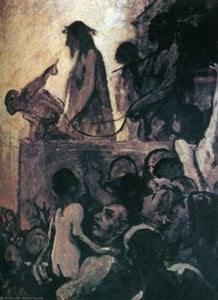
In the mid-19th century, as the world began to shift under the weight of industrialization and political upheaval, Honoré Daumier captured a moment of profound spiritual and social tension. His 1850 masterpiece, Ecce Homo, is far more than a mere biblical illustration; it is a visceral encounter with the essence of human suffering. The painting captures the harrowing instant when Pontius Pilate presents a battered Jesus Christ to a judgmental crowd, uttering the fateful words, "Behold the Man." Through his unflinching lens, Daumier strips away the gilded, idealized layers often found in religious iconography, replacing them with a stark, heavy realism that forces the viewer to confront the uncomfortable truth of injustice and the weight of collective condemnation.
The composition is a masterclass in psychological depth and dramatic tension. Daumier utilizes a technique deeply rooted in the tradition of chiaroscuro, a method he refined by studying the dramatic light and shadow of masters like Rubens. This interplay of light and dark does not merely illuminate the scene; it sculpts the very emotions of the figures. A luminous, almost ethereal glow surrounds the central figure of Christ, yet this light does not offer comfort—instead, it serves to highlight his isolation against a backdrop of grim, shadowed faces. The crowd is not a monolithic entity but a collection of individual gazes: some are filled with mockery, others with a haunting, silent observation, creating a sense that the viewer is standing right there in the dust and heat of the Roman trial.
Technically, Ecce Homo showcases Daumier’s extraordinary command over oil on canvas. His brushwork avoids the superficial prettiness of the era, opting instead for a textured, robust application that mirrors the grit of the subject matter. The palette is dominated by earthy, somber tones—deep browns, muted ochres, and heavy shadows—which ground the divine event in a tangible, earthly reality. This commitment to Realism allows the painting to transcend its historical period; it becomes a universal symbol of compassion amidst cruelty. For the collector or the lover of fine art, this piece offers a profound sense of gravity, making it an anchor for any sophisticated interior.
For those looking to integrate such a powerful work into a curated space, Ecce Homo serves as a magnificent focal point. Its ability to command attention through tonal complexity and emotional weight makes it ideal for galleries or study rooms where art is intended to provoke thought and conversation. A high-quality reproduction of this work preserves the subtle gradations of Daumier’s shadows and the raw, expressive lines of his draftsmanship, allowing the haunting beauty of this 19th-century triumph to breathe within a modern setting. It is an invitation to look closer, to feel the weight of history, and to find beauty in the most honest depictions of the human condition.
Оноре Домије je koristio/la tehniku Oil On Canvas za delo "Ecce Homo". Ova tehnika definiše materijalnu prirodu originalnog dela.
„Ecce Homo”, autor Оноре Домије se opisuje kao delo Dramatic raspoloženja. Ovakva klasifikacija može pomoći u uklapanju dela u određeni ambijent.
„Ecce Homo”, autor Оноре Домије spaja tehniku Oil On Canvas sa stilom Contemporary Realism. Tehnika i pravac opisuju način izrade i stil dela.


1808 - 1879 , Француска
 Pregledaj u prostoru
 Pošalji
 Podeli
 Detalji o delu
 Vodič
Vodič

 Preuzmi
 Slični predmeti
 Rendgenski snimak
 Automatska prezentacija
 Pitanja i odgovori
 Statistika


 Pročitaj više