Biografija umetnika
Edgar Degas: A Revolutionary French Artist Known for His Captivating Ballet Dancers, Parisian Scenes, and Innovative Techniques—A True Master of Modern Art
Edgar Degas stands as a monumental figure in the annals of art history – an artist who defied categorization yet irrevocably shaped the trajectory of modern painting. Born Hilaire-Germain-Edgar De Gas in Paris, 1834, he possessed a singular vision that blended classical training with a radical embrace of contemporary life, establishing him as one of the foremost innovators of his time. His legacy continues to resonate today, influencing artists across generations and cementing his place among the titans of Impressionism and Realism alike.
Early Life and Artistic Foundations
Degas’s upbringing was comfortably bourgeois; his father served as a banker, providing financial stability for his family, while his mother descended from Creole lineage in New Orleans – an experience that instilled in him a fascination with diverse cultures and perspectives. From a young age, he demonstrated an aptitude for drawing and painting, initially honing his skills by meticulously copying works within the Louvre Museum—a formative practice that cultivated a lifelong devotion to classical art forms. This dedication wasn’t merely academic; it represented a conscious rejection of prevailing artistic conventions and fueled a desire to forge his own path. He enrolled at Lycée Louis-leGrand, but quickly realized that formal education alone wouldn't satisfy his creative impulses.
Beyond Impressionism: A Unique Artistic Vision
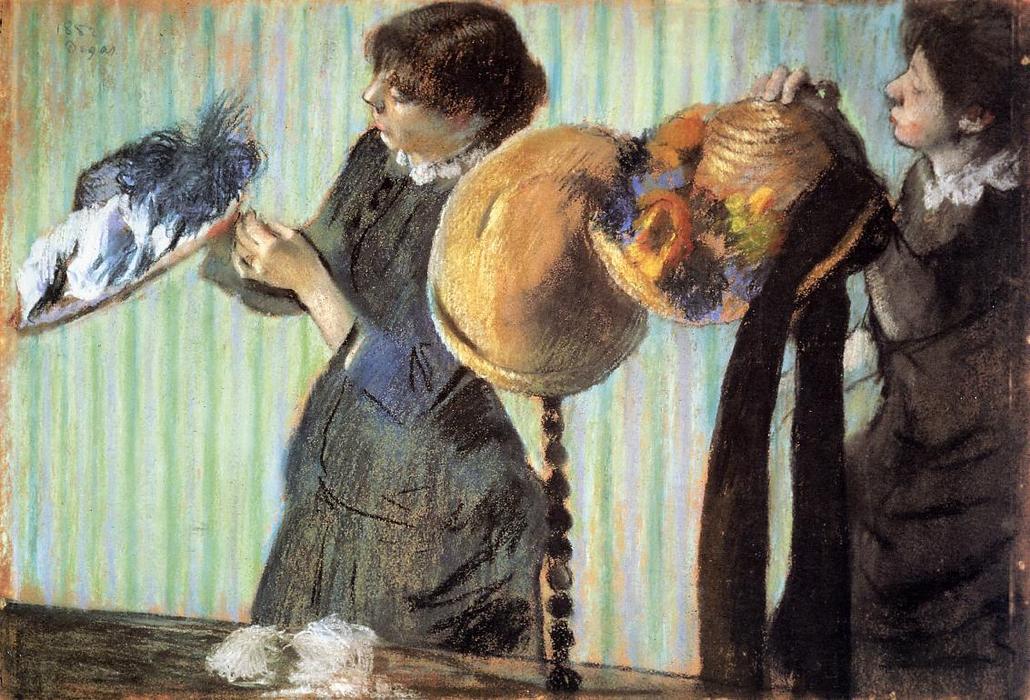
While fellow Impressionists like Monet and Renoir sought to capture the ephemeral beauty of fleeting moments outdoors—primarily bathed in sunlight—Degas largely conducted his artistic endeavors within the confines of his studio. This deliberate choice allowed him unparalleled control over composition, color palettes, and textural nuances. He eschewed the grand narratives favored by academic painters, instead focusing on subjects that resonated with the pulse of everyday Parisian life: laundresses diligently tending to their tasks, cabaret singers captivating audiences with their performances, milliners crafting elaborate hats—and, most notably, dancers. Degas didn’t merely depict ballerinas as idealized figures; he confronted them with unflinching honesty, portraying their grueling rehearsals and capturing the physicality of their profession with remarkable precision. His canvases often featured unconventional cropping techniques—placing figures in unexpected positions—and utilized asymmetrical arrangements that conveyed a sense of dynamism and immediacy. He was driven by an unwavering commitment to observing reality without embellishment, striving to reveal its inherent beauty through meticulous detail.
Influences Shaping Degas’s Artistic Style
Degas's artistic sensibilities were profoundly shaped by a constellation of influences—spanning from classical masters like Ingres to the pioneering Realists championed by Courbet and Pissarro. However, perhaps the most transformative encounter was his immersion in Japanese prints—Ukiyo-e—which captivated him with their bold compositions, flattened perspectives, and masterful use of color. These prints instilled in Degas a stylistic sensibility that prioritized visual impact over traditional representational accuracy, encouraging him to experiment with innovative techniques and challenge established artistic norms. He skillfully blended these influences into his own distinctive style, resulting in artworks characterized by both elegance and psychological depth.
Notable Achievements and Legacy
Degas’s oeuvre encompasses an astonishing array of mediums—oil paintings, sculptures, prints, and drawings—each imbued with a remarkable level of technical virtuosity. His ballet class scenes—particularly *The Ballet Class*—remain iconic representations of artistic observation and capture the essence of movement with breathtaking clarity. Similarly, his depictions of racehorses and jockeys exemplify his fascination with capturing fleeting moments of action and conveying emotion through subtle gestures and expressions. Furthermore, Degas’s portraits are distinguished by their psychological complexity, delving beneath surface appearances to reveal the inner lives of his subjects—a hallmark of his artistic approach. His influence extended far beyond his own lifetime, inspiring subsequent generations of artists who embraced innovation and pursued stylistic experimentation. Edgar Degas's enduring legacy resides not only in his masterpieces but also in his unwavering belief that art should serve as a conduit for truthfulness and beauty—principles that continue to resonate powerfully within the artistic landscape today.