Pregledaj u prostoru Isprobaj u AR-u Pređi na prodaju štampanih primeraka Naručite ručno oslikano reprodukciju Podeli
Detalji Vodič Dodaj u omiljene Preuzmi sliku Slični predmeti Rendgenski snimak Automatska prezentacija Statistika

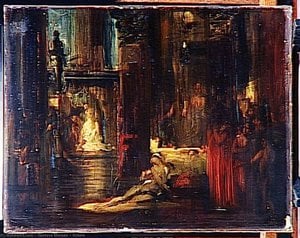
La Mort de Sapho

La Mort de Sapho depicts a woman lying on her side before a rocky landscape with a castle-like structure, symbolizing death and introspection through vibrant colors and intricate figures—a masterpiece by Gustave Moreau.

Жртва симбола и визионар слике, Густав Море је био француски ренесансни уметник који је оставио траг у историји сликања. Из познатог музеја Мореа у Парису су му се прецизније прилагодиле техничке карактеристике и стил, док су његове најзначајније слике представљале митове и бибљске приче које су га одликовале. Иновативни и веома емоционални Море је био утицајан на последишње уметнике као што су Ма

Kupite digitalnu sliku visoke rezolucije i poboljšanog kvaliteta, koja je znatno superiornija od onoga što vidite u online prikazu.

Svaka datoteka je pedantno pripremljena od strane naših stručnjaka koristeći napredne alate i profesionalnu ručnu retušu. Osiguravamo da svaka slika ima izuzetnu oštrinu, preciznu reprodukciju boja i fine detalje.

Konačna datoteka se dostavlja putem e-pošte u roku od 72 sata, optimizovana za neposrednu upotrebu u profesionalnim, izdavačkim i štamparskim okruženjima. To je isti kvalitet kojem veruju vrhunski studiji dizajna, izdavači i galerije.

Digitalna slika

Preuzmite datoteku visoke rezolucije za ličnu upotrebu, štampanje i kreativne projekte. ( Pređi na prodaju štampanih primeraka Naručite ručno oslikano reprodukciju)

Ukupna cena

$ 24,90

Uključeno uz svaku porudžbinu digitalne slike

Ekspertska digitalna isporuka, zagarantovana

Kada odaberete WahooArt.com, ne dobijate samo sliku – vi primate profesionalno unapređeno digitalno umetničko delo, izrađeno sa najvećom preciznošću i uz garanciju zadovoljstva. Evo svega što automatski dolazi uz vašu porudžbinu:

shipping_icon
Brza dostava putem e-pošte

Vaša digitalna slika visoke rezolucije biće vam poslata putem e-pošte u roku od 72 sata od poručivanja – spremna za trenutnu upotrebu.

canvas_icon
Digitalna datoteka unapređena veštačkom inteligencijom

Vaše umetničko delo je profesionalno optimizovano primenom naprednih AI alata i ručne obrade, čime se osiguravaju maksimalni detalji, oštrina i preciznost boja.

insurance_icon
Besplatna doživotna ponovna isporuka

Slučajno ste obrisali ili izgubili svoju datoteku? Ne brinite – poslaćemo vam je ponovo u bilo kom trenutku, potpuno besplatno.

tax_icon
Bez troškova uvoza – zauvek

Uživajte u svojim umetničkim delima trenutno, bez carine, akciza ili troškova dostave – digitalni download je uvek bez poreza.

color_icon
Garancija preciznosti boja

Uz pomoć profesionalnih alata i upravljanja bojama, osiguravamo da vaša digitalna slika što vernije odražava originalne boje.

return_icon
Garancija zadovoljstva u roku od 100 dana

Ako niste zadovoljni svojom digitalnom slikom, izvršićemo reviziju ili ćemo vam vratiti 100% novca u roku od 100 dana – bez ikakvih pitanja.

guarantee_icon
100% garancija povrata novca

Niste zadovoljni? Dobijte puni povraćaj novca u roku od 100 dana od prijema digitalne datoteke – bez suvišnih pitanja.

discount_icon
Popusti na velike porudžbine

Kupite 3 slike, uštedite 10% - Kupite 5 slika, uštedite 15% - Kupite 10+ slika, uštedite 20%. Odlično za kreativne projekte, galerije i agencije.

Brzi pregled

  • Artist: Gustave Moreau
  • Title: The Painting
  • Artistic style: Romantic Surrealism
  • Subject or theme: Mythology, Spirituality
  • Location: Private Collection
  • Medium: Oil on Canvas

Kviz o umetnosti

Svako pitanje ima samo jedan tačan odgovor.

Pitanje 1:
What artistic movement is Gustave Moreau associated with?
Pitanje 2:
The painting depicts a woman lying on her side in front of what type of landscape?
Pitanje 3:
What architectural element is prominently featured in the background of “La Mort de Sapho”?
Pitanje 4:
Moreau’s artistic style prioritizes conveying what?
Pitanje 5:
What is the overall atmosphere created by Moreau’s use of color in “La Mort de Sapho”?

A Dream Weaver of Symbolism: The Life and Art of Gustave Moreau

Gustave Moreau—a name that conjures images of opulent interiors bathed in muted hues, populated by fantastical figures drawn from mythology and folklore—stands apart as a titan among the Symbolist painters who dominated the artistic landscape of late 19th-century Paris. Unlike his Impressionist contemporaries obsessed with capturing sunlight’s ephemeral dance across landscapes, Moreau wrestled with profound questions about consciousness, spirituality, and the subconscious mind, translating these intellectual explorations into breathtaking visual narratives. His life itself was marked by an unusual blend of scholarly pursuits and artistic obsession—a testament to his unwavering commitment to forging a singular path toward aesthetic truth. Moreau’s formative years were spent immersed in the intellectual ferment of Parisian salons, where he encountered thinkers like Nietzsche and Wagner—figures who profoundly influenced his worldview and fueled his fascination with esoteric traditions. This exposure instilled within him a conviction that art possessed the capacity to transcend mere representation, achieving instead a communion with deeper realities beyond sensory perception. He rejected the prevailing scientific materialism of the era, arguing passionately for the importance of intuition and imagination as instruments of artistic creation. His distinctive style—characterized by meticulous detail, flattened perspectives, and an arresting use of color—was born from this intellectual crucible. Moreau eschewed the naturalistic conventions championed by Realism, opting instead for a deliberately stylized approach that prioritized symbolic resonance over photographic accuracy. He employed techniques honed through years of painstaking observation and experimentation, layering translucent glazes upon thickly impastoed surfaces to achieve luminous effects and imbue his canvases with an otherworldly glow. This masterful manipulation of pigment—often incorporating iridescent hues—created textures that seemed to pulsate with inner life, mirroring the artist’s own preoccupation with psychological depth. Moreau's artistic output spanned decades, producing a prolific body of work encompassing paintings, sculptures, decorative arts, and prints. However, it is his monumental canvases—particularly those depicting biblical scenes and mythological figures—that cemented his reputation as one of Symbolism’s foremost masters. Consider “The Tower of Babel,” for instance—a sprawling composition dominated by towering stone structures and populated by grotesque humanoids engaged in futile attempts to ascend toward the heavens. The painting's symbolism is multilayered, reflecting Moreau’s anxieties about societal fragmentation and humanity’s inability to grasp transcendent truths. Similarly, his depiction of “Saint George and the Dragon”—a dramatic tableau imbued with palpable tension—employs flattened perspectives and stylized figures to convey a visceral sense of struggle between good and evil. Beyond its technical brilliance, Moreau's art possesses an undeniable emotional impact. His canvases evoke feelings of melancholy, wonder, and apprehension—reflecting his profound engagement with existential concerns. He sought not merely to depict events but to communicate inner states of mind, inviting viewers into a realm of psychological contemplation. By confronting the viewer with unsettling imagery and ambiguous narratives, Moreau compelled them to grapple with questions about faith, morality, and the human condition—a legacy that continues to inspire artists and collectors alike. Ultimately, Gustave Moreau’s enduring influence stems from his unwavering conviction that art could serve as a conduit for accessing realms beyond the visible world. He remains an exemplar of artistic integrity and visionary imagination—a testament to the transformative power of pursuing beauty and truth with uncompromising passion. His paintings endure not simply as aesthetically pleasing objects but as profound meditations on the mysteries of human experience, securing his place among the most significant figures in Symbolist art history.

Biografija umetnika

A Dream Weaver of Symbolism: The Life and Art of Gustave Moreau

Gustave Moreau, a name synonymous with the ethereal beauty and enigmatic depths of Symbolist painting, emerged from 19th-century Paris as a singular artistic voice. Born in April 6, 1826, into a bourgeois family—his father an architect and archivist—Moreau’s early life was steeped in intellectual curiosity and aesthetic sensibility. From a young age, he displayed a remarkable gift for drawing, nurtured through traditional academic training at the École des Beaux-Arts under figures like François-Édouard Picot. However, Moreau's artistic path would diverge sharply from the prevailing Realist and Impressionist currents of his time. He wasn’t interested in capturing fleeting moments or objective reality; instead, he sought to unlock the hidden realms of myth, religion, and the human psyche through a deeply personal and symbolic visual language. His journey was one of inward exploration, translating subjective emotions and spiritual yearnings onto canvas with an obsessive attention to detail and a vibrant, often opulent palette.

The Forge of Imagination: Influences and Artistic Development

Moreau’s artistic development wasn't born in a vacuum. While rejecting the dominant trends of his era, he drew inspiration from diverse sources. The dramatic use of color and exotic subject matter found in the works of Eugène Delacroix ignited a passion for narrative painting imbued with emotional intensity—a fascination that would shape many of his early compositions. He held Renaissance masters like Michelangelo and Leonardo da Vinci in high esteem, admiring their mastery of composition, anatomy, and psychological insight; figures whose monumental sculptures and paintings profoundly impacted his artistic sensibilities. Yet, Moreau wasn’t merely imitating these artists; he was synthesizing their influences into something entirely new. His formative years were spent absorbing the art of antiquity and the Renaissance, meticulously copying Old Master paintings—not as an exercise in mere replication, but as a means of immersing himself in their techniques and unlocking their secrets. This dedication to craft, combined with his burgeoning interest in mythology and literature, laid the foundation for his unique artistic vision. He diligently studied the works of Dante Alighieri and Friedrich Nietzsche, whose philosophical ideas resonated deeply with his own spiritual quest.

A World of Symbols: Themes and Techniques

Moreau’s paintings are not simply illustrations of myths or biblical stories; they are complex allegories that invite contemplation and interpretation. He delved into narratives like those of Salome, Orpheus, Jupiter and Semele, exploring their underlying psychological and spiritual truths—truths far beyond the surface appearance of the tales themselves. His canvases teem with symbolic imagery—serpents representing temptation, jewels signifying earthly desires, and figures embodying abstract concepts like grief, loss, or redemption. He masterfully created a dreamlike atmosphere through intricate detail, rich textures, and an unsettling juxtaposition of light and shadow; techniques honed during his extensive travels to Italy where he encountered the grandeur of Roman ruins and the artistic fervor of Florentine Renaissance studios. Moreau’s technique was characterized by meticulous layering of paint—a painstaking process that resulted in surfaces shimmering with iridescent colors and evoking a sense of otherworldly beauty. He prioritized expressive power over realistic representation, focusing on color and form to convey mood and meaning—a deliberate departure from the prevailing Impressionist preoccupation with capturing fleeting visual sensations.

Notable Works

  • Salome Dancing before Herod: Perhaps his most iconic work, this painting exemplifies Moreau’s opulent style and fascination with biblical narratives; its unsettling gaze and dramatic lighting continue to captivate viewers today.
  • Jupiter and Semele: A monumental depiction of Greek mythology showcasing Moreau's mastery of composition and color—a testament to his ambition and artistic prowess.
  • Orpheus: Several paintings by Moreau explore the myth of Orpheus, reflecting themes of loss, grief, and artistic inspiration; these works demonstrate his profound understanding of human emotion.
  • The Apparition: Demonstrrates Moreau’s skill in creating ethereal and otherworldly scenes—a hallmark of his Symbolist style.
  • Desdemona: A poignant portrayal of Shakespeare's tragic heroine, imbued with psychological depth and emotional resonance.

Legacy and Influence: The Enduring Power of Symbolism

Though initially met with mixed reactions from the Parisian art establishment, Moreau gradually gained recognition as a pivotal figure in the burgeoning Symbolist movement during the 1890s—a movement that championed imagination, subjectivity, and artistic freedom. Unlike many of his contemporaries who actively sought public acclaim, he remained somewhat reclusive, preferring to work independently and avoid artistic controversies; prioritizing artistic integrity above social prestige. Nevertheless, Moreau’s influence extended far beyond his immediate circle. He accepted a professorship at the École des Beaux-Arts in 1893, where he profoundly impacted generations of artists—including Henri Matisse and Georges Rouault—inspiring them to embrace Symbolist principles and forge their own distinctive artistic paths. His unwavering belief in the transformative power of art—coupled with his meticulous craftsmanship and profound understanding of mythology—established him as a towering presence in the history of modern art. Gustave Moreau died April 18, 1898, leaving behind an unparalleled body of work that continues to inspire artists and scholars alike—a legacy enshrined in the Musée Gustave Moreau, established in his former studio and home in Paris—where visitors can immerse themselves in the captivating world of this extraordinary artist.

Густав Море Ау

Густав Море Ау

1826 - 1898 , Француска

Osnovne informacije

  • Artistic Movement Or Style: Симболизам
  • Artists Or Movements Influenced By This Artist:
    • Хенри Матисс
    • Жорж Роуолт
  • Artists Who Influenced This Artist:
    • Евгење Делакроа
    • Микеланђело
    • Леонардо да Винчи
  • Date Of Birth: Април 6, 1826
  • Date Of Death: Април 18, 1898
  • Full Name: Gustave Moreau
  • Nationality: Француски
  • Notable Artworks:
    • Саломе Джижући Предо Herod
    • Юпитер И Семеле
    • Орфейс
    • Априцитион
    • Десдемона
  • Place Of Birth: Париз, Француска