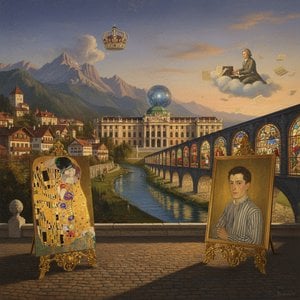
Rane godine i umetnički počeci
Gustav Klimt, rođen 14. jula 1862. u Baumgartenu blizu Beča, poticao je iz porodice koja je imala kako umetničke sklonosti tako i finansijske poteškoće. Njegov otac, Ernst Klimt, bio je gravir zlatom, zanimanje koje je na suptilan, ali dubok način uticalo na mladog Gustava – privlačnost pozlaćenih listova, precizan detalj, sama raskoš. Porodične poteškoće značile su česte selidbe unutar Beča, što je možda dovelo do toga da Klimt razvije oštar uvid u svoju okolinu i senzibilitet prema ljudskom iskustvu. Već kao dete, njegovi crteži bili su izvanredni, negovani očevim zanimanjem i urođenim talentom koji se brzo pokazao. Godine 1876. upisuje Bečku školu primenjenih umetnosti (Kunstgewerbeschule), gde je započeo formalno obučavanje u arhitektonskom slikarstvu pod Ferdinandom Laufbergerom. Ovo mu je pružilo čvrst tehnički temelj, ali ga je takođe izložilo preovlađujućim akademskim stilovima – stilovima koje će Klimt jednog dana osporiti i prevazići. Upravo ovde je formirao važan umetnički partnerstvo sa svojim bratom Ernstom i Franzom von Matschom, saradnja koja je obezbedila ranu narudžbinu za dekorativne zidne slike i platone, postavljajući temelje za njegov budući uspeh.
Uspon Bečke secesije
Do 1890-ih Klimt je postao sve više razočaran konzervativnom umetničkom ustanovom u Beču. Želeo je veću kreativnu slobodu, prostor gde bi inovacija mogla da napreduje bez ograničenja tradicije. Ova želja kulminirala je osnivanjem Bečke secesije 1897. godine, ključnog momenta u austrijskoj umetnosti. Klimt je izabran za prvog predsednika, postajući simbol pokreta koji je nastojao da se odvoji od strogih akademskih normi i prihvati nove umetničke struje koje su preplavljivale Evropu – Art Nouveau, Simbolizam i Japonizam. Sama zgrada Secesije, dizajnirana od Josefa Marije Olbriha, postala je simbol ovog odbijanja, hram posvećen modernoj umetnosti. Klimtova dela bila su centralna za etos Secesije, utelovljujući njeno odbacivanje konvencionalne estetike i prihvatanje dekorativnih elemenata, hrabrih boja i simoličkih slika. Njegove slike su počele da istražuju teme ljubavi, smrti i seksualnosti sa bezprecedentnom iskrenošću, izazivajući društvene norme i budiće divljenje i gnjev.
Zlatna faza i umetnička zrelost
Otprilike od 1900. godine Klimt je ušao u ono što se sada naziva njegovom „zlatnom fazom“, periodom karakterisan raskošnom upotrebom pozlaćenih listova inspirisanih vizantijskim mozaicima i srednjovekovnim iluminiranim rukopisima. Ova tehnika je transformisala njegove slike u sjajne, vanvremenske vizije, prožete smislom duhovne dubine i senzualnog šarma. *Poljubac* (1907-1908), možda njegovo najpoznatije delo, oličuje ovaj stil – par zaključan u zagrljaju, obavijen zlatnom aurom, čija tela krase složeni uzorci. Tokom ovog perioda Klimt je producirao i niz zapanjujućih portreta, uključujući *Portret Adele Bloch-Bauer I* (1907), koji je pokazao njegovu sposobnost da uhvati ne samo fizičku sličnost, već i psihološku kompleksnost svojih subjekata. Sve više je brisao granice između slikarstva i ukrasa, integrirajući dekorativne elemente u svoje kompozicije kako bi stvorio skladno spajanje forme i sadržaja. Uticaj japanske umetnosti – Japonizma – bio je posebno očigledan u njegovoj izravnavanju perspektive, naglasku na liniji i upotrebi ukrasnih uzoraka.
Kontroverze, uticaji i trajni značaj
Klimtova karijera nije bila bez kontroverzi. Godine 1900. primio je prestižnu narudžbinu da oslika zidne platone za Veliku dvoranu Univerziteta u Beču, koji su predstavljali Filozofiju, Pravo i Teologiju. Međutim, ova dela – posebno *Filozofija* – proglašena su provokativnim, pa čak i pornografskim od strane konzervativnih kritičara, što je dovelo do javnog gneva i na kraju ga nateralo da odbije daljnje javne narudžbine. Ovaj incident predstavljao je prekretnicu u njegovoj karijeri, gurajući ga ka privatnom patronazu i omogućavajući mu veću umetničku slobodu. Tokom svog života Klimt je bio pod uticajem raznovrsnog niza umetnika i stilova – od istorijskih slika Hansa Makarta do dekorativne umetnosti Vizantije i Japana. Takođe se inspirisao iz Simbolističkog pokreta, istražujući teme mitologije, alegorije i podsvesti. Gustav Klimt je nastavio da slikara plodno sve do svoje smrti 6. februara 1918. godine od moždanog udara tokom španske gripa. Njegova kasnija dela istraživala su apstraktnije oblike i pejzaže, što ukazuje na stalnu umetničku evoluciju. Sada je prepoznat kao jedna od najvažnijih figura u austrijskoj istoriji umetnosti, vodeći zastupnik Bečke secesije i trajni simbol Art Nouveau elegancije.
Njegove slike postižu visoke cene na aukcijama, a njegov uticaj nastavlja da rezonuje u savremenoj umetnosti i dizajnu.
Ključne karakteristike i umetnički stil
- Simbolizam: Klimtova dela su duboko simbolična, često istražujući teme ljubavi, smrti, seksualnosti i ljudskog stanja.
- Art Nouveau: Bio je vodeća figura u Art Nouveau pokretu, karakterizovan njegovim organskim linijama, dekorativnim uzorcima i naglaskom na lepoti.
- Zlatna faza: Njegova upotreba pozlaćenih listova stvorila je sjajne, raskošne površine koje su postale njegov stilski potpis.
- Dekorativni elementi: Klimt je integrisao dekorativne elemente u svoje kompozicije, brisajući granice između slikarstva i ukrasa.
- Žensko telo: Žensko telo bilo je centralna tema u njegovom radu, često prikazano sa senzualnošću i psihološkom dubinom.



 Pregledaj u prostoru
 Kupi ručno naslikanu sliku
 Pošalji
 Podeli
 Detalji o delu

 Преузми
 Slični predmeti
 Rendgenski snimak
 Slajdovi
 Statistika

 Pročitaj više






































 Opcija sa staklom dostupna je samo za dimenzije manje od 110 cm