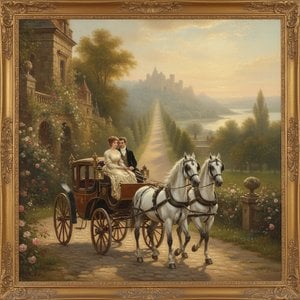
Giuseppe Arcimboldo’s Saddle for Sleigh Horse: A Study in Detail and Symbol
Giuseppe Arcimboldo (1527-1593), a Florentine Mannerist artist, stands apart from his contemporaries not merely for his innovative approach to portraiture but for his audacious reimagining of artistic conventions. While he produced numerous impressive frescoes adorning churches and executed commissions for noble patrons—works reflecting the stylistic trends of his time—Arcimboldo’s enduring fame rests upon a singular series of composite heads crafted entirely from meticulously arranged objects: fruits, vegetables, flowers, books, even musical instruments. These weren't frivolous exercises in visual illusion; they were complex allegories imbued with profound symbolism that resonated deeply within the Renaissance worldview and continue to captivate audiences today.
“Saddle for sleigh horse,” created in 1585, exemplifies Arcimboldo’s distinctive style—a masterful blend of realism and fantastical imagination. This drawing, executed in blue ink on aged paper, offers a glimpse into the artist's creative process and reveals his meticulous attention to detail. Unlike traditional portraits that strive to capture likeness with precise shading and perspective, Arcimboldo presents a stylized representation of equine equipment, transforming mundane materials into an arresting visual statement.
- Subject Matter: The artwork focuses on a saddle for sleigh horses—a practical item reflecting the transportation needs of the era. However, Arcimboldo elevates this functional object into a symbolic gesture, hinting at themes of power, nobility, and perhaps even seasonal cycles.
- Style & Technique: Arcimboldo’s technique is characterized by painstaking line work combined with hatching and cross-hatching to achieve tonal variation. The artist skillfully renders the intricate metalwork and leather components of the saddle using precise lines, creating an illusion of texture that suggests both solidity and delicacy.
- Composition & Perspective: The drawing adopts a relatively flat perspective—a deliberate choice that prioritizes clarity and visual impact over realistic depth. This orthographic projection emphasizes the central element – the saddle itself – ensuring its complexity is fully appreciated.
- Materials Used: Arcimboldo employed blue ink on aged paper, selecting materials that contribute to the drawing’s overall atmosphere of antiquity and thoughtfulness. The subtle discoloration of the paper enhances the impression of authenticity and invites contemplation about time and artistic legacy.
Beyond its technical prowess, “Saddle for sleigh horse” speaks to Arcimboldo's broader artistic vision. As evidenced by his other composite portraits—particularly “Vertumnus,” depicting Emperor Rudolf II as a gardener brimming with flora—Arcimboldo sought to communicate ideas and emotions through unconventional imagery. The saddle’s inclusion within this series underscores the artist’s fascination with transforming everyday objects into vehicles for symbolic representation, cementing his place as one of the most inventive and intellectually stimulating figures in Renaissance art.
The drawing's placement within Arcimboldo’s oeuvre—specifically alongside other depictions of seasonal imagery—further reinforces its significance. It serves as a testament to Arcimboldo’s ability to transcend stylistic conventions and engage viewers on multiple levels, prompting reflection on themes of nature, power, and the artist’s own creative genius.
A reproduction of this remarkable artwork would bring a touch of Mannerist elegance and intellectual curiosity into any interior space. Its meticulous detail and symbolic richness offer an unparalleled opportunity to appreciate Arcimboldo's groundbreaking artistic vision.



 Pregledaj u prostoru
 Naručite ručno oslikano reprodukciju
 Podeli
 Podeli
 Detalji
 Vodič
Vodič

 Preuzmi sliku
 Slični predmeti
 Rendgenski snimak
 Automatska prezentacija
 Statistika


 Pročitaj više






































 Opcija sa staklom dostupna je samo za dimenzije manje od 110 cm