The Architect of the Roman Spirit: The Life and Legacy of Giacomo della Porta
Giacomo della Porta (1533–1602) was far more than a mere builder; he was a visionary whose hands and intellect helped sculpt the very soul of late Renaissance Rome. Born in the serene landscape of Porlezza, Italy, his journey from a Lombard apprentice to the preeminent architect of the Mannerist era is a testament to the transformative power of classical training. Under the watchful eye of his father, Cristoforo della Porta, a skilled sculptor, Giacomo learned the delicate language of stone and form. This early immersion in the tactile realities of sculpture would later inform his architectural prowess, allowing him to treat entire buildings as monumental, three-dimensional canvases. His talent was further ignited within the grand workshops of the Milan Cathedral, where the shadow of Michelangelo’s monumentalism loomed large, teaching him that architecture could achieve a divine, muscular grandeur.
As his career matured, della Porta became an indispensable figure in the papal courts of Paul III and Pius IV. He possessed a rare ability to bridge the gap between the complex, often intellectualized aesthetics of Mannerism and the emerging, emotive power of the Baroque. His work was characterized by a sophisticated understanding of proportion and a daring approach to structural innovation, heavily influenced by the principles of Vignola. This synthesis of classical order and dramatic movement allowed him to navigate the shifting religious and political tides of the Counter-Reformation, creating spaces that were both intellectually rigorous and spiritually overwhelming.
Masterworks of Stone and Water
The architectural legacy of della Porta is most vibrantly felt in the streets and sanctuaries of Rome and Naples. His contribution to the
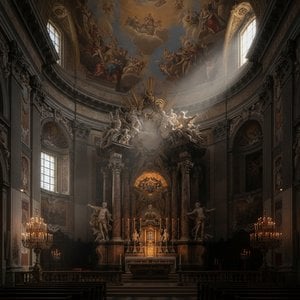
Chiesa del Gesù Nuovo stands as a pinnacle of his creative output. In designing its façade, he moved away from static, flat surfaces toward a dynamic interplay of light and shadow. By utilizing complex geometric patterns and intricate sculptural reliefs, he transformed the exterior into a theological narrative, where every pilaster and pediment served to direct the viewer's gaze toward the heavens. This mastery of the facade helped set the standard for much of the Baroque architecture that would follow in the centuries to come.
Beyond the walls of churches, della Porta’s genius flowed through the city’s veins via his magnificent hydraulic works. He understood that water was a living element of urban design, capable of bringing movement and life to the heavy stone of Rome. His involvement in the creation of iconic fountains, such as the
Fontana delle Tartarughe (Turtle Fountain), showcases his ability to blend delicate sculpture with functional engineering. In these works, one can observe:
- The seamless integration of classical mythological figures with fluid, organic movement.
- A profound command over the acoustics and visual impact of cascading water.
- The use of sculptural detail to create intimate, human-scaled moments within a grand urban landscape.
A Lasting Impression on the Eternal City
The historical significance of Giacomo della Porta lies in his role as a transitional titan. He stood at the crossroads of eras, holding the torch of the High Renaissance while lighting the way for the Baroque. His meticulous work on the reconstruction of the dome of
St. Peter’s Basilica ensured that the most important site in Christendom possessed the structural integrity and aesthetic majesty required by its status. Through his efforts, the architectural language of Rome became one of strength, drama, and profound permanence.
Even in his more detailed sculptural contributions, such as the intricate elements found in the
Atlas Fountain, della Porta demonstrated an obsession with the human condition and the weight of classical myth. His ability to imbue cold marble with the tension of muscle and the grace of movement remains a hallmark of his style. Today, when we walk through the historic centers of Italy, we are not merely walking past buildings; we are moving through a curated experience of space and emotion designed by a man who saw the world as a masterpiece in progress. His life’s work remains an enduring dialogue between the earthbound weight of stone and the ethereal aspirations of the human spirit.



 Pregledaj u prostoru
 Naručite ručno oslikano reprodukciju
 Podeli
 Podeli
 Detalji
 Vodič
Vodič

 Preuzmi sliku
 Slični predmeti
 Rendgenski snimak
 Automatska prezentacija
 Statistika


 Pročitaj više






































 Opcija sa staklom dostupna je samo za dimenzije manje od 110 cm