BESPLATNA KONSULTACIJA SA STRUČNJAKOM ZA UMETNOST

x
Naručite reprodukciju Naručite reprodukcijuKupi digitalnu sliku Kupi digitalnu sliku PošaljiPošalji
DetaljiDetalji Dodaj u omiljene Dodaj u omiljene ПреузмиПреузми Slični predmetiSlični predmeti Rendgenski snimakRendgenski snimak SlajdoviSlajdovi

Vesuvius

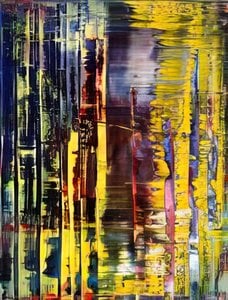
Gerhard Richter’s ‘Vesuvius,’ a mesmerizing Capitalist Realism painting from 1976, evokes memory and landscape through layered color washes over a grayscale photograph of the Italian volcano. Explore this iconic artwork and its profound reflections on human experience.

Gerhard Richter je nemački umetnik poznat po svojim inovativnim tehničkim pristupima i dubokom angažovanju oko istorijskih tema. Najpoznatiji su njegovi fotorealistički pejzaži i abstrakcije koje ispituju samu prirodu percepcije i reprezentacije, ostavljajući nezaboravno mesto u umetnosti.

Giclee štampa / Umetnički otisak

Giclée štampa ili print na platnu muzejskog kvaliteta uz brzu proizvodnju i fleksibilne opcije završne obrade.

P118B $10
P118H $10
P118W $10
P438Z $10
P508JH $12
P508YH $12
P805H $10
P805Z $10
P919BZ $10
P919G $10
P919XJ $10
P959ZH $10
P968JZ $12
W106C $8
W218G $10
W218JH $8
W218Y $10
W307PJ $10
W316G $10
W316PJ $8
W316Y $10
W398PJ $8
W4111J $10
W500HY $15
W500JH $15
W692G $12
W849H $8
W940BG $15
W953PJ $8

Standard
custom
CM
INCH

Izaberite jednu od naših unapred definisanih veličina koje odgovaraju originalnim proporcijama umetničkog dela.

širina
visina

Možete uneti sopstvene dimenzije kako biste umetničko delo prilagodili specifičnom okviru ili prostoru. Ako odabrani format ne odgovara proporcijama originalne slike, mi ćemo ili iscrtati deo dela ili proširiti sliku pomoću ogledane ivice ili jednobojnog popunjavanja. Digitalni prikaz će vam biti poslat na odobrenje pre početka proizvodnje.
Imajte na umu da pregled na ekranu ne odražava stvarno iscrtavanje ili proširivanje. Samo će prikaz (mockup) precizno pokazati finalnu kompoziciju.
Iako su prilagođene dimenzije dostupne, preporučujemo da odaberete dimenziju sa unapred definisane liste kako biste očuvali originalne proporcije.

Dostava širom sveta () za 2 nedelje umesto uobičajenih 4/5 nedelja. (3 јул)

why_choose_icon
Besplatna ekspresna dostava širom sveta
why_choose_icon
Visokokvalitetno laneno platno
why_choose_icon
Kompletno osiguranje transporta
why_choose_icon
Garancija povraćaja carine i uvoznih dažbina
why_choose_icon
Garancija vernosti boja
why_choose_icon
Politika povrata u roku od 60 dana (samo u slučaju nedostataka)
why_choose_icon
Garancija povrata novca od 100%
why_choose_icon
Popust pri grupnoj kupovini

Ukupna cena

-

reproduction

Vesuvius

Giclee štampa / Umetnički otisak

Dimenzije reprodukcije

-

Konačna cena

-

Osnovne informacije

  • Year: 1976
  • Title: Vesuvius
  • Dimensions: 73 x 105 cm
  • Subject or theme: Volcanic Landscape
  • Influences: Landscape Painting
  • Notable elements or techniques: Photorealistic layering
  • Medium: Oil on canvas

Kviz o umetnosti

Svako pitanje ima samo jedan tačan odgovor.

Pitanje 1:
What artistic movement is Gerhard Richter most associated with?
Pitanje 2:
The image depicts a landscape featuring what prominent natural element?
Pitanje 3:
What is the airplane in the painting meant to symbolize?
Pitanje 4:
Gerhard Richter's early life was significantly impacted by:
Pitanje 5:
Richter’s artistic style is characterized by a blending of realism and abstraction. Which technique exemplifies this approach?

Opis predmeta

Vesuvius – A Meditation on Landscape and Memory

Gerhard Richter’s “Vesuvius,” painted in 1976, isn't merely a depiction of the Italian volcano; it’s an exploration of how memory shapes perception. Richter, deeply influenced by his formative years under Nazi Germany—a period characterized by displacement and uncertainty—employs his signature technique of layering semi-transparent squares of color onto a photographic print to achieve a mesmerizing effect.

  • Style: Richter’s approach aligns with ‘Capitalist Realism,’ a movement he spearheaded that deliberately eschews traditional artistic conventions. Instead, it prioritizes the reproduction of photographs as an autonomous art form, questioning notions of originality and authorship.
  • Technique: The artist meticulously applies thin washes of color—often muted reds, yellows, and blues—over a grayscale image of Vesuvius. This layering process creates a hazy atmosphere, blurring the boundaries between reality and illusion. It’s as if Richter is attempting to capture not just what he sees but also how it feels – the lingering impressions of experience.
  • Historical Context: Created in the wake of the Vietnam War and amidst growing anxieties about environmental degradation, “Vesuvius” speaks to a broader cultural preoccupation with confronting the destructive forces of nature alongside acknowledging the fragility of human existence. Richter’s deliberate obfuscation mirrors the difficulty of grasping complex events and emotions fully.

The Photographic Source – A Dialogue Between Image and Reality

Richter's fascination with photography stems from a profound belief that it possesses an inherent honesty—a quality he seeks to preserve while simultaneously transforming it into something new. He argues that photographs capture moments in time with unparalleled accuracy, yet they are inherently incomplete representations of experience. By reworking these images through color washes, Richter acknowledges this limitation but elevates them beyond mere documentation.

“The photograph,” Richter famously stated, “is not a copy; it’s an interpretation.”

Color as Emotion – Capturing Atmosphere and Suggestion

The subtle hues employed in “Vesuvius” aren't intended to convey literal representations of the volcano itself. Rather, they serve as conduits for emotion—a reflection of Richter’s own contemplative gaze upon the landscape. The colors evoke a sense of melancholy and quiet contemplation, mirroring the artist’s preoccupation with memory and loss.

Symbolism Beyond Representation

While “Vesuvius” presents a visually striking panorama, its significance transcends mere visual pleasure. The volcano symbolizes both destructive power and regenerative potential—themes that resonate deeply within Richter's artistic worldview. He uses color to subtly suggest these ideas, inviting viewers to engage in an imaginative dialogue with the artwork.

Srodna umetnička dela


Biografija umetnika

A Life Shaped by Division: The Early Years and Artistic Formation of Gerhard Richter

Gerhard Richter’s artistic journey began in Dresden, Germany, amidst the turbulent backdrop of postwar Europe and the looming shadow of Soviet influence. Born on February 9, 1932, his childhood was profoundly impacted by displacement – his family repeatedly relocated during the Nazi era and subsequently under communist rule—experiences that instilled within him a fundamental preoccupation with uncertainty and questioning. The idyllic landscapes of Reichenau and Waltersdorf, initially formative environments for his artistic sensibilities, dissolved into conflict as Dresden endured siege during World War II, leaving indelible scars on his psyche. His father, Wilhelm Richter, was a schoolteacher who navigated the complexities of life under authoritarian pressure, while his mother, Elise Richter-Schröder, nurtured a love for literature and music within their household—a duality that would become a defining characteristic of Richter’s own artistic approach. Early Artistic Training: Socialist Realism's Constraints Richter commenced formal training at Dresden Academy of Fine Arts in 1951, initially immersed in the dominant stylistic conventions of socialist realism – a mandated aesthetic aimed at glorifying communist ideology and portraying idealized depictions of Soviet life. Despite this imposed framework, Richter harbored an innate desire for artistic freedom—a yearning to transcend ideological boundaries and explore more expansive creative horizons. He recognized that true expression demanded resistance to dogma, prompting him to actively seek alternative paths beyond the prescribed norms. This awareness fueled his determination to develop a distinctive visual language, one rooted in observation and experimentation rather than adherence to predetermined formulas. The Düsseldorf Breakthrough: Embracing Experimentation and Dissidence A pivotal moment arrived in 1961 when Richter, alongside Marianne Eufinger, courageously defied communist restrictions and fled East Germany for Düsseldorf—a city brimming with artistic dynamism and intellectual ferment. This relocation represented a radical transformation of his artistic trajectory, liberating him from the constraints of socialist realism and immersing him in an environment where innovation was not merely tolerated but actively championed. Düsseldorf became Richter’s crucible—a space where he dismantled conventional stylistic conventions and embarked on a period of intense exploration that would solidify his early mature work. He swiftly rejected the rigid aesthetic dictates of socialist realism, embracing instead a multifaceted approach encompassing photorealism, abstraction, and chance operations—techniques that challenged established artistic paradigms and interrogated the very nature of representation. Photorealism's Paradox: Replication and Reflection Richter’s fascination with photorealism stemmed from his conviction that meticulous reproduction could illuminate deeper truths about reality—a paradoxical assertion given the inherent limitations of photographic illusion. He painstakingly recreated images sourced from family photographs or newspaper clippings, employing techniques honed to an astonishing degree of precision—capturing minute details with unwavering accuracy. However, Richter’s photorealistic paintings transcended mere imitation; they functioned as meditations on perception and memory—inviting viewers to contemplate the subjective experience of seeing and remembering. By confronting photographic illusion head-on, he exposed its inherent ambiguities and questioned its ability to convey complete objectivity—a stance that resonated powerfully with fellow artists grappling with similar dilemmas. Abstraction's Embrace: Chance and Gestural Freedom Alongside photorealism, Richter pursued abstraction—creating canvases layered with vibrant colors and dynamic brushstrokes—techniques that prioritized gestural freedom over precise control. He recognized that artistic expression could flourish beyond the confines of representational accuracy—embracing spontaneity and unpredictability as fundamental principles. His pioneering use of squeegees—tools typically employed for cleaning windows—added another dimension to his artistic practice—manipulating paint in ways that defied conventional expectations and yielding unexpected textural effects. This embrace of chance—a deliberate relinquishment of control—served as a catalyst for innovation, propelling Richter’s work into uncharted territories of visual language. Legacy and Influence: Shaping Contemporary Art's Landscape Gerhard Richter’s enduring legacy extends far beyond the realm of artistic achievement—he fundamentally reshaped the landscape of contemporary art by challenging established conventions and redefining notions of stylistic coherence. His unwavering commitment to experimentation—coupled with his profound engagement with historical and political themes—established him as one of the most influential artists of our time. He resisted categorization—rejecting attempts to confine his work within a single stylistic framework—a stance that underscored his conviction that artistic exploration demanded boundless curiosity and intellectual rigor. Richter’s influence can be seen in countless artworks produced by subsequent generations of artists—drawn to his innovative techniques and his fearless interrogation of artistic norms—demonstrating the enduring power of his vision. He remains a beacon of creativity—inspiring audiences worldwide with his challenging and deeply resonant oeuvre—a testament to his transformative contribution to art history.
Георг Рихтер

Георг Рихтер

1932 - , Германија

Osnovne informacije

  • Artistic Movement Or Style:
    • Фотореализам
    • Абстракција
  • Artists Who Influenced This Artist:
    • Жан Арп
    • Пабло Пикассо
  • Date Of Birth: 9 фебруара 1932.
  • Full Name: Gerhard Richter
  • Nationality: Германија
  • Notable Artworks:
    • Абстрактно сликарство 610-1
    • Gilbert
    • С. са дететом
  • Place Of Birth: Дрезден, Германија
Istražite umetnička dela organizovana prema temama, stilovima i karakteristikama.