Meleager and Atalante: A Baroque Dance of Myth and Light
Gerard van Honthorst’s “Meleager und Atalante,” painted in 1632, isn't merely a depiction of a classical myth; it’s a carefully orchestrated tableau vivant—a stage set for a dramatic narrative rendered with the masterful precision characteristic of the Dutch Golden Age. The painting captures a pivotal moment from Greek mythology: the hunt for the Calydonian boar, specifically the scene where Meleager, son of King Oeneus, and Atalante, renowned for her archery skills, engage in a spirited chase, their fates intertwined with the formidable beast. Yet, Honthorst elevates this ancient tale beyond simple illustration, transforming it into a vibrant exploration of youthful passion, heroic endeavor, and the interplay of light and shadow—elements that define his signature style.
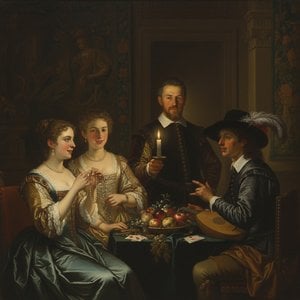
The composition is remarkably dynamic, drawing the viewer directly into the heart of the action. A group of figures – hunters, attendants, and onlookers – are clustered within a richly detailed courtyard setting. The central focus rests on Meleager and Atalante, their movements frozen in a moment of intense pursuit. Notice how Honthorst doesn’t depict a single, decisive blow against the boar; instead, he captures the *process* of the hunt—the anticipation, the exertion, and the shared determination etched on their faces. The figures are not static portraits but active participants within a larger drama, contributing to the painting's overall sense of movement and immediacy.
The Language of Light: Honthorst’s Caravaggist Technique
Honthorst’s genius lies in his command of *tenebrism*, a technique borrowed directly from the Italian painter Caravaggio. This dramatic use of light and dark isn't simply an aesthetic choice; it serves to heighten the emotional intensity of the scene and guide the viewer’s eye. A single, brilliant lantern illuminates Meleager and Atalante, casting deep shadows that envelop the surrounding figures and create a sense of mystery and suspense. The stark contrast between light and shadow emphasizes their heroic stature, highlighting their youthful energy and determination against the backdrop of the shadowy courtyard.
Observe how Honthorst meticulously renders the textures – the rough fabric of the hunters’ tunics, the polished surfaces of the weapons, the glistening skin of Meleager's arm. This attention to detail is further enhanced by his skillful use of color—rich reds and browns dominate the palette, creating a warm, earthy atmosphere that contrasts sharply with the cool blues and greens used for the shadows. The light itself seems almost tangible, radiating from the lantern and bathing the scene in an ethereal glow.
Symbolism and Courtly Grace
Beyond the immediate narrative of the hunt, “Meleager und Atalante” is laden with symbolic meaning. The boar itself represents chaos and danger—a force that must be subdued to restore order and harmony. Meleager and Atalante, as the hunters, embody courage, skill, and youthful vitality. Their intertwined pursuit suggests a shared destiny, a bond forged in the crucible of heroic endeavor.
The setting – a courtyard with a dining table and chairs – hints at the aristocratic context of the scene. The painting was originally part of the collection of Frederik Hendrik van Oranje-Nassau, a prominent Dutch statesman and art collector. This royal provenance adds another layer of significance to the work, suggesting that it was intended as a decorative element for a grand interior—a testament to the wealth and power of the Dutch Republic during its Golden Age. The inclusion of the lute, a symbol of female sexuality and pleasure, subtly underscores the romantic tension between Meleager and Atalante.
A Timeless Masterpiece: Reproduction and Legacy
“Meleager und Atalante” remains a captivating work of art, admired for its dramatic composition, masterful technique, and evocative symbolism. Reproductions offer an accessible way to experience the beauty and power of this iconic painting, bringing its vibrant colors and dynamic energy into any space. Whether displayed in a formal gallery or a cozy living room, this Baroque masterpiece continues to inspire awe and wonder—a timeless reminder of the enduring appeal of classical mythology and the artistry of Gerard van Honthorst.



 Pregledaj u prostoru
 Pređi na prodaju štampanih primeraka
 Podeli
 Podeli
 Detalji
 Vodič
Vodič

 Preuzmi sliku
 Slični predmeti
 Rendgenski snimak
 Automatska prezentacija
 Statistika


 Pročitaj više






































 Opcija sa staklom dostupna je samo za dimenzije manje od 110 cm