


Ručno oslikano uljanim bojama na platnu u dimenzijama i okviru po vašem izboru, izrađeno po porudžbini od strane naših umetnika. ( Kupi print Kupi digitalnu sliku)





























Izaberite jednu od naših unapred definisanih veličina koje odgovaraju originalnim proporcijama umetničkog dela.

Можете унети сопствене димензије како бисте прилагодили дело одређеном оквиру или простору. Ако одабрана величина не одговара пропорцијама оригинала, слика ће бити исечена или проширена додатним елементима који се ручно насликавају. Дигитални prikaz ће вам бити послат на одобрење пре почетка производње.
Имајте на уму да преглед на екрану не одражава стварно исецање или проширење. Само приказ (mockup) ће тачно приказати коначну композицију.
Иако су доступне прилагођене величине, препоручујемо да одаберете димензију из дефинисане листе како бисте сачували оригиналне пропорције.
Isporuka širom sveta () za 3/4 nedelje umesto uobičajenih 5 nedelja. (6 септембар). Bez kompromisa po pitanju kvaliteta.


Self-Portrait with Spider
Dimenzije reprodukcije
“Self-Portrait with Spider,” created by Georg Friedrich Schmidt in 1758, is more than just a depiction of an artist at his desk; it's a meticulously crafted window into the intellectual and emotional landscape of the late 18th century. Executed as a monochrome etching on paper, this work exemplifies the hallmarks of the Rococo style – a delicate balance between elegance, introspection, and subtle symbolism – while showcasing Schmidt’s mastery of printmaking technique. The piece, currently residing in the Kunsthalle Bremen, offers a compelling glimpse into the artistic sensibilities of a man grappling with his craft and perhaps, with the complexities of human existence.
Schmidt’s skill as an etcher is immediately apparent. The artwork relies almost entirely on intricate linework, achieved through painstaking hatching and cross-hatching techniques. This deliberate manipulation of line density creates a remarkable tonal range within the monochrome palette, generating a convincing illusion of form and shadow. The artist employed a drypoint needle – a tool that allows for a slightly roughened surface when pressed into the copper plate – adding texture and depth to the image. The process itself was demanding: ink was meticulously applied to the prepared plate, carefully wiped away to reveal only the lines intended for transfer, and finally, the paper was pressed onto the inked surface, resulting in a crisp, detailed print. The precision and control demonstrated are hallmarks of Schmidt’s dedication to his craft.
Beyond its technical prowess, “Self-Portrait with Spider” is rich in symbolic potential. The inclusion of the spider itself – crawling across the wall – immediately draws the viewer’s attention and invites interpretation. Traditionally associated with creativity, patience, and even cunning, the spider could represent Schmidt's artistic process, his meticulous approach to detail, or perhaps a darker reflection on human nature. The artist’s gaze, directed out of the window towards an unseen landscape, suggests introspection and a contemplative mood. The setting – a simple desk adorned with writing implements and bottles – reinforces this sense of quiet engagement with thought and creation. The slightly off-center composition adds to the work's subtle unease, mirroring perhaps the anxieties inherent in artistic endeavor.
Created in 1758, “Self-Portrait with Spider” firmly places Schmidt within the context of the Rococo period. This style, flourishing across Europe – particularly in France and Prussia – emphasized grace, elegance, and a sense of playful sophistication. Schmidt’s work reflects this aesthetic through its refined details, delicate lines, and emphasis on capturing subtle expressions. His artistic journey was significantly shaped by his connections within the Prussian court, fostered through friendships with figures like Antoine Pesne and Nicolas Lancret, allowing him access to Parisian artistic circles and further refining his style. The piece stands as a testament to the importance of patronage in supporting artistic development during this era.


1712 - 1775 , Nemačka

Master the nuances of Giclée printing with our expert guide. Discover how pigment-based inks and museum-grade substrates create fade-resistant, high-fidelity art reproductions designed for discerning collectors seeking unparalleled quality and longevity.
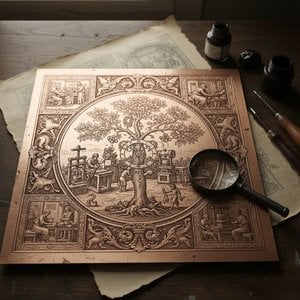
Explore the intricate world of etching and intaglio printmaking. Discover how masters use acid and metal to create profound textures and lines, from Romanticism to modern era, through an expert lens of art history and technical mastery.

 Pregledaj u prostoru
 Pošalji
 Podeli
 Detalji o delu

 Преузми
 Slični predmeti
 Rendgenski snimak
 Slajdovi


 Pročitaj više







 Opcija sa staklom dostupna je samo za dimenzije manje od 110 cm


