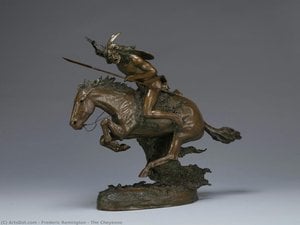
Хроничар Нестајућег Запада: Живот и Уметност Фредерика Ремингтона
Фредерик Сакридер Ремингтон, рођен у Кантону, Њујорк, 4. октобра 1861. године, није био продукт Дивљег Запада који је тако живописно приказивао; већ Источњак који је обликовао свој уметнички идентитет кроз фасцинацију и посвећено изучавање. Његово порекло указује на живот далеко од прашњавих стаза и кавалтеријских напада – француско-баскенске претке помешане са чврстим републиканским коренима Нове Енглеске, оца који је био пуковник у Грађанском рату и уредник новина, и везе са чувеном династијом Remington Arms кроз далеке рођаке. Ипак, рано излагање војној тематици, заједно са немиром и оштрим оком за приповедање, одвело га је на пут ка томе да постане вероватно најпрепознатљивији уметник Америчког Запада. Његово детињство се преселило у Блумингитон, Илиноис, па назад у Кантон и коначно Огденсбург, Њујорк, али његова машта је остала опседнута причама о животном стилу на граници. Иако је првобитно усмерен ка војној едукацији на Vermont Episcopal Institute, Ремингтонов прави позив није био у праћењу наређења, већ у посматрању и тумачењу света око себе кроз уметност. Кратко време проведено на Универзитету Јејл то је потврдило; фудбал и скицирање су имали много више апела него формално академско тежиште.
Од Илустратора до Сликара: Ковање Уметничке Визије
Ремингтонов уметнички пут није започео са великим платнима, већ са мастилом и папиром. Његов први објављени рад, карикатура за *Yale Courant*, сигнализирао је рану способност да зароби акцију и наратив. Кључно путовање у Монтану 1881. године запалило је његову доживотну опсесију Западом. Ово није било само туристички поглед; Ремингтон је тражио да се урони у културу, посматрајући каубоје, домороце и сам пејзаж. Првобитно је покушао са раничарењем и рударством, али то се није показало успешним, ослобађајући га да се потпуно посвети уметности. Вративши се на Исток, брзо се усталио као илустратор за часописе као што су *Harper's Weekly* и *Collier’s*, његове динамичне слике западних сцена очаравајући националну публику жедну прича о граници. Ове илустрације нису биле само извештај; били су прожети драмом, енергијом и романтизованом визијом Запада која је дубоко резонирала са јавним разумевањем. Кроз овај рад је Ремингтон усавршио своје вештине у композицији, хватању покрета и преношењу емоција – квалитетима који су касније дефинисали његова сликања. Примио је минималну формалну обуку осим неколико часова цртања на Јејлу и кратког периода на Art Students League, развијајући уместо тога препознатљив стил карактеризован енергичним потезима кистом, смелим бојама и фокусом на реализам помешан са драматичном страшћу.
Заробљање Нестајућег Света: Теме и Стил
Ремингтонова уметност је неодвојиво повезана са специфичним моментом у америчкој историји – сумраком Старог Запада. Његова платна су насељени иконичним фигурама: храбри каубоји који гоне стоку, стоички домороци који се суочавају са расељавањем, и војници америчке коњице укључени у херојске битке и трагичне конфликте. Није избегавао да прикаже тешке стварности живота на граници, али његов рад често тежи романтизованом приступу, истичући храброст, авантуру и судар култура.
Његова сликања нису једноставно историјски документи; они су евокативни наративи који истражују теме хероизма, губитка и неизбежног марша прогреса. Ремингтонов стил се развијао током времена, прелазећи од чвршћих, академскијих рендеринга до лабављих, експресивнијих потеза кистом. Био је мајстор у хватању покрета – коњи који галопирају преко равница, каубоји који се боре са биковима, војници који нападају у битку.
Често је користио брзе скице и фотографије као референтни материјал, али његова уметност је увек надмашила пуко имитирање, прожето његовом сопственом уникатном визијом и емоционалним интензитетом. Позната дела попут *My Ranch*, *Waiting in the Moonlight*, *Ridden Down* (1905) и *The Long-Horn Cattle Sign* (1908) оличавају његову способност да зароби величину и рањивост Америчког Запада.
Наслеђе и Трајан Утицај
Фредерик Ремингтон је изненада умро 1909. године у доби од 48 година, оставивши за собом огроман корпус дела који наставља да очарава публику данас. Његов утицај на западну уметност је неоспоран; он није само сликао Запад, већ је помогао да га *дефинише* за генерације Американаца. Установио је визуелни језик границе – иконографију каубоја, Индијанаца и коњице која је постала дубоко уграђена у популарној култури.
- Његов рад је инспирисао безброј других уметника, укључујући Н.Ц. Вајета и Зејна Греја.
- Музеј уметности Фредерика Ремингтона у Огденсбургу, Њујорк, служи као сведочанство његовог трајног наслеђа, чувајући опсежну збирку његових сликања, скулптура и архивског материјала.
- Његова уметност се наставља излагати у главним музејима широм земље, укључујући Метрополитенски музеј уметности и Амон Картер музеј америчке уметности.
Ремингтонове слике, иако су понекад критиковане због романтизованог приказа Запада, нуде драгоцен увид у кључну еру у америчкој историји. Заробио је не само шта *је било*, већ и шта су људи *веровали* о Западу – његовим митовима, легендама и трајном привлачењу. Остаје моћан симбол америчког духа—хроничар нестајућег света који га је трансформисао у трајно уметничко наслеђе.



 Pređi na štampu
 Pošalji
 Podeli
 Detalji o delu

 Преузми
 Slični predmeti
 Slajdovi
 Statistika


 Pročitaj više