Pregledaj u prostoru AR pregled Kupite ručno oslikano delo Pređi na digitalnu sliku Pošalji
Detalji o delu Vodič Dodaj u omiljene Preuzmi Slični predmeti Rendgenski snimak Automatska prezentacija Pitanja i odgovori Prezentacija Statistika

An Indian Trapper

Dimenzije
124.0 x 86.0 cm

Discover "An Indian Trapper" by Frederic Remington – a captivating Western American art masterpiece depicting Native Americans and cowboys. Explore the iconic painting's details.

Istražite očaravajući svet Frederica Remingtona (1861-1909), majstora zapadnoameričke umetnosti! Otkrijte ikonične slike kauboja, Indijanaca i života na Divljem Zapadu – istinska američka legenda. Njegova dela su hronika nestajućeg sveta i vizuelni simbol duha Amerike.

Giclee štampa / Umetnički otisak

Giclée štampa ili print na platnu muzejskog kvaliteta uz brzu izradu i raznovrsne opcije završne obrade. ( Kupite ručno oslikano delo Pređi na digitalnu sliku)

Corner sample of the P118B picture frame: oblikovani polistiren, 5 cm wide and 3 cm thick
P118B дин10
Corner sample of the P118H picture frame: oblikovani polistiren, 5 cm wide and 3 cm thick
P118H дин10
Corner sample of the P118W picture frame: oblikovani polistiren, 5 cm wide and 3 cm thick
P118W дин10
Corner sample of the P438Z picture frame: oblikovani polistiren, 5.5 cm wide and 3.5 cm thick
P438Z дин10
Corner sample of the P508JH picture frame: oblikovani polistiren, 7 cm wide and 3.5 cm thick
P508JH дин12
Corner sample of the P508YH picture frame: oblikovani polistiren, 7 cm wide and 3.5 cm thick
P508YH дин12
Corner sample of the P805H picture frame: oblikovani polistiren, 5 cm wide and 3.5 cm thick
P805H дин10
Corner sample of the P805Z picture frame: oblikovani polistiren, 5 cm wide and 3.5 cm thick
P805Z дин10
Corner sample of the P919BZ picture frame: oblikovani polistiren, 7 cm wide and 3.5 cm thick
P919BZ дин10
Corner sample of the P919G picture frame: oblikovani polistiren, 7 cm wide and 3.5 cm thick
P919G дин10
Corner sample of the P919XJ picture frame: oblikovani polistiren, 7 cm wide and 3.5 cm thick
P919XJ дин10
Corner sample of the P959ZH picture frame: oblikovani polistiren, 5 cm wide and 3 cm thick
P959ZH дин10
Corner sample of the P968JZ picture frame: oblikovani polistiren, 6 cm wide and 4 cm thick
P968JZ дин12
Corner sample of the W106C picture frame: masivno drvo, 5 cm wide and 3 cm thick
W106C дин8
Corner sample of the W218G picture frame: masivno drvo, 5 cm wide and 3 cm thick
W218G дин10
Corner sample of the W218JH picture frame: masivno drvo, 5 cm wide and 3 cm thick
W218JH дин8
Corner sample of the W218Y picture frame: masivno drvo, 5 cm wide and 3 cm thick
W218Y дин10
Corner sample of the W307PJ picture frame: masivno drvo, 6 cm wide and 3 cm thick
W307PJ дин10
Corner sample of the W316G picture frame: masivno drvo, 6 cm wide and 3 cm thick
W316G дин10
Corner sample of the W316PJ picture frame: masivno drvo, 6 cm wide and 3 cm thick
W316PJ дин8
Corner sample of the W316Y picture frame: masivno drvo, 6 cm wide and 3 cm thick
W316Y дин10
Corner sample of the W398PJ picture frame: masivno drvo, 5 cm wide and 3 cm thick
W398PJ дин8
Corner sample of the W4111J picture frame: masivno drvo, 6.5 cm wide and 3.5 cm thick
W4111J дин10
Corner sample of the W500HY picture frame: masivno drvo, 7 cm wide and 5 cm thick
W500HY дин15
Corner sample of the W500JH picture frame: masivno drvo, 7 cm wide and 5 cm thick
W500JH дин15
Corner sample of the W692G picture frame: masivno drvo, 8 cm wide and 4 cm thick
W692G дин12
Corner sample of the W849H picture frame: masivno drvo, 5 cm wide and 3 cm thick
W849H дин8
Corner sample of the W940BG picture frame: masivno drvo, 7.5 cm wide and 4.5 cm thick
W940BG дин15
Corner sample of the W953PJ picture frame: masivno drvo, 6 cm wide and 3.5 cm thick
W953PJ дин8

Standardne dimenzije
po meri
CM
INCH

Izaberite jednu od naših unapred definisanih veličina koje odgovaraju originalnim proporcijama umetničkog dela.

širina
visina

Unesite željenu širinu i visinu kako bi se štampa uklopila u vaš ram ili zid. Štampu je moguće samo iseći, ali nikada povećati iznad dimenzija originalne slike, stoga format sa drugačijim proporcijama uzrokuje gubitak dela slike. Pre početka štampe, poslaćemo vam digitalni prikaz radi potvrde. Slika prikazana na ovoj stranici ne predstavlja stvarni isrez — to pokazuje samo digitalni prikaz.

Dostava širom sveta () za 2 nedelje umesto uobičajenih 4/5 nedelja. (8 новембар)

Besplatna ekspresna dostava širom sveta
Visokokvalitetno laneno platno
Potpuno osiguranje transporta
Garancija povraćaja carine i uvoznih dažbina
Garancija vernosti boja
Politika povraćaja u roku od 100 dana (samo u slučaju nedostataka)
Garancija povrata 100% novca
Popust na više proizvoda

Ukupna cena

дин 7228

An Indian Trapper

Giclee štampa / Umetnički otisak

Dimenzije reprodukcije

-

Ukupna cena

дин 7228

Osnovne informacije

  • Artistic style: Realism
  • Notable elements: Cowboy, Native American
  • Medium: Oil on canvas
  • Artist: Frederic Remington
  • Influences: Old West

Kviz o umetnosti

Svako pitanje ima samo jedan tačan odgovor.

Pitanje 1:
What is the primary subject depicted in Frederic Remington’s ‘An Indian Trapper’?
Pitanje 2:
In what year was Frederic Remington’s ‘An Indian Trapper’ painted?
Pitanje 3:
Frederic Remington was a prominent artist associated with which artistic movement?
Pitanje 4:
According to the image description, what is prominent in the background of the painting?
Pitanje 5:
Frederic Remington’s work often depicted scenes from what era of American history?

An Indian Trapper: A Chronicle of the American West

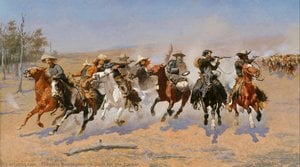
Frederic Remington’s “An Indian Trapper,” painted in 1889, isn't merely a depiction of a solitary figure on horseback; it’s a potent distillation of the burgeoning mythology surrounding the American West during a period of profound transformation. This oil-on-canvas masterpiece captures a moment suspended between tradition and encroaching modernity, embodying both the romanticized vision of frontier life and the unsettling reality of displacement for Native American communities.

The scene unfolds within a vast, rugged landscape—a palette dominated by ochre browns, deep blues, and muted greens. The composition is carefully constructed to emphasize the figure’s isolation and connection to his environment. A lone Native American man, clad in traditional buckskin garments and adorned with a distinctive headdress, surveys the horizon from atop a powerful chestnut horse. His posture exudes quiet confidence and an intimate understanding of the land—a stark contrast to the often-portrayed image of the savage or untamed wilderness.

Remington’s Technique: Bridging Realism and Romanticism

Remington, initially trained as a journalist and illustrator for dime novels, possessed a remarkable ability to synthesize observation with artistic license. “An Indian Trapper” exemplifies this approach. While rooted in meticulous detail—notice the texture of the buckskin, the muscular build of the horse, and the subtle nuances of light and shadow—the painting transcends simple realism. Remington employs a slightly heightened palette and dramatic lighting to evoke a sense of grandeur and timelessness, aligning with the conventions of Romanticism.

His brushwork is loose and expressive, particularly in the depiction of the landscape, suggesting movement and vastness. The horse’s powerful stride is rendered with dynamic energy, while the man's stillness conveys a deep connection to his surroundings. Remington masterfully utilizes color to create depth and atmosphere, drawing the viewer into the heart of the scene.

Symbolism and Historical Context

“An Indian Trapper” emerged during a critical juncture in American history—the late 19th century witnessed escalating conflicts between settlers and Native American tribes following westward expansion. Remington’s work, while often celebrated for its romanticized portrayal of the West, is inextricably linked to this complex historical context. The painting can be interpreted as both an endorsement of the frontier spirit and a subtle commentary on the displacement of indigenous populations.

The figure's solitary stance reflects the increasing isolation experienced by Native Americans as their traditional ways of life were disrupted. The headdress, a symbol of leadership and spiritual authority, subtly hints at the cultural heritage being lost in the face of assimilation. Remington’s decision to depict the man on horseback—a mode of transportation increasingly associated with settlers—underscores this shift.

Emotional Resonance: A Legacy of Interpretation

Despite its historical complexities, “An Indian Trapper” continues to resonate deeply with viewers today. The painting evokes a sense of melancholy and contemplation, prompting reflection on themes of identity, displacement, and the enduring relationship between humans and the natural world. It’s a powerful reminder of a vanishing way of life—a poignant testament to the beauty and tragedy inherent in America's westward expansion.

Reproductions of this iconic artwork offer an accessible means of experiencing Remington’s vision, allowing viewers to appreciate the artistry and historical significance of this enduring masterpiece. Its evocative imagery continues to captivate audiences seeking a glimpse into the heart of the American West.

Pitanja i odgovori

Mogu li da gledam "An Indian Trapper" kao prezentaciju preko celog ekrana?

Dostupna je i prezentacija slika: stranica Galerija slika za delo „An Indian Trapper”, autor Фредерик Ремингтон.

Gde se mogu kupiti ručno oslikane kopije dela „An Indian Trapper”, autor Фредерик Ремингтон?

Ručno oslikane kopije dela „An Indian Trapper”, autor Фредерик Ремингтон mogu se kupiti na stranici ovaj sajt: ručno oslikana uljana reprodukcija na lanenom platnu, putem njihove stranice za naručivanje reprodukcija Ručno oslikana reprodukcija ulja na platnu.

Koliko je izražen kontrast u delu „An Indian Trapper”, autor Фредерик Ремингтон?

Svetlo-tamni kontrast dela "An Indian Trapper" je označen kao Gentle. Kontrast opisuje stepen razlike između svetlih i tamnih površina.


Biografija umetnika

Хроничар Нестајућег Запада: Живот и Уметност Фредерика Ремингтона

Фредерик Сакридер Ремингтон, рођен у Кантону, Њујорк, 4. октобра 1861. године, није био продукт Дивљег Запада који је тако живописно приказивао; већ Источњак који је обликовао свој уметнички идентитет кроз фасцинацију и посвећено изучавање. Његово порекло указује на живот далеко од прашњавих стаза и кавалтеријских напада – француско-баскенске претке помешане са чврстим републиканским коренима Нове Енглеске, оца који је био пуковник у Грађанском рату и уредник новина, и везе са чувеном династијом Remington Arms кроз далеке рођаке. Ипак, рано излагање војној тематици, заједно са немиром и оштрим оком за приповедање, одвело га је на пут ка томе да постане вероватно најпрепознатљивији уметник Америчког Запада. Његово детињство се преселило у Блумингитон, Илиноис, па назад у Кантон и коначно Огденсбург, Њујорк, али његова машта је остала опседнута причама о животном стилу на граници. Иако је првобитно усмерен ка војној едукацији на Vermont Episcopal Institute, Ремингтонов прави позив није био у праћењу наређења, већ у посматрању и тумачењу света око себе кроз уметност. Кратко време проведено на Универзитету Јејл то је потврдило; фудбал и скицирање су имали много више апела него формално академско тежиште.

Од Илустратора до Сликара: Ковање Уметничке Визије

Ремингтонов уметнички пут није започео са великим платнима, већ са мастилом и папиром. Његов први објављени рад, карикатура за *Yale Courant*, сигнализирао је рану способност да зароби акцију и наратив. Кључно путовање у Монтану 1881. године запалило је његову доживотну опсесију Западом. Ово није било само туристички поглед; Ремингтон је тражио да се урони у културу, посматрајући каубоје, домороце и сам пејзаж. Првобитно је покушао са раничарењем и рударством, али то се није показало успешним, ослобађајући га да се потпуно посвети уметности. Вративши се на Исток, брзо се усталио као илустратор за часописе као што су *Harper's Weekly* и *Collier’s*, његове динамичне слике западних сцена очаравајући националну публику жедну прича о граници. Ове илустрације нису биле само извештај; били су прожети драмом, енергијом и романтизованом визијом Запада која је дубоко резонирала са јавним разумевањем. Кроз овај рад је Ремингтон усавршио своје вештине у композицији, хватању покрета и преношењу емоција – квалитетима који су касније дефинисали његова сликања. Примио је минималну формалну обуку осим неколико часова цртања на Јејлу и кратког периода на Art Students League, развијајући уместо тога препознатљив стил карактеризован енергичним потезима кистом, смелим бојама и фокусом на реализам помешан са драматичном страшћу.

Заробљање Нестајућег Света: Теме и Стил

Ремингтонова уметност је неодвојиво повезана са специфичним моментом у америчкој историји – сумраком Старог Запада. Његова платна су насељени иконичним фигурама: храбри каубоји који гоне стоку, стоички домороци који се суочавају са расељавањем, и војници америчке коњице укључени у херојске битке и трагичне конфликте. Није избегавао да прикаже тешке стварности живота на граници, али његов рад често тежи романтизованом приступу, истичући храброст, авантуру и судар култура. Његова сликања нису једноставно историјски документи; они су евокативни наративи који истражују теме хероизма, губитка и неизбежног марша прогреса. Ремингтонов стил се развијао током времена, прелазећи од чвршћих, академскијих рендеринга до лабављих, експресивнијих потеза кистом. Био је мајстор у хватању покрета – коњи који галопирају преко равница, каубоји који се боре са биковима, војници који нападају у битку. Често је користио брзе скице и фотографије као референтни материјал, али његова уметност је увек надмашила пуко имитирање, прожето његовом сопственом уникатном визијом и емоционалним интензитетом. Позната дела попут *My Ranch*, *Waiting in the Moonlight*, *Ridden Down* (1905) и *The Long-Horn Cattle Sign* (1908) оличавају његову способност да зароби величину и рањивост Америчког Запада.

Наслеђе и Трајан Утицај

Фредерик Ремингтон је изненада умро 1909. године у доби од 48 година, оставивши за собом огроман корпус дела који наставља да очарава публику данас. Његов утицај на западну уметност је неоспоран; он није само сликао Запад, већ је помогао да га *дефинише* за генерације Американаца. Установио је визуелни језик границе – иконографију каубоја, Индијанаца и коњице која је постала дубоко уграђена у популарној култури.
  • Његов рад је инспирисао безброј других уметника, укључујући Н.Ц. Вајета и Зејна Греја.
  • Музеј уметности Фредерика Ремингтона у Огденсбургу, Њујорк, служи као сведочанство његовог трајног наслеђа, чувајући опсежну збирку његових сликања, скулптура и архивског материјала.
  • Његова уметност се наставља излагати у главним музејима широм земље, укључујући Метрополитенски музеј уметности и Амон Картер музеј америчке уметности.
Ремингтонове слике, иако су понекад критиковане због романтизованог приказа Запада, нуде драгоцен увид у кључну еру у америчкој историји. Заробио је не само шта *је било*, већ и шта су људи *веровали* о Западу – његовим митовима, легендама и трајном привлачењу. Остаје моћан симбол америчког духа—хроничар нестајућег света који га је трансформисао у трајно уметничко наслеђе.
Фредерик Ремингтон

Фредерик Ремингтон

1861 - 1909 , Сједињене Америчке Државе

Osnovne informacije

  • Artistic Movement Or Style: Zapadnoamerička umetnost
  • Artists Or Movements Influenced By This Artist:
    • N.C. Wyeth
    • Zane Grey
  • Date Of Birth: 4. oktobar 1861.
  • Date Of Death: 26. decembar 1909.
  • Full Name: Frederic Sackrider Remington
  • Nationality: Amerikanac
  • Notable Artworks:
    • My Ranch
    • Waiting in the Moonlight
    • Ridden Down (1905)
  • Place Of Birth: Kanton, SAD