


Giclée štampa ili print na platnu muzejskog kvaliteta uz brzu proizvodnju i fleksibilne opcije završne obrade. ( Kupi ručno naslikanu sliku Kupi digitalnu sliku)
Izaberite jednu od naših unapred definisanih veličina koje odgovaraju originalnim proporcijama umetničkog dela.

Možete uneti sopstvene dimenzije kako biste umetničko delo prilagodili specifičnom okviru ili prostoru. Ako odabrani format ne odgovara proporcijama originalne slike, mi ćemo ili iscrtati deo dela ili proširiti sliku pomoću ogledane ivice ili jednobojnog popunjavanja. Digitalni prikaz će vam biti poslat na odobrenje pre početka proizvodnje.
Imajte na umu da pregled na ekranu ne odražava stvarno iscrtavanje ili proširivanje. Samo će prikaz (mockup) precizno pokazati finalnu kompoziciju.
Iako su prilagođene dimenzije dostupne, preporučujemo da odaberete dimenziju sa unapred definisane liste kako biste očuvali originalne proporcije.
Dostava širom sveta () za 2 nedelje umesto uobičajenih 4/5 nedelja. (6 септембар)


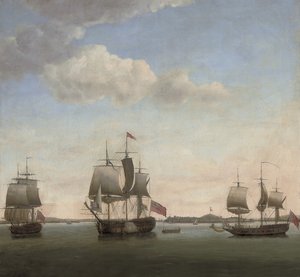
A Dockyard At Wapping
Dimenzije reprodukcije

Francis Holman, born in the coastal town of Ramsgate in 1729, was a British maritime painter whose meticulous depictions of ships and naval life cemented his place as a pivotal figure in eighteenth-century art. Though largely unrecognized during his lifetime—a regrettable oversight considering the enduring fascination with his canvases today—Holman’s legacy resides in his contribution to documenting the burgeoning Royal Navy and capturing the spirit of Britain's maritime dominance. He stands alongside Thomas Luny as one of the era’s most accomplished artists, demonstrating a remarkable ability to blend scientific observation with artistic sensitivity.
Holman’s upbringing was profoundly shaped by his father, Francis Holman Sr., a master mariner who instilled in him an unwavering appreciation for seafaring traditions and craftsmanship. His grandfather, a Ramsgate cooper—a profession deeply intertwined with the maritime economy—further solidified Holman's connection to the sea. This familial heritage undoubtedly fueled his artistic vision, informing his detailed renderings of vessels and their surroundings with unparalleled accuracy. He married Elizabeth, producing three sons, John, Francis, and another son who tragically perished in infancy. Subsequently, he remarried Jane Maxted around 1781, though no children were born from this union. Holman’s will penned in 1783 revealed a solitary existence, marking the final chapter of his life.
Holman's artistic journey commenced with an apprenticeship under Thomas Luny, a fellow painter who would become a celebrated maritime artist himself. This formative relationship fostered collaboration and honed Holman’s technique—particularly in capturing the dynamism of naval battles and the intricacies of shipyards. His early works focused on portraits of ships, commissioned by captains eager to commemorate their vessels. From 1768, he resided in several addresses within the Shadwell area of East London, positioned near Wapping and Blackwall Docks, which served as frequent subjects for his brush. These locations were the beating heart of British maritime commerce, providing him with a front-row seat to the construction and departure of great vessels.
His technical prowess is perhaps most evident in his ability to manipulate light and horizon. Drawing significant influence from Dutch sea painters such as Willem van de Velde the Younger, Holman often employed a low horizon line to emphasize the vastness of the sky and the imposing presence of the masts and rigging. His works are not merely records of wood and canvas but are atmospheric studies of movement and weather. Whether depicting the tranquil river traffic on the Thames or the chaotic intensity of naval engagements during the American War of Independence, Holman possessed a rare talent for conveying the weight of the sea and the tension of combat.
The historical importance of Francis Holman extends far beyond the aesthetic value of his oil paintings. He acted as a visual chronicler of an era when Britain was asserting its naval supremacy. His depictions of shipyards, such as the celebrated View of Blackwall Yard, provide invaluable insights into the industrial and maritime landscape of the eighteenth century. The enduring value of his work is reflected in the modern art market; for instance, his masterpiece of Blackwall Yard achieved a staggering sum at Christie’s in 2018, underscoring the continued reverence for his historical accuracy.
Throughout his career, Holman exhibited at prestigious venues including the Free Society of Artists and the Royal Academy, marking his ascent within the professional art community. His contribution to the genre of marine painting is characterized by several key elements:
Today, the works of Francis Holman are cherished not only as fine art but as essential historical documents. He remains a master of the maritime genre, an artist who looked upon the sea with both the eye of a scientist and the soul of a poet.
1729 - 1784 , United Kingdom

 Pregledaj u prostoru
 Pošalji
 Podeli
 Detalji o delu

 Преузми
 Slični predmeti
 Rendgenski snimak
 Slajdovi
 Pročitaj više




































 Opcija sa staklom dostupna je samo za dimenzije manje od 110 cm


