Prodajte svoju umetnost
x
Pređi na štampu Pređi na štampuPrebacite na sliku Prebacite na sliku PošaljiPošalji
Detalji o deluDetalji o delu Dodaj u omiljene Dodaj u omiljene ПреузмиПреузми Slični predmetiSlični predmeti SlajdoviSlajdovi

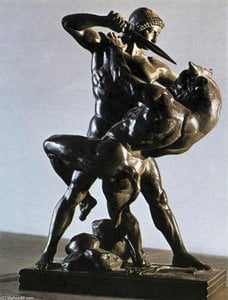
Heracles

Explore Émile Bourdelle’s ‘Heracles & Lion,’ a dynamic bronze sculpture embodying strength & classical form. Discover this powerful work of Greek mythology at the Musée Bourdelle.

Explore the monumental sculptures of Émile Antoine Bourdelle (1861-1929), a pivotal French artist bridging Rodin & modernism. Known for heroic figures, geometric forms, and powerful emotion. Discover his legacy at Musée Bourdelle & worldwide collecti

Ručno rađena uljana reprodukcija

Ručno oslikano uljanim bojama na platnu u dimenzijama i okviru po vašem izboru, izrađeno po porudžbini od strane naših umetnika. (Pređi na štampu Pređi na štampuPrebacite na sliku Prebacite na sliku)

Standard
custom
CM
INCH

Izaberite jednu od naših unapred definisanih veličina koje odgovaraju originalnim proporcijama umetničkog dela.

širina
visina

Можете унети сопствене димензије како бисте прилагодили дело одређеном оквиру или простору. Ако одабрана величина не одговара пропорцијама оригинала, слика ће бити исечена или проширена додатним елементима који се ручно насликавају. Дигитални prikaz ће вам бити послат на одобрење пре почетка производње.
Имајте на уму да преглед на екрану не одражава стварно исецање или проширење. Само приказ (mockup) ће тачно приказати коначну композицију.
Иако су доступне прилагођене величине, препоручујемо да одаберете димензију из дефинисане листе како бисте сачували оригиналне пропорције.

Primeri onoga što se može promeniti: Zamena lica fotografijom kupca; Dodavanje ljubimca (npr. zamena mačke psom); Uključivanje skrivene poruke u pozadini; Promena pejzaža ili elemenata pozadine.
Nakon narudžbine, tim WahooArt.com će klijentu putem e-pošte poslati uputstva i dostaviti prikaz predloženog rešenja

Isporuka širom sveta () za 3/4 nedelje umesto uobičajenih 5 nedelja. (11 август). Bez kompromisa po pitanju kvaliteta.

why_choose_icon
Besplatna ekspresna dostava širom sveta
why_choose_icon
Visokokvalitetno laneno platno
why_choose_icon
Kompletno osiguranje transporta
why_choose_icon
Garancija povraćaja carine i uvoznih dažbina
why_choose_icon
Garancija vernosti boja
why_choose_icon
Politika povrata u roku od 60 dana (samo u slučaju nedostataka)
why_choose_icon
Garancija povrata novca od 100%
why_choose_icon
Popust pri grupnoj kupovini

Ukupna cena

$ 272

reproduction

Heracles

Tehnika reprodukcije

Dimenzije reprodukcije

-

Konačna cena

$ 272

Osnovne informacije

  • Artist: Émile Antoine Bourdelle
  • Location: Musée Bourdelle
  • Artistic style: Classical, geometric forms
  • Medium: Bronze
  • Notable elements or techniques: Lost-wax casting, detailed texture
  • Title: Heracles
  • Year: 1909

Opis umetničkog dela

The Primal Struggle: A Masterpiece of Bronze and Bone

In the heart of the bronze medium lies a raw, unyielding energy that few artists can capture with such visceral precision as Émile Antoine Bourdelle. His sculpture, Heracles, is not merely a depiction of a mythological feat; it is a breathtaking embodiment of tension, movement, and the eternal struggle between civilization and the wild. As one gazes upon this powerful work, the eye is immediately drawn into the kinetic dance of the hero and the beast. The composition centers on the muscular, Herculean figure mid-action, his body a study in anatomical perfection and concentrated force. With his bow drawn and arrow aimed with lethal intent, Heracles represents the pinnacle of human resolve, while the massive lion below serves as a formidable, earthbound shadow of primal danger.

The artistry of Bourdelle shines through the masterful use of lost-wax casting, a technique that allows for an extraordinary level of detail and texture. The bronze surface is far from smooth; instead, it bears the intentional, rugged marks of the sculptor’s hand, creating a play of light and shadow that breathes life into the metal. These visible tool marks and deep undulations provide a sense of volume and realism that makes the musculature appear to pulse with blood. The interplay between the geometric strength of the lion's base and the fluid, rounded forms of the human anatomy creates a sophisticated visual rhythm, bridging the gap between classical stability and modern dynamism.

A Legacy of Heroism and Form

Rooted deeply in the traditions of Greek mythology, Heracles evokes the legendary triumph over the Nemean Lion, a story that has resonated through centuries of human storytelling. However, Bourdelle transcends mere illustration. Drawing inspiration from the monumental style of ancient Greek art, he utilizes strong, defined lines and a sense of architectural construction to elevate the subject matter. This is not just a scene from a myth; it is a symbolic representation of strength, courage, and the indomitable human spirit facing insurmountable adversity. For the discerning collector or interior designer, this piece offers more than decoration; it provides a focal point of profound emotional weight and historical gravity.

To possess a high-quality reproduction of such a significant work is to invite a sense of timelessness into a space. Whether placed in a grand library, a sophisticated study, or as a centerpiece in a contemporary gallery setting, the sculpture commands attention through its sheer presence. The rich, dark tones of the bronze and the dramatic silhouette of the figures create an atmosphere of intellectual depth and classical elegance. It serves as a constant reminder of the beauty found in struggle and the enduring power of heroic ideals, making it an incomparable addition to any curated collection of fine art.


Biografija umetnika

The Architect of Form: The Life and Legacy of Émile Antoine Bourdelle

Born in the historic landscape of Montauban in 1861, Émile Antoine Bourdelle emerged as a titan of French sculpture, a master who bridged the gap between the romantic fluidity of the nineteenth century and the structured rigor of modernism. His journey began not in the grand academies of Paris, but amidst the tactile reality of wood and grain, working as a woodcarver in his father’s cabinet-making shop from the tender age of thirteen. This early immersion in the physical properties of material would later define his sculptural language, imbuing his works with an inherent sense of structural integrity and a profound understanding of volume and mass.

After honing his drawing skills under the guidance of the founder of the Ingres Museum, Bourdelle sought formal training in Toulouse before securing a prestigious scholarship to the École des Beaux-Arts in Paris. It was in the vibrant, competitive atmosphere of the capital that his artistic identity truly began to crystallize. Working within the atelier of Alexandre Falguière and finding inspiration in the studio of Jules Dalou, Bourdelle developed a style that moved away from mere imitation toward a more profound, architectural expression. His 1888 sculptures of Beethoven served as a definitive turning point, showcasing an authoritative command over form that emphasized order, geometric spirit, and a revolutionary approach to construction.

A Symbiosis of Influence: From Rodin to Modernity

The trajectory of Bourdelle’s career was irrevocably altered when he joined the studio of Auguste Rodin in 1893. While many viewed him simply as an assistant, the relationship was one of profound mutual respect; Rodin himself became a great admirer of Bourdelle's unique ability to infuse monumental figures with both heroic strength and rhythmic grace. This period allowed Bourdelle to absorb the expressive vitality of Rodin while simultaneously carving out his own path toward a more structured, classical aesthetic. He did not merely follow the impressionistic textures of his mentor; instead, he sought a return to the permanence of ancient Greek and Roman archetypes, filtered through a twentieth-century lens.

As a teacher, Bourdelle’s influence was nothing short of monumental. His studio became a crucible for future generations of sculptors, where he imparted a philosophy that prioritized the internal logic of the sculpture over superficial detail. His pedagogical reach ensured that his emphasis on geometry, invention, and monumentality would ripple through the decades, influencing the development of Art Deco and the broader movement toward modern abstraction.

Monumental Achievements and Eternal Memory

Throughout his later years, Bourdelle’s work became synonymous with the public spirit of France. He received numerous prestigious commissions for war memorials and civic monuments, works that demanded a sense of timelessness and collective memory. His recognition by the French state was profound, marked by his elevation to Knight, Officer, and eventually Commander of the Legion of Honor. Beyond the borders of France, his participation in the landmark 1913 Armory Show in New York introduced his powerful, rhythmic compositions to an international audience, cementing his status as a pioneer of twentieth-century monumental sculpture.

The legacy of Bourdelle is preserved not only in bronze and stone scattered across the globe but also within the very walls of the Musée Bourdelle in Paris. This museum, housed in his former studio, serves as a sanctuary for his creative spirit, allowing visitors to walk through the space where he shaped the modern sculptural landscape. Though he passed away in 1929, his contribution to the evolution of form remains an indelible part of art history, characterized by:

  • Structural Integrity: A mastery of geometric construction that gave figures a sense of architectural permanence.
  • Heroic Expression: The ability to convey profound human emotion through powerful, larger-than-life compositions.
  • Historical Synthesis: A unique ability to blend classical tradition with the burgeoning energy of modernism.
  • Pedagogical Impact: A lasting influence on the sculptural community through his dedicated teaching and studio leadership.

Osnovne informacije

  • Artistic Movement Or Style: Monumental sculpture, Modernism
  • Artists Or Movements Influenced By This Artist: ['20th century monumental sculpture']
  • Artists Who Influenced This Artist:
    • Alexandre Falguière
    • Jules Dalou
  • Date Of Birth: October 30, 1861
  • Date Of Death: October 1, 1929
  • Full Name: Émile Antoine Bourdelle
  • Nationality: French
  • Notable Artworks: ['Beethoven']
  • Place Of Birth: Montauban, France