Pregledaj u prostoru Isprobaj u AR-u Naručite ručno oslikano reprodukciju Pređi na prodaju digitalnih slika Podeli
Detalji Vodič Dodaj u omiljene Preuzmi sliku Slični predmeti Rendgenski snimak Automatska prezentacija Statistika

Wendingen

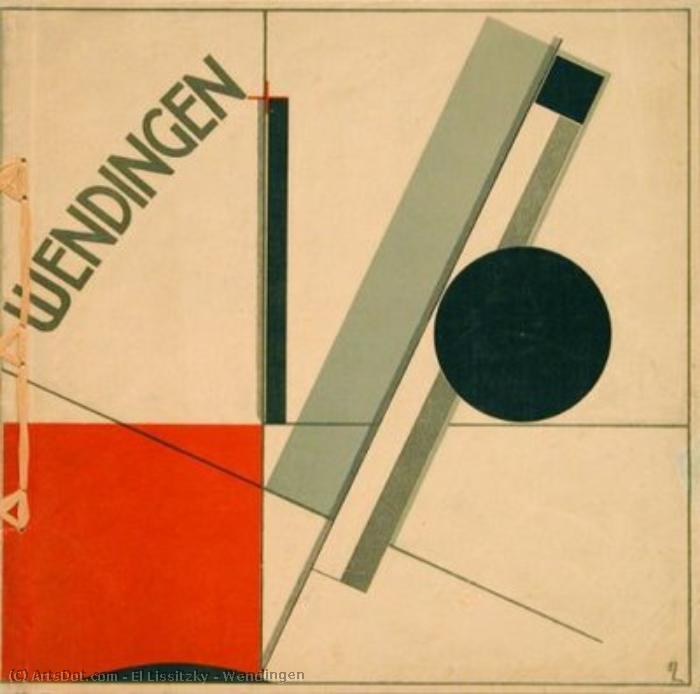
Explore El Lissitzky's 'Wendingen' (1921), a striking geometric abstraction blending Cubism & Constructivism. Featuring bold shapes, red accents, and stylized lettering.

El Lissitzky je ruski umetnik koji je poznat po svojim revolucionarnim idejama i inovacijama u oblasti grafičkog dizajna i arhitekture. Njegova dela uključuju Suprematizam, Proun i propagandne plakate koje su oblikovali umetnički svet 20. veka.

Giclee štampa / Umetnički otisak

Giclée štampa ili print na platnu muzejskog kvaliteta uz brzu izradu i raznovrsne opcije završne obrade. ( Naručite ručno oslikano reprodukciju Pređi na prodaju digitalnih slika)

Corner sample of the P118B picture frame: moulded polystyrene, 5 cm wide and 3 cm thick
P118B дин10
Corner sample of the P118H picture frame: moulded polystyrene, 5 cm wide and 3 cm thick
P118H дин10
Corner sample of the P118W picture frame: moulded polystyrene, 5 cm wide and 3 cm thick
P118W дин10
Corner sample of the P438Z picture frame: moulded polystyrene, 5.5 cm wide and 3.5 cm thick
P438Z дин10
Corner sample of the P508JH picture frame: moulded polystyrene, 7 cm wide and 3.5 cm thick
P508JH дин12
Corner sample of the P508YH picture frame: moulded polystyrene, 7 cm wide and 3.5 cm thick
P508YH дин12
Corner sample of the P805H picture frame: moulded polystyrene, 5 cm wide and 3.5 cm thick
P805H дин10
Corner sample of the P805Z picture frame: moulded polystyrene, 5 cm wide and 3.5 cm thick
P805Z дин10
Corner sample of the P919BZ picture frame: moulded polystyrene, 7 cm wide and 3.5 cm thick
P919BZ дин10
Corner sample of the P919G picture frame: moulded polystyrene, 7 cm wide and 3.5 cm thick
P919G дин10
Corner sample of the P919XJ picture frame: moulded polystyrene, 7 cm wide and 3.5 cm thick
P919XJ дин10
Corner sample of the P959ZH picture frame: moulded polystyrene, 5 cm wide and 3 cm thick
P959ZH дин10
Corner sample of the P968JZ picture frame: moulded polystyrene, 6 cm wide and 4 cm thick
P968JZ дин12
Corner sample of the W106C picture frame: solid wood, 5 cm wide and 3 cm thick
W106C дин8
Corner sample of the W218G picture frame: solid wood, 5 cm wide and 3 cm thick
W218G дин10
Corner sample of the W218JH picture frame: solid wood, 5 cm wide and 3 cm thick
W218JH дин8
Corner sample of the W218Y picture frame: solid wood, 5 cm wide and 3 cm thick
W218Y дин10
Corner sample of the W307PJ picture frame: solid wood, 6 cm wide and 3 cm thick
W307PJ дин10
Corner sample of the W316G picture frame: solid wood, 6 cm wide and 3 cm thick
W316G дин10
Corner sample of the W316PJ picture frame: solid wood, 6 cm wide and 3 cm thick
W316PJ дин8
Corner sample of the W316Y picture frame: solid wood, 6 cm wide and 3 cm thick
W316Y дин10
Corner sample of the W398PJ picture frame: solid wood, 5 cm wide and 3 cm thick
W398PJ дин8
Corner sample of the W4111J picture frame: solid wood, 6.5 cm wide and 3.5 cm thick
W4111J дин10
Corner sample of the W500HY picture frame: solid wood, 7 cm wide and 5 cm thick
W500HY дин15
Corner sample of the W500JH picture frame: solid wood, 7 cm wide and 5 cm thick
W500JH дин15
Corner sample of the W692G picture frame: solid wood, 8 cm wide and 4 cm thick
W692G дин12
Corner sample of the W849H picture frame: solid wood, 5 cm wide and 3 cm thick
W849H дин8
Corner sample of the W940BG picture frame: solid wood, 7.5 cm wide and 4.5 cm thick
W940BG дин15
Corner sample of the W953PJ picture frame: solid wood, 6 cm wide and 3.5 cm thick
W953PJ дин8

Standardne dimenzije
po meri
CM
INCH

Izaberite jednu od naših unapred definisanih veličina koje odgovaraju originalnim proporcijama umetničkog dela.

širina
visina

Možete uneti sopstvene dimenzije kako biste umetničko delo prilagodili specifičnom okviru ili prostoru. Ako odabrani format ne odgovara proporcijama originalne slike, mi ćemo ili iscrtati deo dela ili proširiti sliku pomoću ogledane ivice ili jednobojnog popunjavanja. Digitalni prikaz će vam biti poslat na odobrenje pre početka proizvodnje.
Imajte na umu da pregled na ekranu ne odražava stvarno iscrtavanje ili proširivanje. Samo će prikaz (mockup) precizno pokazati finalnu kompoziciju.
Iako su prilagođene dimenzije dostupne, preporučujemo da odaberete dimenziju sa unapred definisane liste kako biste očuvali originalne proporcije.

Dostava širom sveta () za 2 nedelje umesto uobičajenih 4/5 nedelja. (9 октобар)

Besplatna ekspresna dostava širom sveta
Visokokvalitetno laneno platno
Sveobuhvatno osiguranje transporta
Garancija povraćaja carine i uvoznih dažbina
Garancija vernosti boja i autentičnosti pri reprodukciji
Politika povraćaja u roku od 100 dana (samo u slučaju nedostataka)
Garancija povrata 100% novca
Popust pri većoj količini

Ukupna cena

дин 6865

Wendingen

Giclee štampa / Umetnički otisak

Veličina reprodukcije

-

Ukupna cena

дин 6865

Brzi pregled

  • Title: Wendingen
  • Year: 1921
  • Influences: Bauhaus
  • Artistic style: Geometric abstraction
  • Artist: El Lissitzky
  • Notable elements or techniques:
    • Sharp angles
    • Flat planes
    • Intersecting lines
    • Right angles

Kviz o umetnosti

Svako pitanje ima samo jedan tačan odgovor.

Pitanje 1:
What artistic movements significantly influenced El Lissitzky’s ‘Wendingen’?
Pitanje 2:
The artwork prominently features a neutral background color. Which color is it primarily?
Pitanje 3:
What does the lettering ‘WENDINGEN’ integrated into the composition signify?
Pitanje 4:
What is the primary technique used in creating the shapes and lines within ‘Wendingen’?
Pitanje 5:
In what year was 'Wendingen' created?

El Lissitzky's "Wendingen": A Geometric Symphony of Form and Space

  • Overview: El Lissitzky’s “Wendingen,” created in 1921, is a striking example of early abstract art, deeply rooted in the Constructivist and Suprematist movements. This artwork isn't merely a painting but a cover design for the Dutch magazine "Wendingen," dedicated to modern architecture and design. It embodies Lissitzky’s vision of “Proun,” a concept aiming to synthesize architecture, engineering, and art into a dynamic visual language.

Subject Matter & Style: A Dialogue Between Geometry and Dynamism

  • Abstract Composition: The artwork eschews representational imagery, instead presenting a purely abstract composition of geometric forms. Sharp angles, intersecting lines, and flat planes dominate the canvas, creating a sense of structured dynamism. Rectangles, circles, and diagonal lines interact to generate spatial tension and visual pathways.
  • Constructivist & Suprematist Influences: "Wendingen" clearly reflects the principles of Constructivism, emphasizing functional design and geometric abstraction. It also draws from Suprematism, Malevich’s movement focused on pure artistic feeling through basic geometric forms. Lissitzky's unique approach integrates these influences, creating a style that is both rigorously structured and emotionally resonant.
  • The "Wendingen" Magazine Context: The piece was designed as a cover for a magazine dedicated to modern architecture. This context highlights the artwork’s purpose: not just aesthetic beauty but also communication and visual impact within a design-focused publication. The stylized lettering of “WENDINGEN” integrated into the composition further emphasizes this functional aspect.

Technique & Materials: Precision and Clarity

  • Lithography on Paper: Lissitzky employed lithography, a printing technique that allows for precise lines and tonal variations. This method was ideal for reproducing the artwork’s sharp geometric forms and limited color palette.
  • Color Palette & Texture: The color scheme is deliberately restrained, featuring strong contrasts between red, gray, black, and beige against a neutral background. This simplicity enhances the clarity of the geometric shapes and prevents visual clutter. The texture appears smooth and flat, characteristic of a printed surface.

Historical Context & Symbolism: A Vision for a New Era

  • Post-War Reconstruction: Created in 1921, "Wendingen" emerged from the aftermath of World War I and the Russian Revolution. It reflects the era’s desire for radical change and innovation across all fields – art, architecture, and society.
  • Proun Concept: Lissitzky's “Proun” concept aimed to transcend traditional artistic boundaries by uniting art, technology, and architecture. "Wendingen" serves as a visual manifestation of this ambition, suggesting a harmonious integration of these disciplines.
  • Symbolic Interpretation: The artwork’s geometric forms can be interpreted as symbols of progress, order, and the potential for a new, rational world. The dynamic arrangement of shapes suggests movement and energy, reflecting the optimism and forward-looking spirit of the early 20th century.

Emotional Impact & Legacy: A Timeless Expression of Modernity

  • Visual Harmony: Despite its abstract nature, "Wendingen" evokes a sense of visual harmony and balance. The carefully arranged geometric forms create a pleasing composition that is both intellectually stimulating and aesthetically satisfying.
  • Influence on Design: Lissitzky’s work has had a lasting impact on graphic design, typography, and architectural aesthetics. "Wendingen" remains an iconic example of early modernism, inspiring generations of artists and designers.

Pitanja i odgovori

U kojim godinama je Ел Лисицкий stvorio/la "Wendingen"?

Ел Лисицкий je imao/la 31 godina kada je kreirao/la "Wendingen" u 1921. Godina je izračunata na osnovu godine rođenja umetnika, 1890.

Kakvo je istorijsko mesto dela "Wendingen"?

„Wendingen”, Ел Лисицкий pripada pravcu Constructivism, unutar perioda Modernizam. Zajedno, oni delu daju njegovo mesto u istoriji umetnosti.

Iz kog istorijskog perioda potiče „Wendingen”, Ел Лисицкий?

Delo „Wendingen”, Ел Лисицкий pripada periodu Modernizam. Ovaj period pruža istorijski kontekst dela.

Koji su datum nastanka i stil dela „Wendingen”, Ел Лисицкий?

„Wendingen”, Ел Лисицкий je datirano 1921 i pripada pravcu Constructivism.

Ko je umetnik koji stoji iza dela "Wendingen"?

Umetnik koji stoji iza dela "Wendingen" je Ел Лисицкий. Delo je katalogizovano pod imenom umetnika Ел Лисицкий.

U kojoj godini je nastalo delo „Wendingen”, Ел Лисицкий?

Datum nastanka dela „Wendingen”, Ел Лисицкий je 1921.

Koja je dominantna boja dela „Wendingen”, Ел Лисицкий?

Haki (#e6c596) je dominantna boja dela „Wendingen”, Ел Лисицкий.


Biografija umetnika

El Lissitzky (1890–1941): Russian Avant-garde Artist & Designer

El Lissitzky, born Lazar Markovich Lissitzky in 1890 in the small Russian town of Pochinok, near Smolensk, Russia, emerged as a pivotal figure in the tumultuous landscape of early 20th-century art. His journey was one of constant reinvention, driven by a fervent belief in the power of art to shape society and reflect the dynamism of the modern world. From his initial training as an architect and engineer – pursuits hampered by restrictions placed upon Jewish students – Lissitzky’s path diverged towards artistic expression, initially through illustrations steeped in Jewish folklore. These early works, like his cover for ‘Chad Gadya’, reveal a nascent talent already grappling with narrative and visual storytelling, hinting at the profound cultural roots that would continue to inform his aesthetic. A move to Berlin and Darmstadt broadened his horizons, but it was upon returning to Russia that Lissitzky truly found his artistic voice, becoming inextricably linked with the revolutionary fervor sweeping through the nation.

Early Years & Artistic Formation

Lazar Markovich Lissitzky’s formative years were marked by a profound engagement with Jewish culture and tradition. Born into a family of intellectuals—his father Mordukh Zalmanov was a well-educated travel agent who possessed fluency in English and German—Lissitzky benefited from an upbringing that fostered intellectual curiosity and artistic appreciation. He began his formal education at the age of 15, maintaining a teaching career for most of his life, demonstrating a lifelong dedication to disseminating knowledge and fostering creativity. His initial training encompassed architecture and engineering, disciplines that would later inform his groundbreaking approach to design—a perspective shaped by limitations imposed upon Jewish students during Tsarist Russia. Recognizing the importance of visual storytelling, Lissitzky turned to illustration, producing evocative images rooted in Yiddish folklore, notably his celebrated cover for ‘Chad Gadya’ (1917), a poignant retelling of the Passover seder song “One Kid.” This early work foreshadowed Lissitzky's distinctive style—a fusion of Cubo-Futurism and Jewish symbolism—establishing him as an artist deeply attuned to cultural heritage. His travels to Germany, France, Italy, and Belgium broadened his artistic horizons and exposed him to influential European movements.

The Suprematist Revolution & Kazimir Malevich’s Influence

A transformative encounter occurred in Vitebsk (now Vitsyebsk), Belarus, where Lissitzky encountered Kazimir Malevich—the architect of Suprematism, a radical movement dedicated to pure geometric abstraction. This meeting ignited Lissitzky's passion for abstraction and cemented his allegiance to Malevich’s uncompromising vision. Together with Malevich and fellow artists, Lissitzky established UNovis (UNOVIS), Vitebsk Group of Constructive Artists—a collective committed to disseminating Suprematist principles through teaching and artistic production. Lissitzky didn’t merely replicate Malevich's style; he forged his own distinctive path, developing *Proun*, a series that blended Suprematism with Constructivism—a daring experiment in spatial representation and architectural design. Proun challenged conventional notions of painting and sculpture, striving to capture the essence of space itself through dynamic compositions featuring intersecting planes and geometric forms. Lissitzky’s unwavering belief in art as a catalyst for social transformation fueled his artistic endeavors—a conviction that would resonate throughout his career. Malevich's influence extended beyond stylistic considerations; it instilled in Lissitzky a fundamental ethos centered on intellectual rigor, uncompromising honesty, and the pursuit of universal visual language.

Proun: Spatial Exploration & Architectural Vision

The Proun series represents Lissitzky’s most ambitious exploration of spatial relationships—a bold assertion that art could transcend representational limitations and engage with the very structure of space itself. Departing from traditional painting techniques, Lissitzky employed a unique method combining drawing, painting, sculpture, and architectural design—a holistic approach reflecting his conviction that artistic expression should encompass multiple dimensions. Proun’s geometric forms—primarily squares, rectangles, circles, and triangles—were arranged in complex configurations that resembled architectural blueprints or exploded diagrams—visual representations of spatial transformations. Lissitzky reasoned that the future of art lay in its ability to harmonize with architecture—a vision articulated eloquently in his manifesto “The Space Must Be a Kind of Showcase…” He sought to create environments that fostered contemplation and inspired innovation—challenging established conventions regarding gallery spaces and promoting a new aesthetic sensibility rooted in geometric abstraction. Lissitzky’s Proun series stands as a testament to his intellectual curiosity, artistic daring, and unwavering commitment to pushing the boundaries of visual expression—a legacy that continues to inspire artists and designers worldwide.

Typography, Exhibition Design & Propaganda: Artistic Engagement

Beyond his pioneering explorations of spatial representation, Lissitzky revolutionized typography—creating innovative fonts and graphic designs that conveyed complex ideas with clarity and elegance. He recognized that effective communication demanded meticulous attention to visual form—a conviction that guided his work on posters, books, and exhibition displays—often serving as a visual communicator for Soviet propaganda efforts. Lissitzky’s masterful use of color, shape, and text—combined with an uncompromising commitment to social responsibility—established him as one of the foremost designers of his era. His iconic poster “The Constructor” (1924)—a striking depiction of a stylized hammer and sickle—became emblematic of Soviet ideology—a powerful visual statement reflecting the nation’s aspirations for industrial progress and collective action. Lissitzky's exhibition designs—particularly those conceived for the Bauhaus in Weimar—challenged conventional gallery spaces—creating immersive environments that actively engaged viewers—promoting a new aesthetic sensibility rooted in geometric abstraction and functionalism. His work profoundly influenced subsequent generations of artists and designers—solidifying his place as a visionary who reshaped the visual landscape of the 20th century. Lissitzky’s legacy extends far beyond his artistic creations—serving as an inspiration for those striving to harness art's transformative potential—a testament to his enduring influence on cultural discourse and aesthetic innovation.
Ел Лисицкий

Ел Лисицкий

1890 - 1941 , Руси́я

Brzi pregled

  • Artistic Movement Or Style:
    • Suprematism
    • Konstruktivizam
  • Artists Or Movements Influenced By This Artist: ['Bauhaus']
  • Artists Who Influenced This Artist: ['Kazimir Malevich']
  • Date Of Birth: Nov 23, 1890
  • Date Of Death: Dec 30, 1941
  • Full Name: El Lissitzky
  • Nationality: Rusija
  • Notable Artworks:
    • Izgraditel'
    • Pokrov
  • Place Of Birth: Pochinok, Russia
Istražite umetnička dela organizovana prema temama, stilovima i karakteristikama.