Pregledaj u prostoru Isprobaj u AR-u Naručite ručno oslikano reprodukciju Pređi na prodaju digitalnih slika Podeli
Detalji Vodič Dodaj u omiljene Preuzmi sliku Slični predmeti Rendgenski snimak Automatska prezentacija Statistika

untitled (5171)

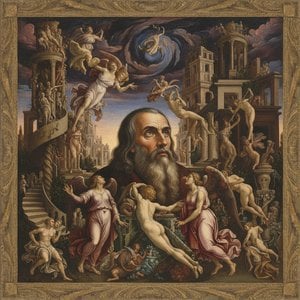
El Greco’s haunting black and white portrait captures the solemn gaze of two men draped in robes, embodying Byzantine tradition blended with Spanish fervor. This evocative depiction from the Baroque era invites contemplation on faith and history – explore a timeless masterpiece.

El Greco, grčki slikar španske renesanse, poznat po dramatičnim kompozicijama, izduženim figurama i religijskim temama. Otkrijte 'Sahranu grofa Orgaza' i ostala remek-dela ovog vizionara!

Giclee štampa / Umetnički otisak

Giclée štampa ili print na platnu muzejskog kvaliteta uz brzu izradu i raznovrsne opcije završne obrade. ( Naručite ručno oslikano reprodukciju Pređi na prodaju digitalnih slika)

Corner sample of the P118B picture frame: kaljeni polistiren, 5 cm wide and 3 cm thick
P118B дин10
Corner sample of the P118H picture frame: kaljeni polistiren, 5 cm wide and 3 cm thick
P118H дин10
Corner sample of the P118W picture frame: kaljeni polistiren, 5 cm wide and 3 cm thick
P118W дин10
Corner sample of the P438Z picture frame: kaljeni polistiren, 5.5 cm wide and 3.5 cm thick
P438Z дин10
Corner sample of the P508JH picture frame: kaljeni polistiren, 7 cm wide and 3.5 cm thick
P508JH дин12
Corner sample of the P508YH picture frame: kaljeni polistiren, 7 cm wide and 3.5 cm thick
P508YH дин12
Corner sample of the P805H picture frame: kaljeni polistiren, 5 cm wide and 3.5 cm thick
P805H дин10
Corner sample of the P805Z picture frame: kaljeni polistiren, 5 cm wide and 3.5 cm thick
P805Z дин10
Corner sample of the P919BZ picture frame: kaljeni polistiren, 7 cm wide and 3.5 cm thick
P919BZ дин10
Corner sample of the P919G picture frame: kaljeni polistiren, 7 cm wide and 3.5 cm thick
P919G дин10
Corner sample of the P919XJ picture frame: kaljeni polistiren, 7 cm wide and 3.5 cm thick
P919XJ дин10
Corner sample of the P959ZH picture frame: kaljeni polistiren, 5 cm wide and 3 cm thick
P959ZH дин10
Corner sample of the P968JZ picture frame: kaljeni polistiren, 6 cm wide and 4 cm thick
P968JZ дин12
Corner sample of the W106C picture frame: masivno drvo, 5 cm wide and 3 cm thick
W106C дин8
Corner sample of the W218G picture frame: masivno drvo, 5 cm wide and 3 cm thick
W218G дин10
Corner sample of the W218JH picture frame: masivno drvo, 5 cm wide and 3 cm thick
W218JH дин8
Corner sample of the W218Y picture frame: masivno drvo, 5 cm wide and 3 cm thick
W218Y дин10
Corner sample of the W307PJ picture frame: masivno drvo, 6 cm wide and 3 cm thick
W307PJ дин10
Corner sample of the W316G picture frame: masivno drvo, 6 cm wide and 3 cm thick
W316G дин10
Corner sample of the W316PJ picture frame: masivno drvo, 6 cm wide and 3 cm thick
W316PJ дин8
Corner sample of the W316Y picture frame: masivno drvo, 6 cm wide and 3 cm thick
W316Y дин10
Corner sample of the W398PJ picture frame: masivno drvo, 5 cm wide and 3 cm thick
W398PJ дин8
Corner sample of the W4111J picture frame: masivno drvo, 6.5 cm wide and 3.5 cm thick
W4111J дин10
Corner sample of the W500HY picture frame: masivno drvo, 7 cm wide and 5 cm thick
W500HY дин15
Corner sample of the W500JH picture frame: masivno drvo, 7 cm wide and 5 cm thick
W500JH дин15
Corner sample of the W692G picture frame: masivno drvo, 8 cm wide and 4 cm thick
W692G дин12
Corner sample of the W849H picture frame: masivno drvo, 5 cm wide and 3 cm thick
W849H дин8
Corner sample of the W940BG picture frame: masivno drvo, 7.5 cm wide and 4.5 cm thick
W940BG дин15
Corner sample of the W953PJ picture frame: masivno drvo, 6 cm wide and 3.5 cm thick
W953PJ дин8

Standardne dimenzije
po meri
CM
INCH

Izaberite jednu od naših unapred definisanih veličina koje odgovaraju originalnim proporcijama umetničkog dela.

širina
visina

Unesite širinu i visinu koja vam je potrebna, kako bi se uklopili u vaš ram ili na vaš zid. Štampa se može samo iseći, nikada ne može biti veća od originalne slike, stoga format sa drugačijim proporcijama gubi deo slike. Poslaćemo vam digitalni prikaz radi potvrde pre nego što započnemo štampu. Slika prikazana na ovoj stranici ne pokazuje stvarni rez — to pokazuje samo digitalni prikaz.

Dostava širom sveta () za 2 nedelje umesto uobičajenih 4/5 nedelja. (23 октобар)

Besplatna ekspresna dostava širom sveta
Visokokvalitetno laneno platno
Sveobuhvatno osiguranje transporta
Garancija povraćaja carine i uvoznih dažbina
Garancija vernosti boja i autentičnosti pri reprodukciji
Politika povraćaja u roku od 100 dana (samo u slučaju nedostataka)
Garancija povrata 100% novca
Popust pri većoj količini

Ukupna cena

дин 6993

untitled (5171)

Giclee štampa / Umetnički otisak

Veličina reprodukcije

-

Ukupna cena

дин 6993

Brzi pregled

  • Artistic style: Expressive; stylized
  • Subject or theme: Religious portraiture
  • Title: untitled (5171)
  • Medium: Oil on canvas
  • Movement: Spanish Mannerism

A Vision in Monochrome: The Enigmatic Presence of El Greco

In the quiet, shadowed corridors of art history, few works possess the haunting, spectral allure of Untitled (5170). This striking monochrome portrait by the master Doménikos Theotokópoulos, known eternally as El Greco, invites the viewer into a realm where the boundaries between the physical and the spiritual begin to dissolve. At first glance, the painting presents two figures standing shoulder to shoulder, their forms rendered in a sophisticated palette of greys and deep blacks. There is an undeniable gravity to their presence; they stand as silent sentinenes against a muted, textured wall, their gaze fixed upon something unseen by the spectator. Whether they are contemplating a sacred text or lost in a moment of profound religious devotion, their stillness commands a contemplative silence that resonates long after one turns away.

The composition is masterfully balanced, utilizing the stark contrast of light and shadow to sculpt the figures from the darkness. One man, marked by the wisdom of a well-groomed beard, stands alongside his companion, whose smoother features suggest a different stage of life or perhaps a different station within their mysterious order. Their attire—heavy, flowing robes reminiscent of ancient togas—hints at a connection to the classical world or a high-ranking religious brotherhood. This sense of historical weight is further enhanced by the subtle presence of a chair tucked near the edge of the frame, a small domestic detail that grounds these ethereal beings in a tangible, albeit somber, reality.

The Alchemy of Style: Byzantine Roots and Baroque Drama

To understand the technical brilliance of this piece, one must look to the unique artistic lineage of El Greco himself. Born in Crete under Venetian rule, the artist was a bridge between worlds. This painting serves as a breathtaking synthesis of his Byzantine heritage and the burgeoning Baroque movement. From his early training, he retained a profound respect for the symbolic clarity and meticulous detail found in Eastern iconography. However, he infused this tradition with a dramatic, almost restless energy. Through the masterful application of sfumato, El Greco softens the edges of reality, allowing the contours of the figures to bleed subtly into the background. This technique creates an atmospheric, dreamlike quality that is essential to the painting's emotional impact.

The artist’s signature use of elongated proportions—a hallmark of his mature style—is present here in a more restrained, monochromatic form. These stretched silhouettes do not merely serve a stylistic purpose; they act as visual metaphors for spiritual elevation, pulling the viewer's eye upward and away from the mundane. For the collector or interior designer, this technique offers a unique way to introduce movement and verticality into a space. The interplay of light across the folds of the robes creates a rhythmic texture that provides depth to any wall, making it an ideal centerpiece for rooms designed for reflection, study, or sophisticated conversation.

A Legacy of Mystery for the Modern Collector

Beyond its technical merits, Untitled (5170) carries a profound emotional weight. It is a work that thrives on ambiguity, making it a timeless addition to any curated collection. The painting does not provide easy answers; instead, it poses questions about identity, faith, and the passage of time. This sense of mystery is precisely what makes El Greco’s work so enduringly relevant in contemporary interior design. In an era of visual noise, the monochromatic serenity of this portrait offers a sanctuary of calm.

Integrating a high-quality reproduction of such a masterpiece allows one to bring the historical gravity of 16th-century Toledo into a modern setting. Whether placed in a minimalist gallery-style living room or a richly textured library, the painting acts as an anchor of sophistication. It is more than mere decoration; it is an invitation to engage with the ghosts of the past and to find beauty in the shadows. For those seeking to adorn their homes with art that inspires deep thought and aesthetic reverence, this work by El Greco remains an incomparable choice.

Pitanja i odgovori

Na koji način „untitled (5171)”, Ел Греко povezuje Spanish Mannerism sa domovinom umetnika?

Delo "untitled (5171)" delo je Ел Греко, rođenog u Grčka, u okviru pokreta Spanish Mannerism. Poreklom umetnika, ovo delo se povezuje sa Spanish Mannerism stilom kakav su zastupali umetnici iz Grčka.

U kom delu doma bi se reprodukcija dela "untitled (5171)" lepo uklopila?

„untitled (5171)”, Ел Греко se preporučuje za Living Room. Ovaj predlog je zasnovan na temi, bojama i raspoloženju dela.

Da li je „untitled (5171)”, Ел Греко u javnom vlasništvu?

Što se tiče autorskih prava, "untitled (5171)" je u javnom vlasništvu – autorska prava su istekla.


Biografija umetnika

Доменикос Теотокoполос, познат као Ел Греко: Живот изграђен вером и пламеном

Доменикос Теотокoполос, свету познатији као Ел Греко – „Грк“ – био је сликар чији живот и дело надмашују лаке категоризације. Рођен 1541. године на острву Крит, тада под влашћу Венеције, његово уметничко путовање га је одвело преко Венеције и Рима, да би свој највећи израз доживео у духовном срцу Шпаније: Толеду. Ел Греко није био само производ ових места; он је синтетизовао њихове утицаје у нешто сасвим јединствено, стил који је најављивао емоционалну интензивност експресионизма и фрагментиране облике кубизма вековима касније. Његов рани тренинг у византијској традицији усадио му је пажњу за детаље и дубоко разумевање религиозне иконографије. Ова основа, међутим, није га ограничила. Подносио је своја дела на грчком, често додајући „Krḗs“ – Критски – као поносан израз свог порекла, чак док се упуштао у нове уметничке територије. Семена његовог препознатљивог стила била су посејана не само у техници, већ и у жутој религијској клими своје домовине и богатом тесању венецијанске уметности.

Од Венеције до Толеда: Трансформација

Прелазак у Венецију око 1567. године означио је преломни тренутак. Укључен у нагли уметнички поглед, Ел Греко је проучавао мајсторе – Тицијан, Тинторето, Веронезе – апсорбујући њихову способност боје, композиције и драматичног осветљења. Научио је да пусти свој четкицу, да пригрли сензуалност уљне боје и да прикаже фигуре са новом динамиком. Овај венецијански утицај видљив је у раним делима као што је *Свети Себастијан* (1600), где се анатомски детаљи беспрекорно мешају са готово позоришним коришћењем светлости и сенке. Наредна станица у Риму представила га је мањеризму, стилу карактерисаном дугачким облицима, изобличеним перспективама и софистицираним композицијама. Иако је показао значајан таленат, Ел Греко је имао потешкоћа да добије широку признавање у конкурентном римском свету уметности. Управо његов прелазак у Толедо 1577. године коначно је омогућио напретку његове јединствене визије. Град, тада средиште верске жуте током Контрареформације, пружио је и покровитељство и атмосферу повољну за његову интензивно религиозну слику.

Стил без премца

Уметнички стил Ел Грека одмах се препознаје – и сасвим задивљује. Његове фигуре су често драматично издужене, тела истегнута и искривљена у позе које преносе осећај духовне ектaзе или дубоке патње. Ово није једноставно стилско лудило; то је покушај да се прикаже непознато, емоционална и духовна реалност која лежи изван површине ствари. Мајсторски је користио боју – не нужно реалистичну боју, већ живе, често неуобичајене нијансе – како би појачао емотивни утисак свог рада. Драматично осветљење, са оштрим контрастом између светлости и сенке, ствара позоришни ефекат, увлачећи посматрача у срце сцене. *Полагање грофа од Оргаза* (1586-1588), сматра се његовим мајсторским делом, савршено илуструје ове особине. Слика приказује чудесни догађај – силазак светих да сахране благочестивог племића – са изузетном реалистичношћу у приказу савремених фигура поред етеричних, издужених облика који представљају божанску интервенцију. Он је спојио византијске традиције са техникама ренесансе, стварајући стил који је био иновативан и дубоко личан. Његова каснија дела постала су све мистичнија, одражавајући његове сопствене дубоке верске убеђења и растуће дистанцирање од уобичајених уметничких норми.

Заоставштина и поновно откривање

Упркос значајном успеху који је постигао током свог живота – добијајући важне поруџбине од цркава и манастира у Толеду – рад Ел Грека пао је у релативну заборав након његове смрти 1614. године. Вековима је био углавном преглеђен од стране историчара уметности, одбачен као ексцентричан или провинцијски уметник. Једва је у 20. веку почела да се цени његова генијалност. Уметници попут Пикаса и Брака препознали су га као претечу модерне уметности, посебно кубизма, дивећи му се изобличеним облицима и неуобичајеним перспективама. Његов експресионистички стил резоновао је са експресионистима који су тражили да пренесу емоционалну интензивност смелим бојама и драматичним композицијама. Данас се Ел Греко слави као једна од најважнијих фигура у западном свету уметности – визионарски сликар чије дело наставља да задивљује публику својом духовном дубином, емотивном моћи и јединственом уметничком визијом. Његове слике нису само репрезентације религиозних сцена; они су прозори у душу, сведочанства о трајној моћи вере и прославе способности човечког духа за надраштавање.

Истакнути радови

  • Полагање грофа од Оргаза (1586-1588): Његово неспорно мајсторско дело, монументално дело које спојава реализам и духовну интензивност.
  • Пут до Толеда (1596-1600): Драматичан пејзаж који приказује град у вртложачном, атмосферском стилу, хватајући његову суштину са готово визионарском квалитетом.
  • Отварање петтег печата (1608-1614): Део серије инспирисане Књигом Откривања, ова слика илуструје Ел Грекову апокалиптичну визију и његову способност драматичне композиције.
  • Свети Себастијан (1600): Моћна представа свеца, која комбинује анатомске детаље са позоришним осветљењем и емоционалном интензивношћу.
  • Есполио (Основни део Христа) (1577-1579): Рано дело које приказује његове венецијанске утицаје и драматичну употребу боја и светлости.
Ел Греко

Ел Греко

1541 - 1614 , Grčka

Brzi pregled

  • Datum Rođenja: 1 oktobar 1541.
  • Datum Smrti: 7 april 1614.
  • Mesto Rođenja: Krita, Grčka
  • Nacionalnost: Grk-Španski
  • Pokreti Pod Uticajem:
    • Ekspresionizam
    • Kubizam
  • Puno Ime: Domenikos Teotokópoulos
  • Umetnički Pokret: Manirizam, Barok
  • Uticajni Umetnici:
    • Titian
    • Tintoretto
  • Značajna Dela:
    • Sahranjivanje grofa Orgaza
    • Pogled na Toledo
    • El Espolio
    • Sveti Sebastijan
Istražite umetnička dela organizovana prema temama, stilovima i karakteristikama.