Pregledaj u prostoru Isprobaj u AR-u Pređi na prodaju štampanih primeraka Pređi na prodaju digitalnih slika Podeli
Detalji Vodič Dodaj u omiljene Preuzmi sliku Slični predmeti Rendgenski snimak Automatska prezentacija Statistika

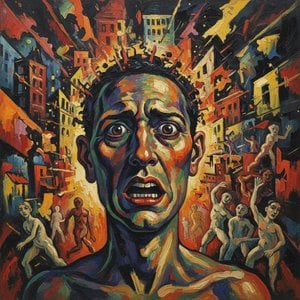
Prophets (also known as Double Self Portrait)

Explore Egon Schiele’s "Prophets" – a haunting Expressionist self-portrait of raw emotion & psychological turmoil. Thick impasto, angular lines, and earthy tones capture intense anxiety. #art #expressionism #schiele

Истражите емоционално богату експресионистичку уметност Егона Шилеа (1890-1918): јаке портрети, психолошке теме и јединствене линије. Откријте репродукције сада!

Ručno rađena uljana reprodukcija

Ručno oslikano uljanim bojama na platnu u dimenzijama i okviru po vašem izboru, izrađeno po porudžbini od strane naših umetnika. ( Pređi na prodaju štampanih primeraka Pređi na prodaju digitalnih slika)

P118B $10
P118H $10
P118W $10
P438Z $10
P508JH $12
P508YH $12
P805H $10
P805Z $10
P919BZ $10
P919G $10
P919XJ $10
P959ZH $10
P968JZ $12
W106C $8
W218G $10
W218JH $8
W218Y $10
W307PJ $10
W316G $10
W316PJ $8
W316Y $10
W398PJ $8
W4111J $10
W500HY $15
W500JH $15
W692G $12
W849H $8
W940BG $15
W953PJ $8

Standardne dimenzije
po meri
CM
INCH

Izaberite jednu od naših unapred definisanih veličina koje odgovaraju originalnim proporcijama umetničkog dela.

širina
visina

Možete uneti sopstvene dimenzije kako biste prilagodili umetničko delo određenom okviru ili prostoru. Ako odabrana veličina ne odgovara proporcijama originala, slika će biti isečena ili proširena dodatnim elementima koji se ručno oslikavaju. Digitalni prikaz će vam biti poslat na odobrenje pre početka proizvodnje.
Imajte na umu da pregled na ekranu ne odražava stvarno prisecanje ili proširenje. Samo mockup će precizno prikazati konačnu kompoziciju.
Iako su dostupne prilagođene veličine, preporučujemo da izaberete dimenziju iz unapred definisane liste kako biste sačuvali originalne proporcije.

Primeri mogućih izmena: Zamena lica fotografijom kupca; Dodavanje ljubimca (npr. zamena mačke psom); Uključivanje skrivene poruke u pozadini; Promena pejzaža ili elemenata pozadine.
Nakon narudžbine, tim WahooArt.com će klijentu putem e-pošte poslati uputstva i dostaviti prikaz predloženog rešenja

Svetska isporuka () za 3/4 nedelje umesto uobičajenih 5 nedelja. (25 септембар). Bez kompromisa po pitanju kvaliteta.

why_choose_icon
Besplatna ekspresna dostava širom sveta
why_choose_icon
Visokokvalitetno laneno platno
why_choose_icon
Sveobuhvatno osiguranje transporta
why_choose_icon
Garancija povraćaja carine i uvoznih dažbina
why_choose_icon
Garancija vernosti boja i autentičnosti pri reprodukciji
why_choose_icon
Politika povraćaja u roku od 100 dana (samo u slučaju nedostataka)
why_choose_icon
Garancija povrata 100% novca
why_choose_icon
Popust pri većoj količini

Ukupna cena

$ 297

reproduction

Prophets (also known as Double Self Portrait)

Tehnika izrade reprodukcije

Veličina reprodukcije

-

Ukupna cena

$ 297

Brzi pregled

  • Artistic style: Abstract Expressionist
  • Subject or theme: Psychological turmoil
  • Artist: Egon Schiele
  • Title: Prophets (Double Self Portrait)
  • Medium: Oil paint on canvas
  • Influences: Symbolism
  • Movement: Expressionism

Kviz o umetnosti

Svako pitanje ima samo jedan tačan odgovor.

Pitanje 1:
What artistic movement is Egon Schiele’s "Prophets" primarily associated with?
Pitanje 2:
The painting utilizes thick impasto brushstrokes, contributing to what visual characteristic?
Pitanje 3:
What is the dominant color palette of "Prophets", reflecting the emotional tone of the artwork?
Pitanje 4:
The image description mentions a 'claustrophobic composition.' What does this suggest about the artist's intention?
Pitanje 5:
What symbolic element is present in the painting, representing themes of anxiety and isolation?

Prophets (Double Self Portrait) – A Descent Into Psychological Torment

The artwork “Prophets” by Egon Schiele stands as a chilling testament to the artist’s preoccupation with mortality and psychological vulnerability, rendered in an intensely expressive style that defines his signature oeuvre. Painted in 1911 during a period of profound artistic experimentation and personal crisis, this double self-portrait transcends mere representation; it plunges into the depths of human consciousness, capturing a state of agonizing introspection and confronting viewers with unsettling imagery.

Style and Technique: Expressionist Intensity

Schiele’s approach to painting aligns squarely with the tenets of Expressionism—a movement that prioritized emotional honesty over objective observation. Unlike Impressionists who sought to capture fleeting moments of light and color, Schiele aimed to convey inner turmoil through distorted forms and jarring compositional choices. Thick impasto brushstrokes dominate the canvas, creating a palpable textural surface that embodies the artist’s agitated state of mind. The deliberate fragmentation of the figures—particularly the torso and heads—reflects the disintegration of psychological stability, mirroring Schiele's own anxieties about existence. Angular lines dissect the composition, generating a sense of unease and instability, while overlapping shapes contribute to a chaotic visual field that amplifies the emotional impact.

Historical Context: Vienna’s Artistic Avant-Garde

Schiele’s work emerged from Vienna’s vibrant artistic milieu at the turn of the century—a city grappling with intellectual ferment and social upheaval. The Expressionist movement flourished in Austria, fueled by disillusionment following World War I and a desire to grapple with existential questions. Schiele's exploration of themes like death, sexuality, and psychological distress resonated deeply within this cultural landscape, reflecting anxieties prevalent among artists and intellectuals of the era. He was influenced by artists such as Edvard Munch and Oskar Kokoschka, who similarly sought to depict inner emotional states through distorted forms and symbolic imagery.

Symbolism: Confronting Mortality and Isolation

The painting’s symbolism is laden with references to Christian iconography—specifically the crucifixion—suggesting a confrontation with mortality and spiritual suffering. The pose of the figures embodies vulnerability and anguish, mirroring Schiele's own struggles with illness and loss. The muted earthy palette – ochre, burnt sienna, and dark browns – punctuated by flashes of yellow and red – serves to heighten the emotional intensity, emphasizing the psychological torment depicted. The minimal lighting casts dramatic shadows that further accentuate the distorted forms, creating a claustrophobic atmosphere that underscores the figures’ isolation.

Emotional Impact: A Window Into Schiele's Psyche

“Prophets” is not merely an aesthetically striking artwork; it offers a profound glimpse into Schiele’s psyche—a portrait of a man wrestling with demons both internal and external. The artist’s gaze, piercing and unsettling, conveys a palpable sense of desperation and fear. The painting compels viewers to confront uncomfortable truths about human vulnerability and the inevitability of death. Its enduring power lies in its ability to evoke empathy for Schiele's tormented soul and to provoke contemplation on the complexities of human experience—a testament to Schiele’s masterful command of artistic expression.

Biografija umetnika

A Life Forged in Expression

Born in 1890 in the Austrian town of Tulln an der Donau, Egon Schiele’s life was a tempestuous journey marked by both extraordinary artistic vision and profound personal hardship. His early years were shadowed by illness and loss; his father succumbed to syphilis when Egon was just fourteen, a tragedy that would deeply resonate within his work, fueling an obsession with mortality and the fragility of existence. Raised initially by his mother and then under the somewhat controlling guardianship of his uncle Leopold Czihaczek, Schiele’s childhood lacked conventional stability but fostered a fiercely independent spirit. Even as a boy, he displayed an intense fascination with trains—a motif that subtly reappeared in later paintings—and a burgeoning talent for drawing, though this was initially met with disapproval from his father who saw it as a distraction from more practical pursuits. The early death of his sister Elvira also cast a long shadow over the young artist’s psyche. These formative experiences instilled within him a sensitivity and an emotional rawness that would become hallmarks of his artistic expression, a constant grappling with themes of life, death, and the human condition.

The Crucible of Vienna: Artistic Development

Schiele's formal artistic training began at the Kunstgewerbeschule (School of Arts and Crafts) in Vienna, but he quickly found himself stifled by its conservative approach. He transferred to the Akademie der bildenden Künste (Academy of Fine Arts), only to become further disillusioned with its rigid academic traditions. This dissatisfaction led him to abandon formal training altogether, choosing instead to forge his own path, a testament to his unwavering artistic conviction. The influence of Gustav Klimt was pivotal during these early years; Schiele admired Klimt’s decorative style and exploration of symbolism, even receiving mentorship from the established artist. However, Schiele soon diverged from Klimt's aesthetic, developing a distinctly individual voice characterized by its stark honesty and psychological intensity. He co-founded the Neues Wiener Kunstgruppe (New Viennese Art Group) in 1909, aligning himself with other progressive artists who challenged the prevailing artistic norms. His early works, often unsettling portraits and self-portraits, began to emerge as powerful statements of emotional turmoil, featuring distorted figures and a palpable sense of vulnerability. These paintings were not merely representations of physical form but explorations of the inner landscape—the anxieties, desires, and fears that haunted the human psyche.

Raw Emotion and Unflinching Truth

Egon Schiele’s art is immediately recognizable for its raw honesty and psychological depth. He fearlessly confronted themes often considered taboo – sexuality, death, anxiety, isolation – with an unflinching gaze. His distinctive style features elongated figures, contorted poses, and expressive lines that convey a sense of unease and emotional intensity. The human form, particularly the nude, became his primary subject, not as an object of idealized beauty but as a vessel for exploring the complexities of human experience. Self-portraits constitute a significant portion of his oeuvre, offering intimate glimpses into his inner world—a world often marked by loneliness and self-doubt. He didn’t shy away from depicting himself in unflattering or vulnerable poses, revealing a profound level of self-awareness and introspection. Beyond self-portraiture, Schiele created numerous portraits of others, capturing their likenesses with an unsettling realism that seemed to penetrate beneath the surface. His landscapes, while less central to his work than his figurative paintings, demonstrate his mastery of form and color, often reflecting the same emotional intensity as his portraits. The use of line is particularly striking in Schiele’s work; it's not merely a tool for defining shape but an expressive force that conveys emotion and psychological tension. Recurring motifs like the *Physalis plant* – symbolizing death and transience with its delicate, papery husk – further underscore this preoccupation with mortality.

A Legacy Cut Short: Achievements & Significance

Despite facing censorship and legal challenges – including a brief imprisonment for allegedly corrupting minors with his art – Schiele gained recognition within Vienna’s avant-garde circles. His work challenged the conventions of the time, provoking both admiration and outrage. By the time of his untimely death during the Spanish flu pandemic in 1918 at the age of twenty-eight, he had established himself as a leading figure in Austrian Expressionism. Significant works such as Self-Portrait with Physalis, Couple Embracing, and Field Landscape (Kreuzberg near Krumau) stand as testaments to his artistic genius. His influence on subsequent generations of artists is undeniable, particularly those interested in exploring psychological themes and challenging conventional artistic norms. Schiele’s bold approach to form and subject matter continues to resonate with audiences today, making him one of the most important and influential figures in early 20th-century art. His paintings are now held in major museum collections worldwide, including the Leopold Museum in Vienna and the Egon Schiele Art Centrum in Český Krumlov, ensuring his artistic legacy endures. He left behind a body of work that is not merely aesthetically compelling but profoundly human—a testament to the power of art to confront the complexities of existence with honesty, courage, and unwavering vision.

  • Key Themes: Mortality, sexuality, isolation, psychological turmoil.
  • Influences: Gustav Klimt, Viennese Secession, personal trauma.
  • Style Characteristics: Elongated figures, contorted poses, expressive lines, raw emotion.

Егон Шиле

Егон Шиле

1890 - 1918 , Австрија

Brzi pregled

  • Artistic Movement Or Style: Ekspresionizam
  • Artists Who Influenced This Artist: ['Gustav Klimt']
  • Date Of Birth: 1890
  • Date Of Death: 1918
  • Full Name: Egon Schiele
  • Nationality: Austrijski
  • Notable Artworks:
    • Samoportret sa fizišalijom
    • Par ljubavi
    • Polje pejzaž
  • Place Of Birth: Tulln, Austria
Istražite umetnička dela organizovana prema temama, stilovima i karakteristikama.