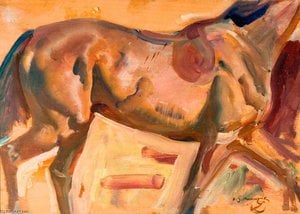
The Undefeated Asteroid (1864) delo Edward Troye, ručno oslikana reprodukcija uljanog slikarstva vrhunskog umetnika
Pregledaj u prostoru AR pregled Pređi na štampu Pređi na digitalnu sliku Pošalji
Detalji o delu Vodič Dodaj u omiljene Preuzmi Slični predmeti Rendgenski snimak Automatska prezentacija Pitanja i odgovori Presentation Statistika

The Undefeated Asteroid Ručno oslikana reprodukcija uljanog slikarstva

Edward Troye’s "The Undefeated Asteroid" (1864) showcases astonishing anatomical detail of a bay horse meticulously groomed by enslaved men in antebellum Virginia, revealing a poignant social commentary through masterful realism and scientific observation – discover this significant equine artwork.

Edward Troye (1808-1874): Swiss artist famed for accurate horse paintings – American Great Plains & Southern thoroughbreds. Author of 'Race Horses of America'.

Ručno rađena uljana reprodukcija

Ručno oslikano uljanim bojama na platnu u dimenzijama i okviru po vašem izboru, izrađeno po porudžbini od strane naših umetnika. ( Pređi na štampu Pređi na digitalnu sliku)

Corner sample of the P118B picture frame: oblikovani polistiren, 5 cm wide and 3 cm thick
P118B дин10
Corner sample of the P118H picture frame: oblikovani polistiren, 5 cm wide and 3 cm thick
P118H дин10
Corner sample of the P118W picture frame: oblikovani polistiren, 5 cm wide and 3 cm thick
P118W дин10
Corner sample of the P438Z picture frame: oblikovani polistiren, 5.5 cm wide and 3.5 cm thick
P438Z дин10
Corner sample of the P508JH picture frame: oblikovani polistiren, 7 cm wide and 3.5 cm thick
P508JH дин12
Corner sample of the P508YH picture frame: oblikovani polistiren, 7 cm wide and 3.5 cm thick
P508YH дин12
Corner sample of the P805H picture frame: oblikovani polistiren, 5 cm wide and 3.5 cm thick
P805H дин10
Corner sample of the P805Z picture frame: oblikovani polistiren, 5 cm wide and 3.5 cm thick
P805Z дин10
Corner sample of the P919BZ picture frame: oblikovani polistiren, 7 cm wide and 3.5 cm thick
P919BZ дин10
Corner sample of the P919G picture frame: oblikovani polistiren, 7 cm wide and 3.5 cm thick
P919G дин10
Corner sample of the P919XJ picture frame: oblikovani polistiren, 7 cm wide and 3.5 cm thick
P919XJ дин10
Corner sample of the P959ZH picture frame: oblikovani polistiren, 5 cm wide and 3 cm thick
P959ZH дин10
Corner sample of the P968JZ picture frame: oblikovani polistiren, 6 cm wide and 4 cm thick
P968JZ дин12
Corner sample of the W106C picture frame: masivno drvo, 5 cm wide and 3 cm thick
W106C дин8
Corner sample of the W218G picture frame: masivno drvo, 5 cm wide and 3 cm thick
W218G дин10
Corner sample of the W218JH picture frame: masivno drvo, 5 cm wide and 3 cm thick
W218JH дин8
Corner sample of the W218Y picture frame: masivno drvo, 5 cm wide and 3 cm thick
W218Y дин10
Corner sample of the W307PJ picture frame: masivno drvo, 6 cm wide and 3 cm thick
W307PJ дин10
Corner sample of the W316G picture frame: masivno drvo, 6 cm wide and 3 cm thick
W316G дин10
Corner sample of the W316PJ picture frame: masivno drvo, 6 cm wide and 3 cm thick
W316PJ дин8
Corner sample of the W316Y picture frame: masivno drvo, 6 cm wide and 3 cm thick
W316Y дин10
Corner sample of the W398PJ picture frame: masivno drvo, 5 cm wide and 3 cm thick
W398PJ дин8
Corner sample of the W4111J picture frame: masivno drvo, 6.5 cm wide and 3.5 cm thick
W4111J дин10
Corner sample of the W500HY picture frame: masivno drvo, 7 cm wide and 5 cm thick
W500HY дин15
Corner sample of the W500JH picture frame: masivno drvo, 7 cm wide and 5 cm thick
W500JH дин15
Corner sample of the W692G picture frame: masivno drvo, 8 cm wide and 4 cm thick
W692G дин12
Corner sample of the W849H picture frame: masivno drvo, 5 cm wide and 3 cm thick
W849H дин8
Corner sample of the W940BG picture frame: masivno drvo, 7.5 cm wide and 4.5 cm thick
W940BG дин15
Corner sample of the W953PJ picture frame: masivno drvo, 6 cm wide and 3.5 cm thick
W953PJ дин8

Standardne dimenzije
po meri
CM
INCH

Izaberite jednu od naših unapred definisanih veličina koje odgovaraju originalnim proporcijama umetničkog dela.

širina
visina

Unesite potrebnu širinu i visinu kako bi se slika uklopila u vaš ram ili zid. Pošto je ovo ručno oslikano delo, umetnik može za dimenzije drugačijeg oblika naslikati malo više prostora oko slike ili malo skratiti ivice — izbor je na vama. Pre početka rada, poslaćemo vam digitalni prikaz radi potvrde. Slika prikazana na ovoj stranici ne predstavlja konačan rezultat — samo digitalni prikaz pokazuje stvarnu sliku.

Primeri mogućih izmena: Zamena lica fotografijom kupca; Dodavanje ljubimca (npr. zamena mačke psom); Uključivanje skrivene poruke u pozadini; Promena pejzaža ili elemenata pozadine.
Nakon narudžbine, tim WahooArt.com će klijentu putem e-pošte poslati uputstva i dostaviti prikaz predloženog rešenja

Svetska isporuka () za 3/4 nedelje umesto uobičajenih 5 nedelja. (5 новембар). Bez kompromisa po pitanju kvaliteta.

Besplatna ekspresna dostava širom sveta
Visokokvalitetno laneno platno
Potpuno osiguranje transporta
Garancija povraćaja carine i uvoznih dažbina
Garancija vernosti boja
Politika povraćaja u roku od 100 dana (samo u slučaju nedostataka)
Garancija povrata 100% novca
Popust na više proizvoda

Ukupna cena

дин 28519

The Undefeated Asteroid

Tehnika reprodukcije

Dimenzije reprodukcije

-

Ukupna cena

дин 28519

Osnovne informacije

  • Subject or theme: Horse Portraiture
  • Medium: Oil on Canvas
  • Influences: Genre Painting
  • Title: The Undefeated Asteroid
  • Artist: Edward Troye

The Undefeated Asteroid – A Portrait of Equestrian Dignity

Edward Troye’s “The Undefeated Asteroid,” painted in 1864, transcends mere equine representation; it embodies the spirit of a bygone era and speaks volumes about social dynamics within the American South during the antebellum period. This monumental canvas captures a pivotal moment – the meticulous grooming of a magnificent bay horse by two enslaved men—a scene meticulously rendered with unparalleled realism that continues to fascinate art historians and collectors alike.

A Masterclass in Anatomical Detail

Troye’s artistic prowess lies not just in capturing the beauty of the horse but in achieving an astonishing level of anatomical accuracy. Unlike many artists of his time who prioritized idealized forms, Troye relentlessly pursued truthfulness. He painstakingly dissected musculature, meticulously documented bone structure, and rendered every subtle nuance of equine anatomy with breathtaking precision. This dedication to scientific observation—a hallmark of animalier art—elevates “The Undefeated Asteroid” beyond a simple depiction of animals; it becomes a testament to Troye’s mastery of technique and his unwavering commitment to portraying subjects faithfully. The artist skillfully employed oil paints on canvas, layering thin glazes to build up tonal depth and creating textures that convincingly mimic the feel of horsehair and muscle fibers.

Historical Context: Racehorses and Slavery in Antebellum Virginia

The painting's significance extends far beyond its artistic merits. It exists within a complex sociohistorical framework—the burgeoning popularity of Thoroughbred racing in Virginia during the 1860s, coupled with the pervasive institution of slavery. The horse depicted is owned by John Minor Botts III, a wealthy planter and prominent figure in Richmond society. His stables employed enslaved men who cared for his horses, highlighting the intertwined roles of labor and leisure within the Southern economy. Troye’s portrayal isn't merely aesthetically pleasing; it serves as a visual record of this era—a poignant reminder of the human cost associated with economic prosperity. The inclusion of African American jockeys underscores the racial inequalities prevalent at the time, presenting them not as mere accessories to the horse but as integral participants in its care and success.

Symbolism: Resilience Amidst Oppression

“The Undefeated Asteroid” carries profound symbolic weight. The horse itself represents strength, nobility, and perseverance—qualities mirrored in the dignified postures of Botts’ attendants. Despite their subjugation under oppressive conditions, these men exhibit unwavering dedication to their craft and a palpable respect for their animal companion. Troye's deliberate framing—the stark contrast between the lush foliage surrounding the horse and the barren tree trunks—further amplifies this symbolism. It suggests that beauty and vitality can endure even in environments marked by hardship and deprivation. The gaze of Botts’ men, turned outward with thoughtful contemplation, speaks to a quiet dignity—a refusal to succumb to despair amidst adversity.

Emotional Impact: A Moment Frozen in Time

Ultimately, Troye's masterpiece evokes a powerful emotional response. It compels viewers to confront the uncomfortable realities of slavery while simultaneously appreciating the artistry and skill involved in its creation. The painting’s meticulous detail invites contemplation—encouraging us to consider not only the visual beauty but also the broader narrative it conveys about human dignity and resilience. “The Undefeated Asteroid” remains a hauntingly beautiful reminder of a specific historical moment, forever enshrined in oil paint on canvas as an enduring symbol of artistic excellence and social commentary.

Pitanja i odgovori

Kako se umetnički pravac i epoha susreću u delu „The Undefeated Asteroid”, autor Edward Troye?

U delu „The Undefeated Asteroid”, autor Edward Troye, umetnički pravac Contemporary Realism susreće eru 19th Century.

Da li je „The Undefeated Asteroid”, autor Edward Troye portret, pejzaž ili kvadratna kompozicija?

„The Undefeated Asteroid”, autor Edward Troye je u Landscape formatu. Format opisuje proporcije kompozicije.

Mogu li da pregledam „The Undefeated Asteroid”, autor Edward Troye pre naručivanja?

Na stranici Pregled u prostoru za delo „The Undefeated Asteroid“ možete pregledati umetničko delo pre naručivanja.


Biografija umetnika

Edward Troye: A Life Dedicated to Equine Art

Edward Troye (1808-1874) was a Swiss-born artist who became celebrated for his remarkably accurate and detailed depictions of American horses, particularly those of the Great Plains and Southern thoroughbreds. His work provides invaluable insight into equine history during a period before widespread photography.

Early Life and Origins

Born in Lannes, Switzerland, in 1808, details regarding Troye’s early artistic training remain scarce. He eventually emigrated to the United States, establishing himself as an artist specializing in horses – a subject that would define his career.

Artistic Development and Style

Troye's style is characterized by its meticulous realism and attention to anatomical detail. He wasn’t concerned with romanticizing or idealizing his subjects; instead, he focused on capturing the true essence of each horse – their musculature, conformation, and individual character. His paintings served as both artistic representations and valuable records of breeding lines and physical traits.

Subjects and Themes

  • Thoroughbreds: Troye frequently painted Southern United States thoroughbreds before the American Civil War, documenting prominent racehorses and their lineages.
  • Great Plains Horses: He is equally known for his depictions of horses native to the American Great Plains, capturing their wild spirit and rugged beauty.
  • Portraits: While primarily a horse painter, Troye also created portraits, often incorporating horses into the composition.

Major Achievements and Rediscovery

Troye’s most significant achievement lies in creating a visual record of American equine history during a crucial period. He authored Race Horses of America (1867), further solidifying his commitment to documenting these magnificent animals.

Interestingly, Troye's work remained largely unknown outside a small circle until 1912. Since then, over 300 of his paintings have been rediscovered and photographed, revealing the breadth and depth of his artistic output.

Influences

Information regarding specific artistic influences on Troye is limited. However, his dedication to realism suggests an appreciation for earlier masters who prioritized accurate representation. His work also reflects a growing interest in scientific observation during the 19th century.

Historical Significance

Edward Troye’s paintings are invaluable historical documents. They provide researchers and enthusiasts with detailed visual information about horse breeds, conformation, and breeding practices of the 19th century. His work offers a unique glimpse into a bygone era, preserving the legacy of these magnificent animals for future generations.

Later Life and Legacy

Troye spent his later years residing in Kentucky, near his friend Keen Richards. He passed away from pneumonia on July 25, 1874, and is buried in Georgetown Cemetery with his wife and grandson. Today, his paintings are highly sought after by collectors and museums, ensuring that his artistic legacy continues to thrive.

Edward Troye

Edward Troye

1808 - 1874 , Switzerland

Osnovne informacije

  • Name: Edward Troye
  • Movement: Animal painting, Historical art
  • Birth Date: 1808
  • Death Date: 1874
  • Birth Place: Lannes, Switzerland
  • Nationality: Swiss
  • Date Of Birth: 1808
  • Date Of Death: 1874
  • Notable Works: Race Horses of America, Portrait of John Hartwell Cocke II of Bremo, The Undefeated Asteroid
  • Place Of Birth: Lannes, Switzerland