BESPLATNA KONSULTACIJA SA STRUČNJAKOM ZA UMETNOST

x
Naručite reprodukciju Naručite reprodukcijuKupi digitalnu sliku Kupi digitalnu sliku PošaljiPošalji
DetaljiDetalji Dodaj u omiljene Dodaj u omiljene ПреузмиПреузми Slični predmetiSlični predmeti Rendgenski snimakRendgenski snimak SlajdoviSlajdovi

stepsin paris

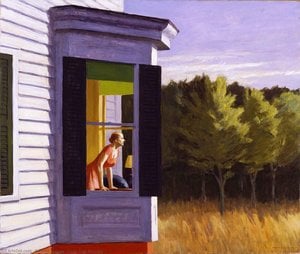
Discover 'Steps in Paris,' a captivating painting by Edward Hopper. Explore its somber mood, striking diagonal composition & muted palette. Own a hand-painted reproduction of this iconic artwork today!

Edward Hopper: Majstor američke realizma koji je oslavio pojedinačnost i urbani život svojom sugestivnom svetlošću i senkom. Poznatiji su njegovi pejzaži kao Nighthawks i Monhegan Houses.

Giclee štampa / Umetnički otisak

Giclée štampa ili print na platnu muzejskog kvaliteta uz brzu proizvodnju i fleksibilne opcije završne obrade.

P118B $10
P118H $10
P118W $10
P438Z $10
P508JH $12
P508YH $12
P805H $10
P805Z $10
P919BZ $10
P919G $10
P919XJ $10
P959ZH $10
P968JZ $12
W106C $8
W218G $10
W218JH $8
W218Y $10
W307PJ $10
W316G $10
W316PJ $8
W316Y $10
W398PJ $8
W4111J $10
W500HY $15
W500JH $15
W692G $12
W849H $8
W940BG $15
W953PJ $8

Standard
custom
CM
INCH

Izaberite jednu od naših unapred definisanih veličina koje odgovaraju originalnim proporcijama umetničkog dela.

širina
visina

Možete uneti sopstvene dimenzije kako biste umetničko delo prilagodili specifičnom okviru ili prostoru. Ako odabrani format ne odgovara proporcijama originalne slike, mi ćemo ili iscrtati deo dela ili proširiti sliku pomoću ogledane ivice ili jednobojnog popunjavanja. Digitalni prikaz će vam biti poslat na odobrenje pre početka proizvodnje.
Imajte na umu da pregled na ekranu ne odražava stvarno iscrtavanje ili proširivanje. Samo će prikaz (mockup) precizno pokazati finalnu kompoziciju.
Iako su prilagođene dimenzije dostupne, preporučujemo da odaberete dimenziju sa unapred definisane liste kako biste očuvali originalne proporcije.

Dostava širom sveta () za 2 nedelje umesto uobičajenih 4/5 nedelja. (2 јул)

why_choose_icon
Besplatna ekspresna dostava širom sveta
why_choose_icon
Visokokvalitetno laneno platno
why_choose_icon
Kompletno osiguranje transporta
why_choose_icon
Garancija povraćaja carine i uvoznih dažbina
why_choose_icon
Garancija vernosti boja
why_choose_icon
Politika povrata u roku od 60 dana (samo u slučaju nedostataka)
why_choose_icon
Garancija povrata novca od 100%
why_choose_icon
Popust pri grupnoj kupovini

Ukupna cena

-

reproduction

stepsin paris

Giclee štampa / Umetnički otisak

Dimenzije reprodukcije

-

Konačna cena

-

Osnovne informacije

  • artist: Edward Hopper
  • style: Impressionism / Post-Impressionism
  • influences: Impressionism
  • title: Steps in Paris
  • notable elements: Diagonal composition, muted color palette, atmospheric perspective, shadow and light contrast

Kviz o umetnosti

Svako pitanje ima samo jedan tačan odgovor.

Pitanje 1:
What is a dominant visual element in Edward Hopper's 'Steps in Paris'?
Pitanje 2:
Which artistic movements most influenced the style of 'Steps in Paris'?
Pitanje 3:
The color palette used in 'Steps in Paris' can best be described as:
Pitanje 4:
What mood or feeling does the artwork primarily evoke?

Opis predmeta

A Quiet Ascent: Exploring Solitude and Urban Space

This evocative painting captures a seemingly ordinary scene – a stone staircase ascending into shadow – yet imbues it with a profound sense of quietude and introspection. Rendered in a masterful blend of realism and atmospheric suggestion, the artwork invites viewers to contemplate themes of isolation, transition, and the subtle poetry found within urban landscapes.

Artistic Style & Influences

The work demonstrates clear influences from late 19th and early 20th-century movements like Impressionism and Post-Impressionism. While not strictly adhering to either style’s tenets, it shares their emphasis on capturing light and atmosphere through visible brushwork and a restrained color palette. The artist's approach leans towards realism, yet avoids meticulous detail in favor of conveying mood and emotional resonance. This stylistic choice places the artwork within a tradition of American Realism that sought to depict modern life with honesty and psychological depth.

Technique & Materials

Executed likely in oil on canvas, the painting showcases a skillful handling of texture and tone. Noticeable brushstrokes build up the surface, particularly on the steps, suggesting the rough materiality of stone. The artist employs atmospheric perspective – softening colors and details as they recede into the distance – to create a convincing illusion of depth and shadow. This technique draws the eye upwards along the diagonal staircase while simultaneously emphasizing the ambiguity of what lies beyond.

Symbolism & Emotional Resonance

Staircases are potent symbols, often representing ascent, progress, or escape. However, in this instance, the upward journey feels less triumphant and more ambiguous. The darkness at the top, combined with the absence of human figures, evokes a sense of loneliness and perhaps even melancholy. The cropped composition – we don’t see where the stairs begin or end – reinforces this feeling of incompleteness and isolation. It's a space caught between worlds, inviting contemplation on themes of transition and the unknown.

Historical Context & Artistic Intent

While the precise date of creation is unknown, the artwork aligns with a period of rapid urbanization and social change. The early 20th century witnessed increasing feelings of alienation and anonymity within modern cities. This painting can be interpreted as a visual expression of these anxieties, capturing a fleeting moment of quiet desperation amidst the bustling energy of urban life. It speaks to the universal human experience of solitude and the search for meaning in an increasingly complex world.

A Versatile Addition to Any Collection

This artwork’s subdued color palette – blending pinks, oranges, purples, and golds within a predominantly neutral scheme – makes it remarkably versatile. It would complement a range of interior design styles, from minimalist modern spaces to more traditional settings. Its contemplative mood lends itself well to bedrooms, studies, or living areas where a sense of calm and introspection is desired. A high-quality reproduction allows art lovers and collectors alike to experience the emotional power and artistic merit of this compelling work.

Srodna umetnička dela


Biografija umetnika

A Solitude Observed: The Life and Art of Edward Hopper

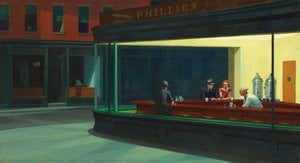
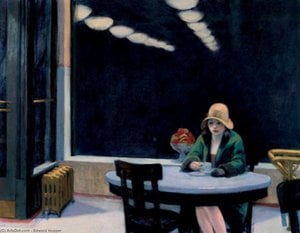
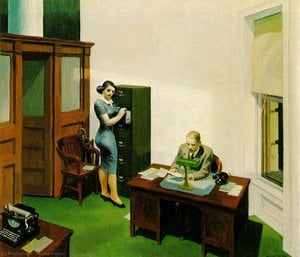
Edward Hopper, a name inextricably linked to the quietude and subtle melancholy that permeated 20th-century American life, wasn’t simply a painter of scenes; he was a poet of light and shadow, a chronicler of modern isolation. Born in Nyack, New York, in 1882, to middle-class parents of Dutch ancestry, Hopper's early years provided a stable upbringing that nurtured his artistic inclinations. From childhood sketches meticulously dated and signed, it became evident that keen observation and an innate talent for drawing were central to his being. Though initially encouraged towards commercial illustration – a pragmatic suggestion from his parents – Hopper’s ambitions leaned toward fine art, leading him to the New York School of Art where he studied under William Merritt Chase and Robert Henri. These formative years instilled not only technical skill but also an appreciation for realism and a commitment to depicting the world as he saw it—unvarnished and honest. The writings of Ralph Waldo Emerson resonated deeply with Hopper, reinforcing his sense of individualism and acute observation – qualities that would become hallmarks of his artistic vision. Early travels to Paris exposed him to Impressionism, yet Hopper quickly diverged from its fleeting brushstrokes, forging a path uniquely his own. Early Life and Artistic Beginnings Hopper’s formative years were marked by a quiet determination to pursue his passions despite familial expectations. He demonstrated exceptional drawing skills from a young age—a talent nurtured by his father, who encouraged him to experiment with various mediums. Despite initial inclinations toward commercial illustration, Hopper steadfastly adhered to his artistic aspirations, enrolling in the New York School of Art where he honed his technique under influential instructors like William Merritt Chase and Robert Henri. These mentors championed realism and instilled a profound respect for capturing the world truthfully—a conviction that would permeate his entire oeuvre. The influence of Emerson’s philosophy – emphasizing self-reliance and perceiving beauty in everyday life – profoundly shaped Hopper's worldview, informing his artistic vision and fueling his desire to portray human experience with uncompromising honesty. Finding His Voice: Realism and the American Scene Hopper’s artistic journey wasn’t immediate or effortless. He wrestled with discovering his distinctive voice, experimenting with diverse styles before settling into the realism that would define his career. This wasn't mere replication of reality; it was a distillation of its essence, stripping away superfluous detail to reveal underlying emotional truths. His paintings began to focus on commonplace settings—houses, diners, offices, hotel rooms—infused with an atmosphere of stillness and often, loneliness. He possessed an extraordinary ability to convey psychological states—hinting at narratives without explicitly stating them—capturing the unspoken anxieties and desires that characterize human existence. The precise rendering of light and shadow became paramount, serving not merely as descriptive elements but as emotional cues, creating environments that were simultaneously captivating and unsettling. House by the Railroad (1925) exemplifies this approach—a deceptively simple composition radiating a palpable sense of isolation and mystery. Hopper’s printmaking complemented his painting practice, sharing similar thematic concerns and stylistic characteristics, demonstrating his mastery across multiple mediums. He rejected grand historical narratives or allegorical symbolism; instead, he prioritized capturing the nuances of human experience through meticulous observation and emotional resonance. Iconic Visions: Nighthawks and Beyond While Hopper’s career unfolded gradually, certain works catapulted him to widespread acclaim. Nighthawks (1942)—arguably his most celebrated painting—became an instant emblem of American culture. The late-night diner scene, bathed in stark fluorescent illumination, encapsulates the alienation and anonymity prevalent in urban life during World War II. The figures within are lost in contemplation, disconnected from one another despite their proximity—a poignant commentary on human relationships and existential concerns. Hopper’s exploration of landscapes – particularly rural vistas – mirrored his fascination with American identity and conveyed a sense of melancholy beauty. Other notable paintings like *Automat*, *Office in a Small City*, and *Summertime* each offer unique perspectives into the complexities of modern society, reflecting Hopper's unwavering commitment to portraying human experience with psychological depth. Legacy and Influence Edward Hopper’s enduring legacy rests not solely on the aesthetic beauty of his paintings but also on their profound ability to provoke contemplation and evoke emotion—a testament to his artistic genius. His distinctive style has inspired countless artists across generations, influencing filmmakers like Alfred Hitchcock and writers alike. Hopper's work continues to resonate with audiences because it confronts universal themes of solitude, isolation, and the quest for meaning in a rapidly evolving world. He solidified his place as one of America’s foremost visual artists—a figure whose paintings remain exhibited globally and continue to captivate viewers with their understated elegance and haunting psychological insight. Hopper's unwavering dedication to realism—coupled with his masterful manipulation of light and shadow—ensures that his artistic vision will endure for decades to come, inspiring future generations of creatives to explore the complexities of human experience with honesty and sensitivity.
Едвард Хопер

Едвард Хопер

1931 - 1967 , САД

Osnovne informacije

  • Artistic Movement Or Style: Реализам
  • Artists Who Influenced This Artist:
    • Вилијам Мерерит Чис
    • Роберт Хенри
  • Date Of Birth: 22. јули 1882.
  • Date Of Death: 15. мај 1967.
  • Full Name: Edward Hopper
  • Nationality: Американац
  • Notable Artworks:
    • Ноћица
    • Кућа код пута
    • Гас
    • Автомат
  • Place Of Birth: Њак, САД
Istražite umetnička dela organizovana prema temama, stilovima i karakteristikama.