Giovanni Cimabue: A Pioneer Bridging Byzantium and Renaissance
Giovanni Cimabue (c. 1240 – 1302), born Cenni di Pepo in Florence, stands as a monumental figure—a bridge between the established artistic traditions of the Byzantine world and the burgeoning innovations that would define the Italian Renaissance. His life, though partially obscured by time and romanticized accounts – most notably those penned by Giorgio Vasari centuries later – marks an undeniable turning point in Western art history. Cimabue wasn’t simply a painter; he was a courageous innovator who dared to subtly challenge artistic conventions, laying the groundwork for the revolutionary changes that would soon sweep across Italy. Even his nickname, believed to mean “bull-headed,” hints at a strong will and perhaps a rebellious spirit—qualities demonstrably present in his willingness to experiment with form and expression.
Compared with the norms of medieval art, Cimabue’s works possess remarkable lifelike figural proportions and a more sophisticated use of shading to suggest volume. This departure from Byzantine stylistic rigidity wasn't merely aesthetic preference; it represented a fundamental rethinking of how artists approached representation. Cimabue meticulously studied Byzantine mosaics—particularly those adorning churches in Constantinople—absorbing their compositional principles and mastering the techniques of tessellation, painstakingly assembling small colored squares of glass or stone to create dazzling surfaces.
The St John Altarpiece: A Testament to Innovation
Perhaps Cimabue’s most celebrated achievement is “St John Altarpiece,” completed around 1479 by Hans Memling. Although Memling adopted the Northern Renaissance style, Cimabue's influence can be discerned in Memling's masterful depiction of St John the Evangelist—a figure rendered with unprecedented realism and psychological depth. The altarpiece exemplifies Cimabue’s legacy: a synthesis of Byzantine grandeur and humanist observation.
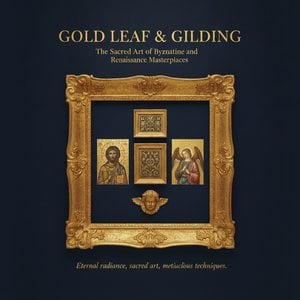
The image itself showcases a mosaic style, characterized by shimmering gold accents applied to the figures' clothing – a deliberate homage to Byzantine iconography where gold symbolized divine glory. Cimabue skillfully employed layering techniques and subtle gradations of color to create an illusion of three-dimensionality, pushing beyond the flattened surfaces typical of earlier medieval art.
Symbolism and Spiritual Significance
Beyond mere stylistic innovation, Cimabue’s work is imbued with profound spiritual symbolism. The central figure of Christ embodies divine majesty, seated upon a throne adorned with rich drapery—a visual representation of God's sovereignty. To his left stands the Virgin Mary, holding the infant Jesus – symbolizing purity and maternal compassion. St John the Evangelist, positioned on the right, represents repentance and humility, clutching a scroll bearing the Gospel text.
Notably, Cimabue incorporated elements that resonated with medieval cosmology—a snake coiled at the base of the throne, representing temptation and evil but ultimately subdued by Christ’s triumph. Two birds perched atop the altar symbolize hope and divine providence, underscoring the altarpiece's overarching message of salvation.
A Lasting Impression
Cimabue’s influence extended far beyond his own lifetime, shaping the artistic sensibilities of subsequent generations. His pioneering approach to form and shading paved the way for artists like Masaccio and Piero della Francesca—figures who would usher in the High Renaissance—solidifying Cimabue's place as one of the foundational architects of Western art.
Reproductions of “Christ Enthroned between the Virgin and St John” offer a captivating glimpse into this pivotal moment in artistic history, allowing viewers to appreciate Cimabue’s visionary genius and its enduring impact on the visual culture of Europe.



 Pređi na prodaju štampanih primeraka
 Podeli
 Podeli
 Detalji
 Vodič
Vodič

 Preuzmi sliku
 Slični predmeti
 Automatska prezentacija
 Statistika


 Pročitaj više






































 Opcija sa staklom dostupna je samo za dimenzije manje od 110 cm