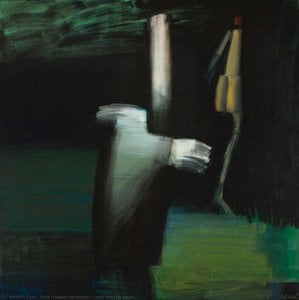
Umetničko delo prikazano na ovoj stranici zaštićeno je autorskim pravima, što znači da zakonski nismo u mogućnosti da kreiramo niti prodajemo identičnu reprodukciju. Ova zaštita se sprovodi u skladu sa međunarodnim sporazumima kao što su Bernska konvencija i nacionalnim zakonima, uključujući i one koji su definisani u Američki zakon o autorskom pravu – Naslov 17.
Ovaj metod je u potpunosti usklađen sa regulativama o autorskim pravima jer ne podrazumeva kopiranje ili dupliranje zaštićenih umetničkih dela. Umesto toga, reč je o kreativnoj reinterpretaciji – novom slikarskom delu koje je inspirisano originalom, ali nije identično njemu.
Giclée štampa ili print na platnu muzejskog kvaliteta uz brzu izradu i raznovrsne opcije završne obrade. ( Kupite ručno oslikano delo Pređi na digitalnu sliku)
Izaberite jednu od naših unapred definisanih veličina koje odgovaraju originalnim proporcijama umetničkog dela.

Unesite željenu širinu i visinu kako bi se štampa uklopila u vaš ram ili zid. Štampu je moguće samo iseći, ali nikada povećati iznad dimenzija originalne slike, stoga format sa drugačijim proporcijama uzrokuje gubitak dela slike. Pre početka štampe, poslaćemo vam digitalni prikaz radi potvrde. Slika prikazana na ovoj stranici ne predstavlja stvarni isrez — to pokazuje samo digitalni prikaz.
Dostava širom sveta () za 2 nedelje umesto uobičajenih 4/5 nedelja. (8 новембар)
The Painter Francis Bacon
Dimenzije reprodukcije

Chronis Botsoglou stands as one of the most profound and uncompromising voices in contemporary Greek art, a painter whose work served as the very conscience of figurative painting for over half a century. Born in Thessaloniki, Greece, his artistic journey was shaped by a rigorous academic foundation, beginning at the Athens School of Fine Arts under the mentorship of the legendary Yiannis Moralis. This early training, followed by a transformative period of study at the École nationale supérieure des Beaux-Arts in Paris, allowed him to weave together a unique aesthetic language—one that rejected the purely decorative in favor of a raw, psychological directness.
His return to Greece marked a pivotal moment in his career as he helped found the New Greek Realists group in 1971. At a time when the international art world was drifting toward conceptual experimentation, Botsoglou remained steadfastly committed to a realism that explored the human condition. His practice was never merely about representation; it was an excavation of existence. Through his large-format figure compositions, he addressed themes of brutality, violence, and cynicism, yet always tempered this critical gaze with an unmistakable sense of empathy and tenderness.
The technical breadth of Botsoglou’s oeuvre is as vast as its emotional depth. While his large-scale paintings often commanded the most critical attention, his mastery extended across a diverse range of media, including engraving, sculpture, pastels, and watercolours. His work frequently oscillates between the heavy physicality of painting material and an almost ethereal, existential lightness. In series such as Personal Nekyia, he delves into the shadows of mortality, using muted tones and haunting imagery to explore the relationship between the self and the void.
In contrast, other works like his Haiku series reveal a different facet of his genius, capturing serene coastal scenes through pastel hues that blend elements of impressionism with nature's quiet beauty. This duality—the ability to move from the visceral weight of human suffering to the delicate observation of light and landscape—defines his artistic legacy. His paintings do not merely depict bodies; they biographize death, using the human form to speak of solitude, fragility, and the enduring struggle of the spirit.
Beyond the canvas, Botsoglou was a monumental figure in the academic and intellectual life of Greece. His dedication to the craft was matched by his commitment to artistic education, serving as a professor at the Athens School of Fine Arts and later as its Rector. He was an artist who thought deeply about the labor of creation, publishing writings that explored the very essence of artistic study and the necessity of honesty in one's work.
His immense contribution to art history is reflected in the widespread presence of his works in prestigious institutions. His legacy is preserved through:
Through decades of solo and group exhibitions spanning from South America to Israel, Chronis Botsoglou remained an artist of profound sincerity, leaving behind a body of work that continues to resonate with its unflinching gaze into the depths of human existence.

1941 - 2022 , Greece

Immerse yourself in the visceral world of Francis Bacon. Explore 25 iconic masterpieces, from distorted figures to haunting portraits. Discover the stories behind these expressionist legends and find museum-quality art reproductions for your collection at WahooArt.com.
 Pregledaj u prostoru
 Pošalji
 Podeli
 Detalji o delu
 Vodič
Vodič

 Preuzmi
 Slični predmeti
 Rendgenski snimak
 Automatska prezentacija
 Pitanja i odgovori
 Statistika

 Pročitaj više






































 Opcija sa staklom dostupna je samo za dimenzije manje od 110 cm