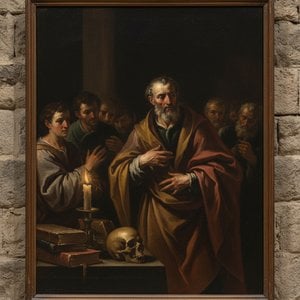
Biografija umetnika
Живот у светлу Андалузије
Бартоломе Естебан Муриљо, име синонимно за златну епоху шпанског барока, изашао је из живописног срца Севиље 1618. године. Његов живот, обележен личним трагедијама и друштвеним променама, растао је у уметничку каријеру која је заузела дух његовог времена – период религиозног жара, социјалних промена и цветајуће уметничке иновације. Рођен Гаспару Естебану, хирургу-берберу, и Марији Перез Муриљо, у великој породици од четрнаест деце, млади Бартоломе је рано доживео губитак оба родитеља, што га је привело под старатељство супруга своје сестре, Хуана Агустина Лагареса, кључне фигуре која ће индиректно водити његов уметнички пут. Муриљово почетно школовање започело је код Хуана дел Кастиља, локалног уметника и рођака преко мајке, постављајући основу за стил који би на крају постао јединствен. Ране године су биле потопљене реалистичким традицијама које су преовладавале у Севиљи, апсорбујући утицаје мајстора попут Зурбарана, Рибере и Кана – уметника који су давали приоритет оштом реализму и драматичном интензитету. Међутим, Муриљов гениј је лежао не у пуком опонашању већ у трансформацији тих основа у нешто мекше, светлије и дубље људско.
Од реализма до блиставе грације
Муриљово уметничко путовање није био изненадан скок у славу, већ еволуција обележена различитим фазама. Његови рани радови, под великим утицајем суздржаног реализма својих савременика, показали су прецизну пажњу на детаље и мрачну палету боја. *Младић са корпама воћа (Персонификација лета)*, настао око 1640-50. године, пример је овог периода – уземљено приказивање свакодневног живота рендеровано изузетном прецизношћу. Ипак, чак и у овим раним делима, наговештаји нежности и емоционалне дубине који су дефинисали његов зрео стил почели су да се појављују. *Млади просјак*, сликана око 1645. године, показује растућу осетљивост према људској патњи, одражавајући утицај Веласкезових мајсторских портрета обичних људи. Како је Муриљо сазревао, његов стил је прошао кроз изуванредну трансформацију. Одустао је од оштрог реализма својих претходника, прихватајући полиранији и рафиниранији естетички израз који је резоновао са укусом севиљанске буржоазије и аристократије. Ова промена била је посебно очигледна у његовим религиозним делима, где је традиционалну иконографију обогатио без преседана осећајем топлине, грације и емоционалне доступности. *Свети Јероним*, сликана између 1650-52. године, представља сведочанство овог зрелог стила – меко осветљено приказивање које зрачи спокојством и преданошћу.
Мајстор религиозног осећања и жанровских сцена
Муриљов уметнички излаз био је изузетно разнолик, обухватајући религиозне слике, жанровске сцене, портрете и митолошке теме. Међутим, најпознатији је по својим приказима Непорочног Зачећа – теми која га је заузела током његове каријере и довела до бројних варијација, од којих свака има јединствен осећај етеричне лепоте. Ова дела, карактерисана деликатном четкицом, светлим бојама и грациозним композицијама, постала су изузетно популарна и успоставила су Муриља као пресудног сликара религиозних слика у Шпанији. Осим својих светих субјеката, Муриљо је одлично успевао да заузиме свакодневни живот обичних људи. Његове жанровске сцене – прикази цвећарки, уличара и просјака – нуде емотивни увид у друштвену стварност Севиље из 17. века. Ове слике нису само опсервацијска проучавања; они су испуњени дубоким осећајем саосећања и састрадања, уздижући скромне субјекте на ниво достојанства и грације. Имао је изузетан дар да заузиме невинство детињства, портретишући младу децу са изузетним реализмом и нежношћу.
Наслеђе и трајни утицај
Утицај Бартоломе Естебана Муриља на ток шпанске уметности – и заправо европског сликања – је неоспоран. Установио је карактеристичан стил који је спојио религиозну преданост са хуманистичким осећањима, стварајући дела која су дубоко резоновала са публиком из различитих друштвених слојева. Његов утицај се протезао далеко ван његове родне Шпаније, инспиришући генерације уметника широм Европе. *Гејнсборо* и *Грез*, између осталих, признали су свој дуг Муриљовом блиставом стилу и осетљивим портретима људских емоција. Обучио је бројне ученике у својој севиљанској радионици, обезбеђујући наставак његовог уметничког наслеђа. Његове слике могу се наћи у престижним музејима широм света, укључујући Музео дел Прадо у Мадриду, Државни музеј Ермитаж у Санкт Петербургу, Волас Колекцију у Лондону и Тимкен музеј уметности у Сан Дијегу – сведочења његовог трајног апела и историјског значаја. Муриљова уметност наставља да очарава гледаоце својом лепотом, грациозношћу и дубоком људскошћу, учвршћујући његово место као једног од највољенијих и утицајних сликара шпанског барока. Његова способност да унесе емоционалну дубину у религиозне слике и прикаже свакодневни живот са саосећањем осигурава да његов рад остаје релевантан и инспиративан вековима након његове смрти 1682. године.



 Pregledaj u prostoru
 Naručite ručno oslikano reprodukciju
 Podeli
 Podeli
 Detalji
 Vodič
Vodič

 Preuzmi sliku
 Slični predmeti
 Rendgenski snimak
 Automatska prezentacija
 Statistika


 Pročitaj više






































 Opcija sa staklom dostupna je samo za dimenzije manje od 110 cm