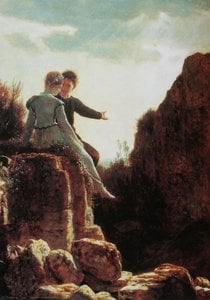
Centaur Watching Fish (1878) delo Арнолд Беклин, ručno oslikana reprodukcija uljanog slikarstva vrhunskog umetnika
Pregledaj u prostoru AR pregled Pređi na štampu Pređi na digitalnu sliku Pošalji
Detalji o delu Vodič Dodaj u omiljene Preuzmi Slični predmeti Rendgenski snimak Automatska prezentacija Pitanja i odgovori Prezentacija Statistika

Centaur Watching Fish Ručno oslikana reprodukcija uljanog slikarstva

Dimenzije
43.0 x 70.0 cm

Arnold Bocklin’s ‘Centaur Watching Fish’ (1878) is a haunting Symbolist oil painting of a melancholic centaur. Explore its Romantic style, earthy tones & contemplation.

Švajcarski simbolista poznat po delu Ostrvo mrtvih. Otkrijte njegova proganjajuća mitološka remek-dela već danas.

Ručno rađena uljana reprodukcija

Ručno oslikano uljanim bojama na platnu u dimenzijama i okviru po vašem izboru, izrađeno po porudžbini od strane naših umetnika. ( Pređi na štampu Pređi na digitalnu sliku)


Corner sample of the P118B picture frame: oblikovani polistiren, 5 cm wide and 3 cm thick
P118B дин10
Corner sample of the P118H picture frame: oblikovani polistiren, 5 cm wide and 3 cm thick
P118H дин10
Corner sample of the P118W picture frame: oblikovani polistiren, 5 cm wide and 3 cm thick
P118W дин10
Corner sample of the P438Z picture frame: oblikovani polistiren, 5.5 cm wide and 3.5 cm thick
P438Z дин10
Corner sample of the P508JH picture frame: oblikovani polistiren, 7 cm wide and 3.5 cm thick
P508JH дин12
Corner sample of the P508YH picture frame: oblikovani polistiren, 7 cm wide and 3.5 cm thick
P508YH дин12
Corner sample of the P805H picture frame: oblikovani polistiren, 5 cm wide and 3.5 cm thick
P805H дин10
Corner sample of the P805Z picture frame: oblikovani polistiren, 5 cm wide and 3.5 cm thick
P805Z дин10
Corner sample of the P919BZ picture frame: oblikovani polistiren, 7 cm wide and 3.5 cm thick
P919BZ дин10
Corner sample of the P919G picture frame: oblikovani polistiren, 7 cm wide and 3.5 cm thick
P919G дин10
Corner sample of the P919XJ picture frame: oblikovani polistiren, 7 cm wide and 3.5 cm thick
P919XJ дин10
Corner sample of the P959ZH picture frame: oblikovani polistiren, 5 cm wide and 3 cm thick
P959ZH дин10
Corner sample of the P968JZ picture frame: oblikovani polistiren, 6 cm wide and 4 cm thick
P968JZ дин12
Corner sample of the W106C picture frame: masivno drvo, 5 cm wide and 3 cm thick
W106C дин8
Corner sample of the W218G picture frame: masivno drvo, 5 cm wide and 3 cm thick
W218G дин10
Corner sample of the W218JH picture frame: masivno drvo, 5 cm wide and 3 cm thick
W218JH дин8
Corner sample of the W218Y picture frame: masivno drvo, 5 cm wide and 3 cm thick
W218Y дин10
Corner sample of the W307PJ picture frame: masivno drvo, 6 cm wide and 3 cm thick
W307PJ дин10
Corner sample of the W316G picture frame: masivno drvo, 6 cm wide and 3 cm thick
W316G дин10
Corner sample of the W316PJ picture frame: masivno drvo, 6 cm wide and 3 cm thick
W316PJ дин8
Corner sample of the W316Y picture frame: masivno drvo, 6 cm wide and 3 cm thick
W316Y дин10
Corner sample of the W398PJ picture frame: masivno drvo, 5 cm wide and 3 cm thick
W398PJ дин8
Corner sample of the W4111J picture frame: masivno drvo, 6.5 cm wide and 3.5 cm thick
W4111J дин10
Corner sample of the W500HY picture frame: masivno drvo, 7 cm wide and 5 cm thick
W500HY дин15
Corner sample of the W500JH picture frame: masivno drvo, 7 cm wide and 5 cm thick
W500JH дин15
Corner sample of the W692G picture frame: masivno drvo, 8 cm wide and 4 cm thick
W692G дин12
Corner sample of the W849H picture frame: masivno drvo, 5 cm wide and 3 cm thick
W849H дин8
Corner sample of the W940BG picture frame: masivno drvo, 7.5 cm wide and 4.5 cm thick
W940BG дин15
Corner sample of the W953PJ picture frame: masivno drvo, 6 cm wide and 3.5 cm thick
W953PJ дин8

Standardne dimenzije
po meri
CM
INCH

Izaberite jednu od naših unapred definisanih veličina koje odgovaraju originalnim proporcijama umetničkog dela.

širina
visina

Unesite potrebnu širinu i visinu kako bi se slika uklopila u vaš ram ili zid. Pošto je ovo ručno oslikano delo, umetnik može za dimenzije drugačijeg oblika naslikati malo više prostora oko slike ili malo skratiti ivice — izbor je na vama. Pre početka rada, poslaćemo vam digitalni prikaz radi potvrde. Slika prikazana na ovoj stranici ne predstavlja konačan rezultat — samo digitalni prikaz pokazuje stvarnu sliku.

Primeri mogućih izmena: Zamena lica fotografijom kupca; Dodavanje ljubimca (npr. zamena mačke psom); Uključivanje skrivene poruke u pozadini; Promena pejzaža ili elemenata pozadine.
Nakon narudžbine, tim WahooArt.com će klijentu putem e-pošte poslati uputstva i dostaviti prikaz predloženog rešenja

Svetska isporuka () za 3/4 nedelje umesto uobičajenih 5 nedelja. (15 новембар). Bez kompromisa po pitanju kvaliteta.

Besplatna ekspresna dostava širom sveta
Visokokvalitetno laneno platno
Potpuno osiguranje transporta
Garancija povraćaja carine i uvoznih dažbina
Garancija vernosti boja
Politika povraćaja u roku od 100 dana (samo u slučaju nedostataka)
Garancija povrata 100% novca
Popust na više proizvoda

Ukupna cena

дин 28455

Centaur Watching Fish

Tehnika reprodukcije

Dimenzije reprodukcije

-

Ukupna cena

дин 28455

Osnovne informacije

  • Artistic style: Romantic
  • Dimensions: 43 x 70 cm
  • Influences: Romanticism
  • Notable elements or techniques: Impasto technique
  • Medium: Oil on canvas
  • Title: Centaur Watching Fish

Kviz o umetnosti

Svako pitanje ima samo jedan tačan odgovor.

Pitanje 1:
What artistic movement is ‘Centaur Watching Fish’ primarily associated with?
Pitanje 2:
The painting depicts a mythological creature – what is it?
Pitanje 3:
What technique is prominently used in Böcklin’s ‘Centaur Watching Fish’?
Pitanje 4:
Where was Arnold Böcklin born?
Pitanje 5:
What is the overall mood conveyed by the artwork’s composition and color palette?

A Silent Meditation on Nature and Mortality

In the quietude of Arnold Böcklin’s 1878 masterpiece, “Centaur Watching Fish,” the viewer is invited into a realm where the boundaries between the mythological and the terrestrial dissolve. This evocative oil on canvas, currently held in the prestigious Kunsthaus Zürich, serves as a profound gateway into the Symbolist movement—a period of art history dedicated to exploring the hidden psychological depths of the human soul. Rather than presenting a mere scene from ancient legend, Böcklin crafts an immersive experience that speaks to the universal themes of solitude and the silent, rhythmic pulse of the natural world. The centaur, a creature of dual nature, reclines upon a serene shoreline, his gaze fixed upon the movement beneath the water's surface, creating a moment of suspended animation that feels both eternal and fleeting.

The composition is masterfully orchestrated to evoke a sense of Romantic reverie. Utilizing a horizontal format, Böcklin emphasizes the reclining posture of the centaur, grounding the mythological figure within a landscape of soft sands and swaying grasses. The artist deliberately eschews the rigid precision of strict realism in favor of an emotional truth. Through the use of diffused lighting and gentle shadows, he establishes an atmosphere of melancholic stillness. This technique allows the viewer to feel the weight of the silence, as if the very air around the creature is heavy with contemplation. It is a painting that does not demand attention through spectacle, but rather earns it through a subtle, haunting intimacy.

The Mastery of Texture and Atmosphere

Technically, “Centaur Watching Fish” is a triumph of texture and perspective. Böcklin employs the impasto technique with remarkable skill, applying thick, deliberate layers of paint to render the coarse fur of the centaur’s equine half. This tactile richness provides a palpable sense of physicality, making the creature feel present and breathing within the frame. To balance this heavy texture, the artist utilizes atmospheric perspective to create an illusion of infinite depth. By reducing color saturation and softening the details of the distant horizon, he simulates a hazy, dreamlike distance that reinforces the theme of isolation. This method draws a direct lineage from the Romantic masters like Caspar David Friedrich, using the landscape as a mirror for spiritual introspection.

The color palette is a sophisticated arrangement of earthy tones—ochres, deep browns, and muted beiges—which lends the work an organic, timeless quality. These warm, grounded hues are contrasted by the subtle, shimmering light reflecting off the water, drawing the eye toward the focal point of the centaur’s quiet observation. For the collector or interior designer, this piece offers a unique aesthetic versatility; its somber yet tranquil mood provides a sophisticated anchor for a room, offering a sense of historical depth and intellectual gravity that more contemporary works may lack.

Symbolism: The Intersection of Myth and Being

Beyond its visual splendor, the painting functions as a complex symbolic tapestry. The centaur itself—a hybrid of human intellect and animal instinct—serves as a powerful metaphor for the duality of existence. As he watches the fish, there is a profound sense of the relationship between humanity and the untamed elements of nature. The act of watching becomes a meditation on mortality; the stillness of the figure suggests a resignation to the cycles of life and death that govern both man and beast. There is a touch of sadness in his solitude, yet it is a beautiful, dignified melancholy that celebrates the quiet dignity of existence.

For those seeking to bring a piece of this profound emotional landscape into their personal spaces, a high-quality reproduction of this work offers more than just decoration. It provides a window into a bygone era of artistic exploration, a constant reminder of the beauty found in silence and the enduring power of myth. Whether placed in a library, a study, or a curated gallery space, “Centaur Watching Fish” continues to provoke thought, inviting all who encounter it to pause, breathe, and reflect upon the silent wonders of the world.

Pitanja i odgovori

Da li je zakonski dozvoljeno reprodukovati delo „Centaur Watching Fish”, autor Арнолд Беклин koje se nalazi u muzeju Kunsthaus Zürich?

Status autorskih prava za delo „Centaur Watching Fish”, autor Арнолд Беклин je jasan: rad pripada u javnom vlasništvu – autorska prava su istekla. Njegovo prisustvo u muzeju Kunsthaus Zürich ne menja taj status.

Kako se umetnički pravac i epoha susreću u delu „Centaur Watching Fish”, autor Арнолд Беклин?

„Centaur Watching Fish“ pripada pravcu Symbolism, a njen autor je stvarao u periodu 19. vek.

Koja je paleta boja u delu "Centaur Watching Fish"?

Paleta dela „Centaur Watching Fish”, autor Арнолд Беклин opisana je kao Earthy, što predstavlja sažet prikaz boja ovog umetničkog dela.


Biografija umetnika

Senka ostrva

Basel u Švajcarskoj predstavlja početnu tačku života koji je definisao napetost između opipljivog i spektralnog. Rođen 16. oktobra 1827. godine, kao sin Christiana Frederica Böcklina i Ursule Lippe, ovaj mladić će se vremenom izdvojiti iz očeve trgovine svilom i usmeriti ka rigoroznim hodnicima Akademije u Diseldorfu. Pod mentorstvom Širmera, počeo je da usvaja jezik pejzaža, veštinu koja će kasnije biti korišćena za mapiranje geografije ljudske duše. On nije samo slikao predele; on je konstruisao prostore u kojima se klasično i makabro sudaraju.

Kretanje iz akademske discipline Diseldorfa ka svetlosti Pariza i drevnoj težini Rima označava fundamentalnu promenu u njegovoj viziji. U Luvru, upijao je istoriju majstora, ali je upravo atmosfera Italije zaista oblikovala njegovu ruku. Vratio se u Rim između 1862. i 1866. godine, u periodu kada je njegova paleta počela da naglašava snažnije, ekspresivnije boje. To nije bila sunčana, blistava Italija renesanse, već mesto dubokih senki i mitološke težine. Njegovo delo je počelo da teži ka alegoriji, koristeći figure iz antike kako bi istražio tešku, neizbežnu prisutnost smrtnosti.

Arhitektura snova

Do kraja 19. veka, njegova reputacija bila je usidrena u specifičnoj, proganjajućoj opsesiji. Između 1880. i 1886. godine stvorio je pet verzija dela Ostrvo mrtvih. Ovo delo, inspirisano engleskim grobljem u Firenci gde je sahranjena njegova ćerka, postalo je fokusna tačka simbolističkog pokreta. To je scena duboke tišine: stenovito ostrvo, tamni čempresi i čamac koji se približava tihoj obali. Slika ne prikazuje samo mesto; ona prikazuje stanje postojanja. Ova sposobnost da se dočara neopipljivo—šaputaj snova i težina onostranog—postavila ga je u centar nove evropske senzibilnosti.

Njegov tehnički pristup često je koristio gust, ekspresivan impasto, naročito u delima kao što je La Guerre (1896). U ovom kompoziciji, platno podrhtava od haosa sukoba. On izbegava čiste linije tradicionalizma, birajući umesto toga gustu, slojevitu kompoziciju gde se figure sukobljavaju usred urušene arhitekture. To je visceralna manifestacija destrukcije, gde se veo između mita i stvarnosti rastvara u oluji senki. Njegov stil se preklapao sa predrafaelitima, ali je ostao distinktoan, fokusiran na mistiku koja je delovala istovremeno drevno i uznemirujuće moderno.

Nasleđe uticaja

Uticaj njegove slike protezao se daleko izvan platna, dosežući do auditivnog domena kasnoromantičke muzike. Njegova dela su pružila vizuelni stimulus kompozitorima, najpre svega utičući na atmosferu u radovima Gustava Mahlera. Njegova sposobnost da premosti jaz između vizuelnog i psihološkog značila je da je njegov uticaj osetio onaj ko je težio da predstavi podsvest. Njegov domet dotakao je nekoliko generacija umetnika:

  • Hans Thoma, mlađi umetnik pod uticajem njegove simboličke dubine.
  • Giorgio de Chirico, koji je pronašao duboku povezanost u izolaciji Böcklinovih kompozicija.
  • Salvador Dalí i Max Ernst, koji su crpeli iz njegove sposobnosti da spoji komično sa košmarnim.
  • Marcel Duchamp, koji je primetio značajan uticaj umetnika na sopstveni razvoj.

Umro je u Fijezoletu, u Italiji, ostavivši za sobom korpus dela koji je odbijao da bude lako klasifikovan. Bio je slikar švajcarskog pejzaža, rimske krčme i mitološke šume, ali je njegova prava tema ostala tiho, neprolazno prisustvo nepoznatog. Njegova dela se i danas čuvaju u značajnim kolekcijama, uključujući Kunstmuseum u Baselu i Kunsthaus Zürich, služeći kao sidra za one koji istražuju raskrštanje mita i smrtnosti.

Арнолд Беклин

Арнолд Беклин

1827 - 1901 , Швајцарска

Osnovne informacije

  • Artistic Movement Or Style: Simbolizam
  • Artists Or Movements Influenced By This Artist:
    • Hans Thoma
    • Giorgio de Chirico
    • Max Ernst
    • Salvador Dalí
    • Marcel Duchamp
  • Artists Who Influenced This Artist:
    • Eugene Delacroix
    • Jean-Baptiste-Camille Corot
  • Date Of Birth: 1827
  • Date Of Death: 1901
  • Full Name: Arnold Böcklin
  • Nationality: Švajcarska
  • Notable Artworks:
    • Ostrvo mrtvih
    • Nimfa i satir
    • Safona
    • La Guerre
  • Place Of Birth: Basel, Švajcarska
Istražite umetnička dela organizovana prema temama, stilovima i karakteristikama.