Pregledaj u prostoru AR pregled Kupite ručno oslikano delo Pređi na digitalnu sliku Pošalji
Detalji o delu Vodič Dodaj u omiljene Preuzmi Slični predmeti Rendgenski snimak Automatska prezentacija Statistika

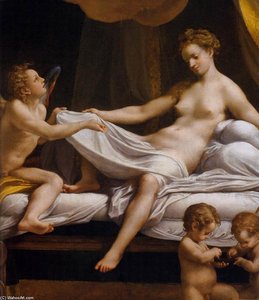
Danaë

Antonio Bellucci’s ‘Danaë,’ painted in 1700-1705, captures the mythic tale of Zeus’s irresistible allure to Danaë. This opulent Venetian Baroque artwork portrays Zeus as golden rain showering upon Danaë's bed, symbolizing divine love and transcendence. Featuring angels and rich textures, it exemplifies Bellucci’s skill in conveying emotion and grandeur.

Antonio Bellucci (1654-1726) was an Italian Rococo painter renowned for grand-manner frescoes in England, Germany & Austria. Explore his mythological scenes, portraits, and religious works – a key figure of the Venetian artistic tradition.

Giclee štampa / Umetnički otisak

Giclée štampa ili print na platnu muzejskog kvaliteta uz brzu izradu i raznovrsne opcije završne obrade. ( Kupite ručno oslikano delo Pređi na digitalnu sliku)

Corner sample of the P118B picture frame: oblikovani polistiren, 5 cm wide and 3 cm thick
P118B дин10
Corner sample of the P118H picture frame: oblikovani polistiren, 5 cm wide and 3 cm thick
P118H дин10
Corner sample of the P118W picture frame: oblikovani polistiren, 5 cm wide and 3 cm thick
P118W дин10
Corner sample of the P438Z picture frame: oblikovani polistiren, 5.5 cm wide and 3.5 cm thick
P438Z дин10
Corner sample of the P508JH picture frame: oblikovani polistiren, 7 cm wide and 3.5 cm thick
P508JH дин12
Corner sample of the P508YH picture frame: oblikovani polistiren, 7 cm wide and 3.5 cm thick
P508YH дин12
Corner sample of the P805H picture frame: oblikovani polistiren, 5 cm wide and 3.5 cm thick
P805H дин10
Corner sample of the P805Z picture frame: oblikovani polistiren, 5 cm wide and 3.5 cm thick
P805Z дин10
Corner sample of the P919BZ picture frame: oblikovani polistiren, 7 cm wide and 3.5 cm thick
P919BZ дин10
Corner sample of the P919G picture frame: oblikovani polistiren, 7 cm wide and 3.5 cm thick
P919G дин10
Corner sample of the P919XJ picture frame: oblikovani polistiren, 7 cm wide and 3.5 cm thick
P919XJ дин10
Corner sample of the P959ZH picture frame: oblikovani polistiren, 5 cm wide and 3 cm thick
P959ZH дин10
Corner sample of the P968JZ picture frame: oblikovani polistiren, 6 cm wide and 4 cm thick
P968JZ дин12
Corner sample of the W106C picture frame: masivno drvo, 5 cm wide and 3 cm thick
W106C дин8
Corner sample of the W218G picture frame: masivno drvo, 5 cm wide and 3 cm thick
W218G дин10
Corner sample of the W218JH picture frame: masivno drvo, 5 cm wide and 3 cm thick
W218JH дин8
Corner sample of the W218Y picture frame: masivno drvo, 5 cm wide and 3 cm thick
W218Y дин10
Corner sample of the W307PJ picture frame: masivno drvo, 6 cm wide and 3 cm thick
W307PJ дин10
Corner sample of the W316G picture frame: masivno drvo, 6 cm wide and 3 cm thick
W316G дин10
Corner sample of the W316PJ picture frame: masivno drvo, 6 cm wide and 3 cm thick
W316PJ дин8
Corner sample of the W316Y picture frame: masivno drvo, 6 cm wide and 3 cm thick
W316Y дин10
Corner sample of the W398PJ picture frame: masivno drvo, 5 cm wide and 3 cm thick
W398PJ дин8
Corner sample of the W4111J picture frame: masivno drvo, 6.5 cm wide and 3.5 cm thick
W4111J дин10
Corner sample of the W500HY picture frame: masivno drvo, 7 cm wide and 5 cm thick
W500HY дин15
Corner sample of the W500JH picture frame: masivno drvo, 7 cm wide and 5 cm thick
W500JH дин15
Corner sample of the W692G picture frame: masivno drvo, 8 cm wide and 4 cm thick
W692G дин12
Corner sample of the W849H picture frame: masivno drvo, 5 cm wide and 3 cm thick
W849H дин8
Corner sample of the W940BG picture frame: masivno drvo, 7.5 cm wide and 4.5 cm thick
W940BG дин15
Corner sample of the W953PJ picture frame: masivno drvo, 6 cm wide and 3.5 cm thick
W953PJ дин8

Standardne dimenzije
po meri
CM
INCH

Izaberite jednu od naših unapred definisanih veličina koje odgovaraju originalnim proporcijama umetničkog dela.

širina
visina

Unesite željenu širinu i visinu kako bi se štampa uklopila u vaš ram ili zid. Štampu je moguće samo iseći, ali nikada povećati iznad dimenzija originalne slike, stoga format sa drugačijim proporcijama uzrokuje gubitak dela slike. Pre početka štampe, poslaćemo vam digitalni prikaz radi potvrde. Slika prikazana na ovoj stranici ne predstavlja stvarni isrez — to pokazuje samo digitalni prikaz.

Dostava širom sveta () za 2 nedelje umesto uobičajenih 4/5 nedelja. (27 октобар)

Besplatna ekspresna dostava širom sveta
Visokokvalitetno laneno platno
Potpuno osiguranje transporta
Garancija povraćaja carine i uvoznih dažbina
Garancija vernosti boja
Politika povraćaja u roku od 100 dana (samo u slučaju nedostataka)
Garancija povrata 100% novca
Popust na više proizvoda

Ukupna cena

дин 7026

Danaë

Giclee štampa / Umetnički otisak

Dimenzije reprodukcije

-

Ukupna cena

дин 7026

Osnovne informacije

  • Location: Private Collection
  • Dimensions: 149 x 159 cm
  • Subject or theme: Mythology
  • Artistic style: Grand Manner
  • Year: 1700
  • Artist: Antonio Bellucci

Kviz o umetnosti

Svako pitanje ima samo jedan tačan odgovor.

Pitanje 1:
What mythological figure is depicted in Antonio Bellucci’s painting ‘Danaë’?
Pitanje 2:
In what century was the painting ‘Danaë’ created?
Pitanje 3:
What artistic movement is Antonio Bellucci's 'Danaë' associated with?
Pitanje 4:
The painting portrays Danaë and her son, Perseus. What is Perseus known for accomplishing in Greek mythology?
Pitanje 5:
What material was used to create ‘Danaë’?

A Celestial Encounter in Gold and Crimson

In the grand tradition of Venetian Baroque, Antonio Bellucci’s Danaë emerges as a breathtaking spectacle of divine intervention and mythic intimacy. Painted around 1700, this monumental canvas captures the precise moment when the boundaries between the mortal and the divine dissolve. The scene depicts the legendary Danaë, Queen of Argos, ensconced within her tower, receiving the clandestine visit of Zeus. Rather than a thunderous storm, the god descends as a shimmering, ethereal golden rain, a celestial element that permeates the composition with a sense of miraculous fertility. This is not merely a mythological retelling; it is a profound meditation on the intersection of earthly vulnerability and heavenly grace, rendered with a theatricality that defines the height of the Venetian spirit.

The painting’s emotional resonance lies in its delicate balance between the regal and the tender. As Danaë reclines upon a bed draped in sumptuous, heavy fabrics, she is not alone in her solitude. The presence of celestial beings—angels hovering with protective intent—softens the erotic tension of the myth with a layer of spiritual sanctity. One angel leans inward, offering a silent reassurance, while another gazes toward the heavens, bridging the gap between the terrestrial chamber and the infinite sky. For the discerning collector or interior designer, this work offers more than just visual splendor; it provides a narrative depth that invites contemplation, making it a commanding centerpiece for any space dedicated to classical elegance.

Mastery of Light, Texture, and Venetian Color

Bellucci’s technical prowess is on full display through his sophisticated use of color and light, characteristic of the transition from the dramatic Baroque to the more luminous Rococo. The palette is dominated by a rich, royal symphony of deep crimsons and radiant golds. These hues are not merely decorative; they serve a symbolic purpose, with the reds echoing the passion and royal lineage of Danaë, while the golds represent the divine essence of Zeus. Through the meticulous application of glazing techniques, Bellucci achieves a luminous, pearlescent quality on the skin of his subjects, creating surfaces that seem to glow from within.

The tactile richness of the piece is equally captivating. A close inspection reveals the artist's ability to manipulate paint to simulate a variety of textures—from the heavy, lustrous weight of silk drapery to the ephemeral, weightless quality of the golden shower. Bellucci employs strategic diagonal lines within the composition to guide the viewer’s eye in a rhythmic dance across the canvas, ensuring that every detail, from the folds of the bedding to the soft features of the attending angels, contributes to a unified sense of movement. This masterful interplay of light and shadow—chiaroscuro—creates a three-dimensional depth that breathes life into the mythological figures, offering an immersive experience that remains as captivating today as it was at the turn of the 18th century.

Pitanja i odgovori

Gde mogu pronaći statistiku o delu „Danaë”, autor Antonio Bellucci?

Statistika za „Danaë”, autor Antonio Bellucci dostupna je na stranici Statistika ovog umetničkog dela: mesečni broj poseta delu, broj poseta radovima umetnika, kao i pregled nedavnih posetilaca prema zemljama i jezicima.

Kako se boje dela „Danaë”, autor Antonio Bellucci odnose na njegovu emocionalnu izražajnost?

U delu "Danaë", boje Earthy prate Romantic osećaj.

Koja je dominantna boja dela „Danaë”, autor Antonio Bellucci?

Dominantna boja dela „Danaë”, autor Antonio Bellucci je Phthalo Green (#2b1211).


Biografija umetnika

The Grandeur of the Venetian Spirit

Antonio Bellucci stands as a luminous figure within the Venetian artistic tradition, a master whose brush captured the transition from the dramatic intensity of the Baroque to the airy elegance of the Rococo. Born in 1654 in Pieve di Soligo, Italy, Bellucci’s early training under Domenico Difnico in Sebénico provided him with a rigorous foundation in classical principles. However, it was his arrival in Venice that truly ignited his creative spirit. By 1675, he was already making significant contributions to the city's sacred spaces, most notably through his monumental frescoes for San Pietro di Castello. In these works, depicting Saint Lorenzo Giustiniani’s fervent prayers during the plague of 1447, Bellucci demonstrated an extraordinary ability to weave together religious devotion and human emotion, creating a sense of divine drama that resonated deeply with the Venetian public.

His talent was not confined to the spiritual realm; Bellucci possessed a versatile mastery over various genres, from the intimate tenderness of nativity scenes for the church of Ascension to the sweeping narratives of classical mythology. A defining characteristic of his development was his collaborative spirit. He worked in close harmony with the landscape painter Antonio Tempesta, where Bellucci’s skill in rendering human figures breathed life and narrative complexity into Tempesta's expansive vistas. This synergy between figure and landscape became a hallmark of his maturing style, blending movement and grace with structural depth.

A Courtly Ascent and European Legacy

As his reputation grew, Bellucci’s ambitions carried him far beyond the borders of the Venetian Republic, leading him to the heart of European power. His periods in Vienna during the late seventeenth and early eighteenth centuries marked a pinnacle in his career, as he secured the prestigious patronage of the Habsburg court. Under the gaze of Emperor Charles VI, Bellucci undertook monumental projects that showcased his technical prowess on an imperial scale. The four altarpieces he created for Klosterneuburg serve as enduring testaments to his ability to command large-scale religious compositions with both majesty and clarity.

The zenith of his architectural painting is perhaps best exemplified by the breathtaking ceiling frescoes at Palais Liechtenstein. In depicting the Triumph of Hercules, Bellucci utilized the grand manner to create an immersive experience, where mythological heroism meets the sophisticated aesthetics of the burgeoning Rococo era. This ability to synthesize classical grandeur with a lighter, more decorative touch allowed him to navigate the changing tastes of the European aristocracy with ease.

Beyond his individual achievements, Bellucci’s historical significance is cemented by his role as a mentor and an influential force in the lineage of Italian art. Through his instruction of talented students such as Antonio Balestra and potentially Jacopo Amigoni, he ensured that the sophisticated techniques of the Venetian school would endure and evolve. His legacy remains etched in the ceilings of palaces and the altars of cathedrals, representing a period of unparalleled artistic splendor where light, movement, and myth converged to celebrate the human and the divine.

Antonio Bellucci

Antonio Bellucci

1654 - 1726 , Italy

Osnovne informacije

  • Artistic Movement Or Style: Rococo
  • Artists Or Movements Influenced By This Artist: ['Venetian Art']
  • Artists Who Influenced This Artist: ['Domenico Difnico']
  • Date Of Birth: 1654
  • Date Of Death: 1726
  • Full Name: Antonio Bellucci
  • Nationality: Italian
  • Notable Artworks:
    • St Lorenzo Giustiniani Praying
    • Nativity
    • Hercules Triumph
  • Place Of Birth: Pieve di Soligo, Italy
Istražite umetnička dela organizovana prema temama, stilovima i karakteristikama.