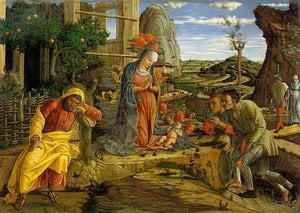
Andrea Mantegna: Arheolog i Vizionar Rane Renesanse
Andrea Mantegnjin život i delo predstavljaju fascinantan spoj arheološke strasti, vizionarske umetnosti i dubokog razumevanja klasične antike. Rođen oko 1431. godine u blizini Padove, na teritoriji tadašnje Republike Venecije, Mantegna je bio više od običnog slikara; on je bio iskreno posvećen revitalizaciji duha antičkog Rima u novom italijanskom društvu. Njegovo detinjstvo i rana mladost provedena su pod mentorstvom Franchesca Squarcionea, čija radionica nije bila samo škola slikarstva već i svojevrsni muzej drevnih reljefa, statua i natpisa. U tom okruženju, okružen fragmentima izgubljenog carstva, Mantegnjina umetnost počinje da se kristališe – karakteristična po skulpturalnim formama, dramatičnoj perspektivi i gotovo opsesivnom pogledu na detalje. Njegova rana ambicija i talenat bili su očigledni, a raskol sa Squarcioneom u mladosti svedoči o njegovoj odlučnosti da se oslobodi uticaja i krene sopstvenim putem.
Mantua i Iluzionističko Majstorstvo
Karlovanje službe pod Gonzagama u Mantovi predstavljaju ključni trenutak u Mantegnjinoj karijeri. U ovom okruženju, dobio je neviđenu umetničku slobodu i priliku da realizuje svoje najambicioznije projekte. Najpoznatije od njih je svakako *Camera degli Sposi* (Venčana soba) u Palazzo Ducale – remek-delo koje prevazilazi granice obične dekoracije. To je potpuni iluzionistički prostor, gde se arhitektura i slika spajaju da bi stvorili produžen osećaj prostora. Freske prikazuju scene iz života porodice Gonzaga, sa neverovatno realističnim portretima koji angažuju gledaoca. Posebno impresivna je *di sotto in sù* (sa donjeg nivoa) perspektiva na plafonu, koja stvara iluziju otvorenog neba. Ova majstorska manipulacija perspektivom nije samo tehnička veština; ona gradi svet unutar sobe, bršeći granice između stvarnosti i reprezentacije. Osim *Camera degli Sposi*, Mantegna je za potrebe Gonzagove porodice stvarao i monumentalne serije kao što su *Trijumfi Cezara*. Ove slike, inspirisane rimskim trijumfalnim procesijama, nisu samo istorijski prikaz; one su složene alegorije koje slave moć i prestiž porodice Gonzaga, sa grandioznošću koja se meri s ambicijama drevnog Rima.
Perspektiva, Anatomija i Klasicizam
Mantegnjine umetničke inovacije protežu se daleko izvan iluzionističkih prostora. On je bio pionir u korišćenju perspektive, često primenjujući tehnike koje su išle protiv konvencionalnih metoda kako bi postigao dramatične efekte. Često je podesio horizontu liniju, stvarajući osećaj monumentalnosti i impozantne skale. Ova tehnika, u kombinaciji sa njegovom pažnjom na detalje anatomije, daju figurama neuporedivo prisustvo i težinu. Njegova veština *trompe-l'oeil* – kreiranje iluzija koje su tako ubedljive da zavaravaju oko – dodatno je pojačala ovaj efekat, bršeći granice između slikarstva i stvarnosti. Ta posvećenost anatomskoj preciznosti nije samo tehnička veština; ona odražava njegovu duboku povezanost sa klasičnom skulpturom i želju da oponaša idealne oblike antike.
Nasleđe i Trajni Uticaj
Andrea Mantegna je umro u Mantovi 1506. godine, ostavivši iza sebe nasleđe koje i danas inspirishe umetničke istoričare i ljubitelje umetnosti. Njegovo delo predstavlja ključni prekretnicu u istoriji renesansne umetnosti, premošćujući jaz između ranog i visokog perioda. On nije bio samo imitator antičkih formi; on je bio tumač, prilagođavajući drevne motive i tehnike da bi stvorio nešto potpuno novo i jedinstveno svoje.
Njegova pažnja na detalje, majstorstvo perspektive i duboka povezanost sa antikom učinili su ga vodećom figurom svog vremena. Istraživanje klasične tematike pomoglo je da se obnovi interesovanje za drevnu umetnost i kulturu, otvarajući put umetničkim dostignućima Visoke renesanse. Njegov uticaj se može videti u delima bezbrojnih umetnika koji su ga sledili, od Raphaelove graciozne kompozicije do Michelangeloovih moćnih figura. Danas, njegove slike se nalaze u glavnim muzejima širom sveta, gde i dalje izazivaju divljenje i poštovanje.
- Njegova inovativna upotreba perspektive nastavlja da se proučava od strane umetnika i istoričara umetnosti.
- Njegova anatomski preciznost ostaje merilo za realističku reprezentaciju.
- Njegova posvećenost klasičnim temama je oblikovala tok renesansne umetnosti.
Mantegnjino trajno nasleđe leži ne samo u njegovoj tehničkoj briljantnosti, već i u njegovoj sposobnosti da sa svojim delima udahuje intelektualnu dubinu i emocionalnu moć, čineći ga jednim od najvažnijih i najuticajnijih umetnika italijanske renesanse.



 Pregledaj u prostoru
 Kupi ručno naslikanu sliku
 Pošalji
 Podeli
 Detalji o delu

 Преузми
 Slični predmeti
 Rendgenski snimak
 Slajdovi
 Statistika
 Pročitaj više






































 Opcija sa staklom dostupna je samo za dimenzije manje od 110 cm