


 GraphiteGerman Renaissance
 Renaissance
 17.0 x 12.0 cm
 Kupferstichkabinett
Giclée štampa ili print na platnu muzejskog kvaliteta uz brzu proizvodnju i fleksibilne opcije završne obrade. ( Kupi ručno naslikanu sliku Kupi digitalnu sliku)
Izaberite jednu od naših unapred definisanih veličina koje odgovaraju originalnim proporcijama umetničkog dela.

Možete uneti sopstvene dimenzije kako biste umetničko delo prilagodili specifičnom okviru ili prostoru. Ako odabrani format ne odgovara proporcijama originalne slike, mi ćemo ili iscrtati deo dela ili proširiti sliku pomoću ogledane ivice ili jednobojnog popunjavanja. Digitalni prikaz će vam biti poslat na odobrenje pre početka proizvodnje.
Imajte na umu da pregled na ekranu ne odražava stvarno iscrtavanje ili proširivanje. Samo će prikaz (mockup) precizno pokazati finalnu kompoziciju.
Iako su prilagođene dimenzije dostupne, preporučujemo da odaberete dimenziju sa unapred definisane liste kako biste očuvali originalne proporcije.
Dostava širom sveta () za 2 nedelje umesto uobičajenih 4/5 nedelja. (7 септембар)


Two seated lions
Dimenzije reprodukcije
This exquisite black and white drawing, "Two Seated Lions," created around 1521 by the renowned German Renaissance artist Albrecht Dürer, offers a captivating glimpse into his meticulous observation of the natural world. More than just a depiction of two majestic animals, it represents a pivotal moment in art history where detailed realism began to intertwine with symbolic meaning.
The artwork portrays two lions seated side-by-side, rendered with remarkable detail. Dürer’s style is firmly rooted in the Northern Renaissance tradition, characterized by its emphasis on anatomical accuracy and naturalistic representation. Unlike earlier depictions of lions often found within mythological or heraldic contexts, this drawing presents them as observed creatures, showcasing their physical attributes with striking realism. The composition itself is balanced and stable, reflecting the inherent power and dignity of these animals. The lions are not engaged in any action; they simply exist, conveying a sense of quiet strength and watchful presence.
Dürer’s mastery of drawing techniques is evident throughout the piece. He primarily utilizes lines – hatching and cross-hatching – to define forms, create depth, and simulate texture. The varying density of these lines skillfully mimics the roughness of lion fur, bringing a tactile quality to the image. The lighting appears to originate from above and slightly in front, casting shadows that accentuate the volume and musculature of the lions’ bodies. This careful manipulation of light and shadow contributes significantly to the three-dimensional effect, despite the two-dimensionality of the medium (likely graphite or charcoal on paper). The precision with which Dürer renders each strand of fur and muscle fiber demonstrates his exceptional skill as a draftsman.
The creation of "Two Seated Lions" occurred during a period when European exposure to exotic animals was limited. Dürer likely drew these lions from observation at a zoo in Ghent, Belgium, demonstrating an early interest in zoological study within the realm of art. This drawing reflects a shift towards empirical observation and scientific inquiry that characterized the Renaissance. It’s significant because it moves beyond purely symbolic representations of lions (often associated with royalty or courage) to a more direct engagement with the animal itself. Dürer's travels throughout Europe exposed him to new artistic influences, including those from Italy, which further shaped his style and approach to realism.
While grounded in observation, "Two Seated Lions" also carries symbolic weight. Lions have long been associated with strength, courage, royalty, and guardianship. Dürer’s depiction imbues these animals with a sense of quiet nobility and inherent power. Interestingly, some scholars suggest that Dürer's fascination with lions may have stemmed from a personal connection – he was known to be proud of his own long hair, and the lion's mane could be seen as a symbolic parallel. The drawing evokes a feeling of awe and respect for these magnificent creatures, while also offering a glimpse into the mind of one of history’s greatest artists—a man dedicated to capturing the beauty and complexity of the world around him.


1471 - 1528 , Италија

Explore the profound artistry of graphite drawing. Discover professional techniques for mastering depth, texture, and detail through a lens of art history, from classical sketches to modern masterpieces. Elevate your understanding of the pencil medium with our expert guide.

Elevate your artistic practice with this expert guide to mastering the line. Discover advanced techniques in graphite, charcoal, and contour drawing designed for art students seeking technical precision and expressive depth in their fine art studies.

Explore the profound precision of German Renaissance art. From Albrecht Dürer’s intricate engravings to the soulful depth of Northern Renaissance portraiture, discover a masterclass in detail, humanism, and technical mastery for the true art enthusiast.
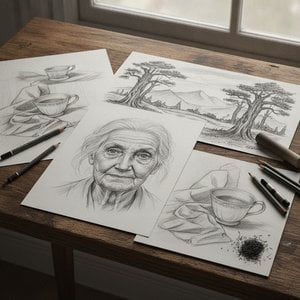
Explore the profound elegance of pencil and charcoal sketching. Discover how masters use line, shadow, and chiaroscuro to capture light and texture, bridging the gap between preparatory studies and timeless fine art masterpieces.

Explore the profound beauty of the sketch. Discover how masters use charcoal and graphite to capture raw emotion, anatomical precision, and fluid movement, bridging the gap between ephemeral marks and eternal oil masterpieces.

 Pregledaj u prostoru
 Pošalji
 Podeli
 Detalji o delu

 Преузми
 Slični predmeti
 Rendgenski snimak
 Slajdovi
 Pročitaj više




































 Opcija sa staklom dostupna je samo za dimenzije manje od 110 cm


