BESPLATNA KONSULTACIJA SA STRUČNJAKOM ZA UMETNOST

x
Kupi štampu Kupi štampuNaručite reprodukciju Naručite reprodukciju PošaljiPošalji
DetaljiDetalji Dodaj u omiljene Dodaj u omiljene ПреузмиПреузми Slični predmetiSlični predmeti Rendgenski snimakRendgenski snimak SlajdoviSlajdovi

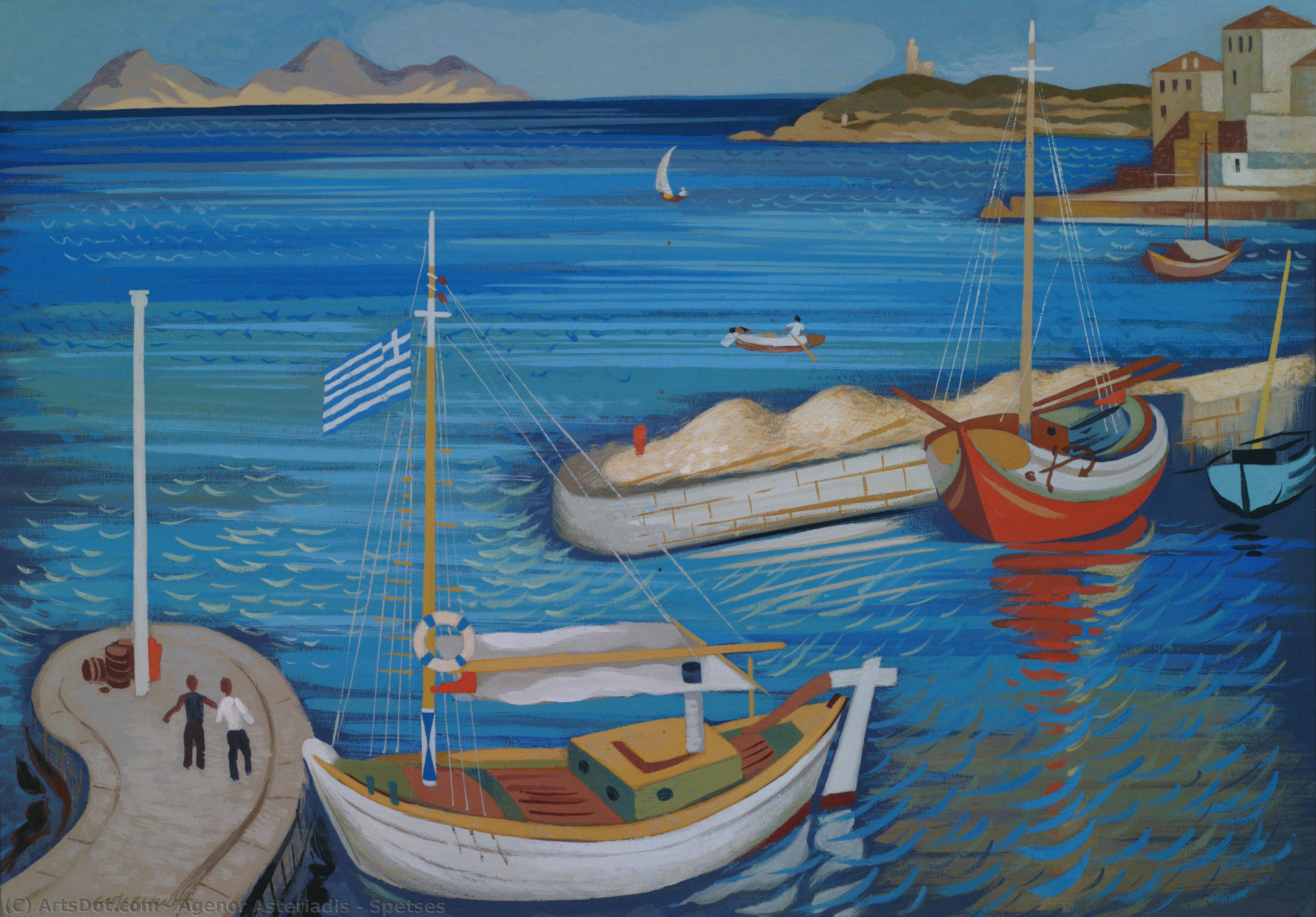
Spetses

Discover the captivating landscape paintings of Agenor Asteriadis, a renowned Greek artist celebrated for his watercolor & oil techniques. Explore his evocative depictions of Greece's beauty.

Kupite digitalnu sliku visoke rezolucije i poboljšanog kvaliteta, koja je znatno superiornija od onoga što vidite u online prikazu.

Svaka datoteka je pedantno pripremljena od strane naših stručnjaka koristeći napredne alate i profesionalnu ručnu retušu. Osiguravamo da svaka slika ima izuzetnu oštrinu, preciznu reprodukciju boja i fine detalje.

Konačna datoteka se dostavlja putem e-pošte u roku od 72 sata, optimizovana za neposrednu upotrebu u profesionalnim, izdavačkim i štamparskim okruženjima. To je isti kvalitet kojem veruju vrhunski studiji dizajna, izdavači i galerije.

Digitalna slika

Preuzmite datoteku visoke rezolucije za ličnu upotrebu, štampanje i kreativne projekte.

Ukupna cena

$9.99

Uključeno uz svaku porudžbinu digitalne slike

Profesionalna digitalna isporuka, zagarantovana

Kada odaberete WahooArt.com, ne dobijate samo sliku – vi primate profesionalno unapređeno digitalno umetničko delo, izrađeno sa najvećom preciznošću i uz garanciju zadovoljstva. Evo svega što automatski dolazi uz vašu porudžbinu:

shipping_icon
Brza dostava putem e-pošte

Vaša digitalna slika visoke rezolucije biće vam poslata putem e-pošte u roku od 72 sata od poručivanja – spremna za trenutnu upotrebu.

canvas_icon
Digitalna datoteka unapređena veštačkom inteligencijom

Vaše umetničko delo je profesionalno optimizovano korišćenjem naprednih AI alata i ručne obrade, čime se osiguravaju maksimalni detalji, oštrina i preciznost boja.

insurance_icon
Besplatna ponovna isporuka doživotno

Slučajno ste obrisali ili izgubili svoju datoteku? Ne brinite – poslaćemo vam je ponovo u bilo kom trenutku, potpuno besplatno.

tax_icon
Bez troškova uvoza – zauvek

Uživajte u svojim umetničkim delima trenutno, bez carine, dažbina ili troškova dostave – digitalni download je uvek bez poreza.

color_icon
Garancija vernosti boja

Uz pomoć profesionalnih alata i upravljanja bojama, osiguravamo da vaša digitalna slika što vernije odražava originalne boje.

return_icon
Garancija zadovoljstva u roku od 60 dana

Ako niste zadovoljni svojom digitalnom slikom, revidirat ćemo je ili vratiti 100% novca u roku od 60 dana – bez ikakvih pitanja.

guarantee_icon
100% garancija povrata novca

Niste zadovoljni? Obezbedite pun povrat novca u roku od 60 dana od trenutka kada ste primili svoju digitalnu datoteku – bez suvišnih pitanja.

discount_icon
Popusti na velike porudžbine

Kupite 3 slike, uštedite 10% - Kupite 5 slika, uštedite 15% - Kupite 10+ slika, uštedite 20%. Odlično za kreativne projekte, galerije i agencije.

Srodna umetnička dela


Biografija umetnika

Maurits Cornelis Escher: The Architect of Impossible Worlds

Born in Leeuwarden, Netherlands, in 1898, Maurits Cornelis Escher was a graphic artist whose singular vision defied conventional perception. For most of his life, he remained largely unrecognized within the established art world, yet today he is celebrated as one of the twentieth century’s most innovative and influential artists. Escher's work—a mesmerizing blend of meticulous detail, mathematical precision, and fantastical imagery—continues to captivate audiences worldwide, inviting us to question our understanding of space, perspective, and reality itself.

Escher’s early life was marked by a quiet intensity and a deep fascination with the natural world. His father, a tailor, and his mother, a milliner, instilled in him a respect for craftsmanship and an appreciation for beauty. After failing to secure admission to the Academy of Fine Arts in Amsterdam, Escher pursued studies in architecture at the Haarlem School of Architecture and Decorative Arts, where he discovered his true calling: printmaking. It was during this period that he began experimenting with woodcuts, lithographs, and mezzotints, techniques that would become central to his artistic practice.

Initially, Escher’s work drew inspiration from the landscapes and creatures of his native Netherlands – intricate depictions of insects, meticulously rendered Dutch windmills, and evocative studies of lichens. However, as he matured as an artist, his interests shifted towards more abstract concepts. He became increasingly intrigued by the mathematical possibilities inherent in visual representation, particularly the principles of tessellations (the tiling of a surface with repeating shapes), infinity, and symmetry. This fascination led him to collaborate with mathematicians like George Pólya, Roger Penrose, and Donald Coxeter, forging a unique intellectual partnership that profoundly influenced his artistic development.

The Impossible Made Real: Escher’s Signature Themes

Escher's most recognizable works are characterized by their paradoxical nature—images that appear to defy the laws of physics and logic. He masterfully manipulated perspective, creating illusions of depth and movement within confined spaces. His “impossible objects,” such as the famous "Hand with Reflecting Sphere" (1935) and "Drawing Hands" (1948), demonstrate his ability to depict figures that simultaneously exist in multiple dimensions or appear to fold back upon themselves. These works, alongside pieces like “Relativity” (1953) and “Waterfall” (1961), explore the fundamental principles of geometry and mathematics, revealing a deep understanding of concepts such as hyperbolic geometry and tessellations.

Beyond these iconic examples, Escher’s oeuvre encompasses a vast range of subjects. He frequently depicted animals in impossible situations—birds flying through solid walls, fish swimming through air—and explored the concept of infinity through intricate patterns that seem to stretch endlessly into the distance. His fascination with symmetry is evident in numerous works, where repeating motifs create mesmerizing visual rhythms and explore the beauty of balanced forms.

A Hidden Life: Escher’s Recognition and Legacy

Despite his growing popularity among scientists, mathematicians, and a wider public—particularly after Martin Gardner featured his work in *The Mathematical Games* column in 1966—Escher remained largely overlooked by the mainstream art world during his lifetime. It wasn't until the late twentieth century that his unique artistic vision began to receive the recognition it deserved. Retrospective exhibitions were held around the globe, showcasing the breadth and depth of his extraordinary talent.

Maurits Cornelis Escher died in Baarn, Netherlands, in 1972, leaving behind a legacy of over 300 prints and drawings. His work continues to inspire artists, designers, and mathematicians alike, serving as a testament to the power of imagination and the enduring fascination with the boundaries of perception. Today, Escher’s intricate creations are not only admired for their aesthetic beauty but also for their profound exploration of fundamental mathematical concepts—a true synthesis of art and science.

Influences and Artistic Connections

Escher's artistic journey was shaped by a diverse range of influences. He drew inspiration from the works of earlier masters, including Michelangelo, Leonardo da Vinci, Dürer, and Holbein, absorbing their techniques and stylistic approaches. However, he also found significant inspiration in the art of the East, particularly Japanese woodblock prints, which showcased intricate detail and a mastery of perspective. The work of Giorgio de Chirico, with its unsettling juxtapositions and dreamlike atmosphere, was another key influence on Escher’s development.

Crucially, Escher's intellectual life extended beyond the realm of art. He engaged in stimulating conversations with leading mathematicians such as George Pólya, Roger Penrose, and Donald Coxeter, seeking to understand the mathematical principles underlying his artistic creations. These collaborations not only deepened his understanding of geometry and tessellations but also informed the conceptual framework of his work.

Notable Works

  • Hand with Reflecting Sphere (1935): A classic example of Escher’s mastery of perspective and impossible objects, depicting a hand holding a sphere that appears to reflect itself endlessly.
  • Drawing Hands (1948): An iconic image showcasing the paradoxical nature of drawing—a figure seemingly creating itself from its own hands.
  • Relativity (1953): A complex lithograph illustrating the concept of relativity through a series of nested staircases and pathways, challenging our perception of space and time.
  • Waterfall (1961): A mesmerizing depiction of water flowing uphill, demonstrating Escher’s ability to manipulate perspective and create illusions of movement.

Further Exploration

To delve deeper into the life and work of Maurits Cornelis Escher, we recommend visiting the official website: M.C. Escher - The Official Website. You can also explore resources such as Wikipedia (https://en.wikipedia.org/wiki/M._C._Escher) and the Henry Moore Foundation website (https://henry-moore.org/).

agenor asteriadis

agenor asteriadis

1898 - 1977