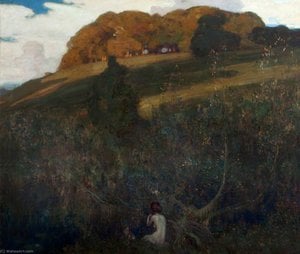
Vizionarski atmosfere in narave
Sir Alfred Edward East je izrazil svojo umetnost v dinamičnem umetnostnem okolju viktorianske Britanije, obdobja, ki ga je opredelila globoka fascinacija tako z natančnim realizmom kot z naraščajočimi romantičnimi ideali. Rodjen v Ketteringu v Northamptonshireju, se je njegova kreativna pot začela z osnovnim oblikovanje na umetnostni šoli v Glasgowu. Čeprav so bile njegove začetne naklonjenosti zakoreninjene v spoštovani tradiciji britanske slikarstva krajine—žanra, ki so ga že obogatili mojstri, kot sta Constable in Turner—je se Eastova umetniška pot soočila z odločilnim in preobrazbenim preobratom. Presegli je zamej samo dokumentiranje in namesto tega skušal zajeti samo esenco naravnega sveta skozi prizmo globokega čustvenega odmeva.
Ta evolucija je bila močno oblikovana z njegovim srečanjem z francosko šolo Barbizon. Namesto da bi preprosto prevzel novo tehniko, je East sprejel filozofsko premik, ki je prednost dajal neposrednemu opazovanju in neizkrivljenemu prikazovanju podeželskega življenja. Odrekel se velikim zgodovnim narativom v korist poezije, ki jo najdemo v vsakdanjih scenah, ter se je osredotočil na občutek popolne prisotnosti v naravi. Ta težnja po slikanju en plein air mu je omogočila mojstrovstvo v subtilni igri svetlobe, senč, in atmosfere, kar je prineslo dela, ki imajo skoraj taktilno kakovost.
Vpliv dalekih obzorjev
Ključni trenutek v Eastovi karieri se je zgodil leta 1888, ko ga je Marcus Huish, vodja Fine Art Society, pošiljal za šest mesecev v Japono. Ta ekspedicija se je izkazala za preobrazbensko, saj so ga edinstvena svetloba, živahne barve in specifična kulturna estetika japanske krajine očarali. Ni zgolj dokumentiral eksotičnih lokacij; vsoževel je nov način gledanja—povečano občutljivost za kompozicijo in delikatno ravnovesje med naravo in človeško prisotnostjo. Nakaončana razstava 104 slik iz te potovanja leta 1890 je bila spektaklen uspeh, ki ga je trdno utrdil kot vodilnega slikarja krajine svoje dobe.
Njegovo del ostaja čudovita sinteza raznolikih vplivov, ki vključuje naslednje elemente:
- Vpliv Barbizon: predanost zemljskim tonom, utemeljeni paleti barv in evokativni moči atmosferične perspektive.
- Britanska tradicija: globoko zakoreninjeno spoštovanje do neukrotljene lepote in mirnega duha angleškega podeželskega okolja.
- Japonska estetika: vpliv novih perspektiv o svetlobi in izpopolnjena občutljivost za subtilne podrobnosti naravnega sveta.
Dediščina in umetnostna značilnost
skozi celo življenje je Eastova predanost zajemanju duše krajine pustila neizbrisen pečat na umetnost njegovega časa. Njegova sposobnost, da je prenesel tiho veličino scen, kot je Midland Meadows, ali sezonska nihanja, ki jih vidimo na delu October Glow, near Yardley Woods, dokazuje mojstrovstvo vzdušja in svetlobe. Poleg njegovih platn, je njegova povezanost z korenami ohranjena skozi umetnično galerijo Alfred East v Ketteringu, ki služi kot svetišče za tisti duh slikarstva krajine, ki ga je pomagal pionirsko uvesti. Njegova dediščina še vedno resonira skozi dela, ki gledalce vabijo k ponovnemu povezovanju z neminljivo lepoto naravnega sveta.
Vprašanja in odgovori
Kje in leta se je rodil/a Alfred East?
Alfred East se je rodil/a v mestu Kettering leta 1844.
Ali lahko dela umetnika Alfred East razvrstim po barvah?
Stran Spektralni pregled razvršča dela umetnika Alfred East po barvah.
Ali obstaja pregled vseh motivov, ki jih je Alfred East naslikal?
Delo umetnika Alfred East lahko raziskujete po temah na njegovi strani Atlas motivov.