Umetniška dela, prikazana na tej strani, so zaščitena z avtorskimi pravicami, kar pomeni, da po zakonu ne moremo ustvarjati ali prodajati identičnih reprodukcij. Ta zaščita se izvaja v skladu z mednarodnimi sporazumi, kot so Bernska konvencija in po nacionalnih zakonih, vključno s tistimi, ki jih določa Zakon o avtorskih pravicah ZDA – naslov 17.
Ta način v celoti upošteva zakonodajo o avtorskih pravicah, saj ne vključuje kopiranja ali podvajanja zaščitenga umetniškega dela. Namesto tega gre za kreativno preinterpretacijo – novo sliko, ki je navdihnjen rezultat originala, vendar ni z njim identična.
Giclée ali platnati odtis muzejske kakovosti z hitro proizvodnjo in prilagodljivimi možnostmi končne obdelave. ( Kupite ročno slikano delo Preklop na digitalno sliko)





























Izberite eno od naših vnaprej določenih velikosti, ki ustrezajo prvotnim proporcijam umetničkega dela.

Vnesite širino in višino, ki jih potrebujete za svoj okvir ali steno. Tiskanje se lahko le odreže, vendar ga ni mogoče narediti večjega od slike, zato format z drugačno obliko pomeni izgubo dela slike. Pred tiskanjem vam pošljemo digitalni predogled za potrditev. Slika, prikazana na tej strani, ne prikazuje dejanskega izrezka — le predogled to omogoča.
Globalna dostava () v 2 tednih namesto standardnih 4/5 tednov. (10 november)
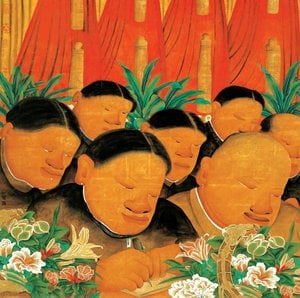
Curtain, No.8
Velikost reprodukcije
In the quiet corridors of contemporary Chinese art, few works command attention with such rhythmic simplicity as Zhu Wei’s Curtain, No.8. At first glance, the viewer is met with a striking expanse of deep red, interrupted only by the disciplined cadence of white stripes. This is not merely a study of fabric or pattern; it is an immersive experience that pulls the observer into a space of profound stillness. The painting, measuring a monumental 160 x 200 cm, utilizes its large scale to envelop the room, making it an ideal centerpiece for those seeking to introduce a sense of dramatic elegance and contemplative depth into a sophisticated interior.
The artistry lies in the masterful tension between tradition and modernity. Executed on paper, Zhu Wei employs techniques that bridge the gap between classical Chinese ink traditions and a contemporary, almost minimalist aesthetic. The way the red pigment interacts with the surface creates a visual texture that suggests the heavy, tactile weight of velvet or thick silk, yet retains a certain ethereal lightness characteristic of fine paper works. Each stripe serves as a structural element, guiding the eye across the composition and creating a hypnotic, undulating movement that mimics the gentle sway of a curtain caught in a phantom breeze.
To understand Curtain, No.8, one must look through the lens of Zhu Wei’s unique position in the post-Tiananmen era of Chinese art. As an artist trained at the People’s Liberation Army Art Academy, his early exposure to propaganda art—characterized by bold colors and clear messaging—informs his ability to manipulate powerful symbols. In this work, the red curtain acts as a potent metaphor. Red is a color deeply embedded in the Chinese cultural consciousness, representing both vitality and the political landscape of the nation. By presenting the curtain as an abstract, patterned object, Zhu Wei invites us to consider what lies behind the veil—the boundary between the public spectacle and the private reality.
For the discerning collector or interior designer, this piece offers a rare opportunity to possess a work that is both visually arresting and intellectually stimulating. The painting does not demand attention through chaos, but rather through a curated, rhythmic order. It provides a sophisticated anchor for a gallery wall or a standalone statement in a minimalist lounge. Whether viewed as a study of geometric pattern or a subtle critique of social layers, Curtain, No.8 remains an evocative masterpiece that brings the nuanced history of modern China into the contemporary living space.
"Curtain, No.8" je wall art delo.
Priporočena prostorina za "Curtain, No.8" avtorja Zhu Wei je Living Room. Ta predlog je lahko seveda prilagojen vašemu notranjemu opremanju.
V "Curtain, No.8" Bold vzdušje dopolnjuje Dramatic čustvo.
Zhu Wei, rojen leta 1966 v Pekingu, je eden najbolj izstopajočih sodobnih kitajskih umetnikov, ki s svojim subtilno kritičnim pogledom na politiko in družbo v hitro spreminjajočem se pokrajisu moderne Kitajske navdihuje gledalce po vsem svetu. Kot eden najbolj prepoznavnih predstavnikov umetnosti obdobja po dogodkih na Tiananmen Age, s svojimi deli izkazuje neverjetno zvestobo tradicionalnemu kitajskemu slikarstvu, hkrati pa ponuja globoko in premišljeno razmišljanje o njegovem zgodovnem kontekstu.
Zhu Wei zavzema ključno mesto v sodobni kitajski umetnosti. Kot umetnik, ki se je pojavil v obdobju po dogodkih na trgu Tiananmen, njegovo del odraža kompleksno negocijanje med tradicijo in modernostjo, med državnim nadzorom in individualno izraževalnostjo. Njegova subtilna kritika političnih in družbenih struktur, podana skozi prizmo klasične kitajske umetnosti, ponuja edinstveno perspektivo na hitro spreminjajočo se Kitajo. S svojim delom dokazuje, da se lahko tradicionalne umetniške oblike močno prilagodijo sodobnim izzivom, s čimer utrjuje svojo dediščino kot vitalnega glasu v svetovnem umetniškem dialogu.

1966 - , Kitajska

Discover the profound beauty of abstract art. Our expert guide explores geometric abstraction, Op Art, and Expressionism, offering connoisseurs deep insights into collecting and curating powerful, non-representational masterpieces for sophisticated interiors.

Explore the profound evolution of Neo-Abstract art. Discover how bold geometric forms, vibrant chromatic depth, and tactile textures redefine modern expression for the discerning collector seeking sophisticated, high-impact masterpieces for contemporary interiors.
 Predogled v realnem okolju
 Pošlji
 Deli
Deli
 Podrobnosti o delu
 Priročnik

 Prenesi sliko
 Podobni izdelki
 Rentgenski posnetek
 Predvajaj diaporama
 Vprašanja in odgovori
 Statistika


 Preberi več









 Možnost stekla je na voljo le za velikosti pod 110 cm