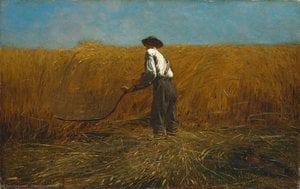
Winslow Homer: Ameriški Realist in Moč Prirode
Winslow Homer, rojen leta 1836 v Bostonu, ni bil oblikovan v tradicionalnih evropskih umetniških akademijah, ki so zaznamovale številne njegove sodobnike. Namesto tega se je pojavil iz izkušnje, ki je bila globoko ameriška, koreninjajoča v praktičnosti in opazovanju. Njegovo potovanje se ni začelo z velikimi zgodovinskimi platnovi, temveč kot komercialni ilustrator pri le dvanajstih letih za Harper's Weekly. Ta zgodnja vajeništvo je bilo oblikujoče, saj je brusilo izjemno sposobnost zajemanja prizorov jasnosti in podrobnosti – spretnosti, ki so postale vodilne značilnosti njegove zrele umetnosti. Ni se učil perspektive v Parizu; učil se je *videti* Ameriko, njene ljudi in njeno razvijajočo se zgodbo. Prijetni ulice Bostona, tiha dostojanstvenost podeželske New England življenja – to so bili njegovi prvi predmeti, upodobljeni s natančnostjo, ki jo je zahtevala potreba po tisku. Ta temelj mu je omogočil prehod v slikanje, sprva z akvarelom, preden se je popolnoma posvetil izraznemu potencialu oljnih barv.
Od Pastoralnih Prizorov do Surove Moči Narave
Homerjeva zgodnja slikarska dela so pogosto prikazovala idilične prizore – otroci, ki se igrajo, kmetje, ki skrbijo za polja, tihe trenutke domačnosti. Ta dela, čeprav očarljiva, so namigala na globljo umetniško občutljivost, ki je čakala, da se sprosti. Katalizator te transformacije je bila nedvomno državljanska vojna. Kot vojni dopisnik za Harper's Weekly je iz prve roke priča brutalnim resničnostim konflikta. Ni se osredotočal na herojske bitke ali velike strategije; namesto tega je dokumentiral vsakdanje življenje vojakov in civilistov, tihe trenutke žalosti in odpornosti sredi kaosa. Ta izkušnja je globoko spremenila njegovo umetniško vizijo. Pastoralni prizori so popustili bolj zahtevnim temam: veterani, ki se spopadajo z travmo, osvobojeni sužnji, ki se orientirajo v novem svetu in surova lepota pokrajin, dotaknjena s trpljenjem. Začel je raziskovati teme boja, izolacije in krhkosti človeštva glede narave – teme, ki bodo zaznamovale njegova najmočnejša dela. Njegov slog se je tudi razvil, postal bolj pogumen in neposreden, kar odraža surov vpliv, ki ga je doživel.
Osvajanje Svjetlobe, Teksture in Ameriške Pokrajine
Winslow Homerjeva umetniška tehnika je takoj prepoznavna po svoji trdnosti in teksturi. Ni bil zainteresiran za minljive vtise; želel je zgraditi občutek oprijemljive resničnosti na platnu. Njegova oljna slikarska dela so značilna za neposredno slikanje – plasti barve, nanesene s samozavestjo, ustvarjajo globino in sijaj. Imel je izjemno sposobnost zajeti svetlobo, bodisi bleščečo žgočo sonce na morju ali mehko sijanje mraka nad podeželskim krajem. Ta mojstrstvo se je raztezalo tudi na njegove akvarele, kjer je dosegel izjemne atmosferske učinke s pomočjo živih barv in nežnih pranja.
Breezing Up (A Fair Wind), naslikan leta 1876, uteleša to spretnost – značilen prikaz ameriškega pomorskega življenja, poln energije in gibanja.
The Gulf Stream, ustvarjeno desetletje kasneje, je morda njegovo najbolj ikonično delo, močan in simboličen prikaz samotarskega človeka, ki se bori s silami narave, metafora za človeški boj proti prevelikim težavam. Ni le slikala tega, kar je videl; posredoval je občutek, čustveno resnico o človeškem stanju.
Zapuščina Oblikovana v Amerikanizmu
Medtem ko je Homer občudoval evropske umetnike, kot so tiste iz šole Barbizon – znane po svojih realističnih prikazih podeželskega življenja – in priznal vplive Courbeta in Miletta, je nazadnje ustvaril svojo lastno, značilno ameriško pot. Odklonil je prevladujoče akademske konvencije in se namesto tega osredotočil na zajemanje edinstvenega duha svoje države. Njegova zapuščina leži v njegovi sposobnosti upodobiti Ameriko z iskrenostjo in avtentičnostjo, ne da bi jo romantiziral ali idealiziral. Ni želel posnemati evropskih stilov; želel je ustvariti umetnost, ki je bila edinstvena za Ameriko, odražala njene pokrajine, ljudi in izzive.
Innocence, ganljivo upodobitev otroštva na ozadju narave, in
Man of Science, ki prikazuje njegovo spretnost pri zajemanju človeške psihologije, sta priče temu zavezništvu. Njegov vpliv je mogoče videti pri poznejših ameriških slikarjih, ki so si prizadevali upodobiti svojo državo s podobno neposrednostjo in čustveno globino.
Trajna Vtis: Homerjeva Zgodovinska Pomembnost
Winslow Homerjeva umetnost ponuja poglobljen vpogled v 19. stoletje Amerike, ki zagotavlja dragocena spoznanja o socialni, politični in kulturni pokrajini njegovega časa. Njegove slike niso le lepe predstavitve; so močna sporočila o človeški odpornosti, lepoti in moči narave ter kompleksnostih ameriške izkušnje. Umrl je leta 1910 in za seboj pustil plodovit opus, ki še danes odzvanja pri občinstvu. Njegova sposobnost zajeti bistvo države v obdobju hitrih sprememb – od posledic državljanske vojne do zore novega stoletja – zagotavlja njegovo mesto med najpomembnejšimi in trajnimi ameriškimi umetniki. Ni le slikala slik; dokumentiral je trenutek v času, ohranil ga za prihodnje generacije.
- Njegovo delo še naprej navdihuje sodobne umetnike.
- Homer ostaja ključna figura pri razvoju ameriškega realizma.



 Predogled v realnem okolju
 Kupite ročno slikano delo
 Pošlji
 Deli
Deli
 Podrobnosti o delu
 Priročnik

 Prenesi sliko
 Podobni izdelki
 Rentgenski posnetek
 Predvajaj diaporama
 Q&A
Q&A Statistika


 Preberi več






































 Možnost stekla je na voljo le za velikosti pod 110 cm


![Indian Tobacco Shop Sign [reverse, Indian Facing Right] — Vinslo Homer, Contemporary Realism](/media/artworks/images-thumb/74/22/7422432cafc295265ef3b7f7fa62d35d.jpg)