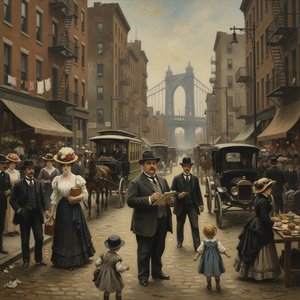
pionir šole Ashcan
William James Glackens, izjemna osebnost ameriške umetnosti, je z svojimi očarljivimi realizmiškimi sliki ostavil neizbrisljiv podpis v kanvu zgodovine. Rojen v Philadelphia, Pennsylvania, leta 1870, je bil Glackensov umetniški potovanje svedočanstvo o njegovi nezlomni strasti do uvareanja bistva vsakdanega življenja.
Rano življenje in vplivi
Glackensova zgodnja življenjska doba je bila označena z naravnim pomanjkanjem kranja do umetnosti, kar ga je vodilo na študijsko mesto v
Pennsylvania Academy of the Fine Arts. Pod mentorstvom Thomasja Anshutza, znanega realizma, je Glackens izboljšal svoje veščine in se je namensk vardan eden założyвач šole Ashcan. Ta gibanje je zavrgnilo konvencionalne meje umetniške lepote in se je namesto tega osredotočalo na trde realnosti mestnega življenja.
Umetniška kariera
Glackensovo delo je značilno po svojih tamno toniranih, vibrantno namalovanih uličnih prizoreh in prikazih vsakdanega življenja v New Yorku in Parizu pred prvi svetovni vojno. Njegova kasnejša dela, pod vplivom Renoirja, so predstavljala svetlejši ton, kar je odražalo njegov rast kot umetnika. Značilno je tudi, da je Glackens deloval kot ilustrator za novinarje in revije v Philadelphia in New Yorku.
Nashranjje in vpliv
Glackensovi prispevi ameriški umetnosti so večdimenzionalni in se razširjajo čez njegovo lastno delo. Izjemno je igral ključno vlogo pri pomagonju Albertu C. Barnesu, da je pridobil evropske slike za
Barnes Foundation v Philadelphia. Ta zbirka je postala temeljac ameriške umetniške zgodovine.
Ključna dela in zbirke: *
The Shoppers (New Realism, olje na platnu, Chrysler Museum of Art) *
View of Haarlem with Bleaching Grounds (Ruysdael, Sforza castle, Milano, Italija)
Priporočljivo branje: * [https://WahooArt.com/@/william-james-glackens](https://WahooArt.com/@/william-james-glackens) - raziskujte obsežna zbirka Glackensovih del na WahooArt.com. * [https://en.wikipedia.org/wiki/william_glackens](https://en.wikipedia.org/wiki/william_glackens) - poglobite se v podrobno biografijo William Jamesa Glackensa na Wikipediaju.



 Preverite v realnem okolju
 Naročite ročno slikano reprodukcijo
 Pošlji kot čestitko
 Deli
Deli
 Podrobnosti
 Navodila

 Prenesi
 Podobni artefakti
 Rentgenski posnetek
 Predvajaj diaporama
 Statistika


 Preberi več






































 Možnost stekla je na voljo le za velikosti pod 110 cm