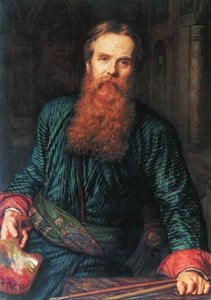
Življenje posvečeno viziji
William Holman Hunt, rojen v Cheapsidu, Londonu 2. aprila 1827, ni bil zgolj slikar; bil je filozofski in duhovni iskalec, ki je svoje najgloblje prepričanja prenesel na platno. Njegovo zgodnje življenje, čeprav zakoreninjeno v živahnem komercialnem svetu očetove skladiščne dejavnosti, je v sebi nosilo umetniški nagib, ki bi sčasoma izpodbijal pričakovanja. Sprva usojen karieri, podobni očetovi, je Hunt našel tolažbo in smisel v umetnosti, najprej s skritimi skicami in pozneje s formalnim študijem na Royal Academy Schools. To obdobje vajeništva pa se je izkazalo za omejujoče. Želel si je umetniškega izraza, ki presega prevladujoče akademske konvencije – želja, ki bi ga kmalu popeljala v revolucionarno spremembo. Bil je zatrt s tem, kar je zaznal kot umetečnost sodobne umetnosti in iskal vrnitev k iskrenosti in podrobnostim, ki so jih našli pri mojstrih pred renesanso, občutek ključnega pomena za ustanovitev bratstva Predrafaelitov. Huntovo pot ni bila zgolj estetska; to je bilo iskanje resnice, morale in duhovne resonance v vizualni reprezentaciji.
Geneza revolucionarskega bratstva
Leta 1848 sta Hunt skupaj z Dante Gabrielom Rossettijem in Johnom Everettom Millaisom ustanovila bratstvo Predrafaelitov (PRB). Ta kolektiv ni bil le umetniški gibanje; to je bila upornost proti temu, kar so videli kot nazadovanje umetnosti po Rafaelu. PRB je zagovarjal vrnitev k natančnim podrobnostim, živahnim barvam in iskreni tematiki, značilni za zgodnje italijansko slikarstvo – pred zaznavno umetečnostjo idealov visokega renesanse. Huntova zavezanost tej filozofiji je ostala neomajna skozi njegovo kariero. Zgodnja dela, kot je
Pastir, naslikan leta 1851, so primer tega posvečenja. Natančen realizem slike – od teksture ovčje volne do vsake posamezne bilke trave – je bil revolucionaren za svoj čas. To ni bila zgolj upodobitev podeželskega življenja; to je bil poskus prenesti moralni in simbolični pomen skozi natančno opazovanje narave.
Prebujanje vesti, tudi iz tega obdobja, je dodatno utrdilo Huntov ugled po intenzivnih naturalističnih prizorih, prežetih s psihološko globino in moralno težo. Te slike niso bile zgolj vizualno osupljive; to so bile izjave o umetnikovem prepričanju v umetnost kot vozilo za resnico in duhovno prebuditev. Bratstvo je želelo izzvati uveljavljene norme umetniške produkcije, zavrniti tisto, kar so zaznavali kot formalistično akademsko slikarstvo v korist neposrednejšega in iskrenejšega spoprijema s svetom okoli njih.
Romanje vere in simbolične globine
Huntova umetniška pot je doživela izjemen preobrat z njegovimi potovanji na Sveto zemljo v 50. in 60. letih. Vodil ga je želja po zgodovinski in topografski natančnosti, se je odpravil na romanje v Palestino in Sirijo ter skrbno dokumentiral pokrajine, kostume in običaje. Ta predanost avtentičnosti je globoko vplivala na njegova kasnejša dela in jih napolnila z neprimerljivim občutkom realizma in duhovne resonance.
Senca smrti, naslikana v tem obdobju, stoji kot močan primer. Slika prikazuje prizor Kristusove žrtve na način, ki je bil tako vizualno osupljiv kot globoko simboličen, kar odraža Huntovo globoko versko prepričanje. Morda njegovo najbolj ikonično delo,
Svetloba sveta, začeto leta 1851 in dokončano leta 1853, uteleša to sintezo vere in umetniške spretnosti. Podoba Kristusa, ki tolče na vrata in ponuja odrešitev tistim, ki odprejo svoja srca, je postala izjemno priljubljena in ostaja ena najbolj prepoznavnih verskih slik viktorijanskega obdobja. Huntova predanost se je raztezala onkraj zgolj reprezentacije; iskal je vključiti v svoja dela plasti simboličnega pomena, črpal iz biblijskih besedil, srednjeveške alegorije in sodobne družbene kritike. Verjel je, da ima umetnost moralni namen – dvigniti, navdihniti in usmeriti gledalce k duhovni razsvetljenosti.
Trajna zapuščina in pozna leta
Kljub temu, da se mu je v poznih letih poslabšal vid – uničujoč udarec za slikarja, tako predanega podrobnostim – je Hunt nadaljeval s ustvarjanjem umetnosti, pogosto ob zaupanju pomoči svojega asistenta Edwarda Roberta Hughesa. Leta 1905 je objavil avtobiografijo in ponudil dragocene vpoglede v svojo umetniško filozofijo in osebno življenje. Njegova predanost je bila priznana z imenovanjem v Red za zasluge s strani kralja Edwarda VII istega leta. Huntovo osebno življenje je zaznamovalo tako veselje kot žalost; bil je poročen dvakrat, najprej z Fanny Waugh, ki je služila kot model za več njegovih del, pozneje pa z njeno sestro Edith, po tem ko je premagal pravne zaplete glede britanskih zakonov o poroki s sorodnico pokojne žene. Umrl je 7. septembra 1910 in bil počaščen s pokopom v katedrali St Paul – dokaz njegovega pomembnega prispevka k britanski umetnosti in kulturi. Zapuščina Williama Holmana Hunta sega daleč onkraj lepote njegovih slik. Revolucioniral je viktorijansko umetnost z zagovarjanjem realizma, simbolizma in duhovne globine ter pustil neizbrisen pečat na generacijah slikarjev in gledalcev. Njegova dela še naprej navdihujejo občudovanje in razmišljanje, kar nas opominja na moč umetnosti, da osvetli človeško stanje in razišče skrivnosti vere.
Ključni vplivi in teme
- Vplivi: Spisi Johna Ruskina o umetnosti in morali; zgodnje italijanske renesančne slike (predrafaeliti); biblijska besedila in srednjeveška alegorija.
- Glavne teme: Verska vera, moralno prebujanje, lepota narave, družbeni komentar, simbolizem. Hunt je dosledno raziskoval teme odrešitve, žrtvovanja in iskanja duhovne resnice v svojem delu.
- Ključni datumi: 2. aprila 1827: rojen v Cheapsidu, London; 1851-1853: naslikal Svetlobo sveta; 7. septembra 1910: umrl in pokopan v katedrali St Paul, London.



 Preverite v realnem okolju
 Preklop na tiskanine
 Pošlji kot čestitko
 Deli
Deli
 Podrobnosti
 Navodila

 Prenesi
 Podobni artefakti
 Rentgenski posnetek
 Predvajaj diaporama
 Statistika


 Preberi več