


Giclée ali platnati odtis muzejske kakovosti z hitro proizvodnjo in prilagodljivimi možnostmi končne obdelave. ( Kupi ročno naslikano sliko Kupi digitalno sliko)





























Izberite eno od naših vnaprej določenih velikosti, ki ustrezajo prvotnim proporcijam umetničkega dela.

Svoje dimenzije lahko vnesete sami, da bodo ustrezne za določen okvir ali prostor. Če izbrana velikost ne bo skladna z razmerji izvirne slike, bomo umetniško delo orezali ali podaljšali s pomočjo ogledalnega odraza ali barvno polnega roba. Pred začetkom proizvodnje vam bomo poslali digitalni predogled za potrditev.
Upoštevajte, da predogled na zaslonu ne prikazuje dejanskega orezovanja ali podaljševanja. Le digitalni predogled bo natančno prikazal končno kompozicijo.
Čeprav so na voljo prilagojene velikosti, priporočamo izbiro dimenzije s predhodno določenega seznama, da ohranite prvotna razmerja.
Globalna dostava () v 2 tednih namesto standardnih 4/5 tednov. (7 september)


A Man Called Mr. Wood, the Dancing Master
Velikost reprodukcije
In the quiet, dignified presence of “A Man Called Mr. Wood, the Dancing Master,” we encounter more than just a portrait; we step into the refined atmosphere of the mid-1s70s British aristocracy. Painted around 1757 by the incomparable Thomas Gainsborough, this work serves as a profound psychological window into the character of a gentleman. Mr. Wood is captured in a moment of poised contemplation, his gaze meeting the viewer with an air of self-assuredness that borders on a subtle, knowing amusement. There is an undeniable magnetism in his expression, a flicker of wit that suggests a man deeply engaged with both his surroundings and his own intellect. As he sits beside a chair and a wall clock, the painting invites us to share in his world of measured grace and social sophistication.
The composition is masterfully balanced, utilizing objects not merely as props but as silent narrators of a life well-lived. The inclusion of the clock serves as a poignant memento mori, a gentle reminder of the relentless passage of time, while the chair anchors the subject in a space of stability and domestic comfort. Gainsborough’s ability to weave these elements into a cohesive narrative allows the viewer to feel the weight of history and the stillness of the moment. For the discerning collector or interior designer, this piece offers a sense of timelessness, making it an ideal centerpiece for spaces that value heritage, intellectual depth, and a touch of classical grandeur.
Technically, this portrait is a testament to Gainsborough’s unique position within the English landscape and portrait traditions. Eschewing the heavy, dramatic shadows often found in the works of his contemporary Sir Joshua Reynolds, Gainsborough employs a luminous palette and a gentle diffusion of light. His technique is characterized by soft, fluid brushstrokes that lend an ethereal, almost dreamlike quality to the scene. Through the skillful application of glazing, he achieves a remarkable depth of tone, particularly evident in the rich textures of Mr. Wood’s blue coat and the subtle highlights on his white hair and beard.
This delicate handling of light creates a sense of atmosphere that is both airy and substantial. The way the light grazes the gold buttons of his attire and illuminates the surfaces within the room demonstrates a mastery of naturalism. It is this very softness—this refusal to rely on harsh contrasts—that imbues the painting with its characteristic serenity. To possess a reproduction of such a work is to bring a sense of calm, sophisticated light into one's own environment, providing an aesthetic anchor that feels both historically significant and eternally fresh.
To understand this portrait is to understand the spirit of the Enlightenment. During this era, the values of intellectual curiosity, social decorum, and naturalism were at the forefront of British culture. Gainsborough’s work perfectly encapsulates these ideals, moving away from the rigid conventions of the Baroque toward a more humanistic and psychologically realistic approach. The painting does not merely document a face; it celebrates the dignity of the individual and the quiet pleasures of an observant life.
For those looking to curate a collection or decorate a room with intention, “A Man Called Mr. Wood” offers unparalleled inspiration. It embodies a lifestyle of understated grandeur—a luxury that does not shout but whispers through quality, texture, and character. Whether placed in a study, a formal dining room, or a curated gallery wall, this masterpiece continues to radiate an aura of confidence and grace, making it a timeless investment for any lover of fine art.


1727 - 1788 , Združeno kraljestvo

Explore the life & work of Thomas Hudson, a leading 18th-century British portraitist. Discover his mastery of the 'Grand Manner,' influential style, and lasting impact on British art. Learn about his notable portraits like Judge William Noel & Alexander Van Aken.

Odkrijte veličino baročne umetnosti! Nasveti za integracijo dramatičnosti in čustvenosti v vaš dom. Kvalitetne reprodukcije, naročila po meri pri WahooArt.com – strokovno posvetovanje in vrhunska kakovost.

Explore the dramatic world of Baroque art! Discover iconic artists like Caravaggio & Rubens, defining techniques, and its lasting impact on art history. Expert insights for collectors & enthusiasts at WahooArt.
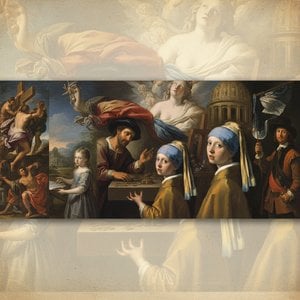
Odkrijte 10 baročnih mojstrovine, ki so zaznamovale umetnost! Karavaggio, Bernini & Rubensovi deli v zgodovinskem kontekstu. Navdih za notranjost in reprodukcije slik na WahooArt.com. Raziskujte polno zbirko online!

Explore the dramatic world of Baroque art! Discover iconic masters like Caravaggio & Rembrandt, their techniques, and the movement's lasting impact. Expert insights for collectors & enthusiasts at WahooArt.

 Predogled
 Pošlji
 Deli
Deli
 Podrobnosti o delu

 Prenesi
 Podobni izdelki
 Rentgenski posnetek
 Predvajaj diaporama


 Razviljaj več







 Možnost stekla je na voljo le za velikosti pod 110 cm


