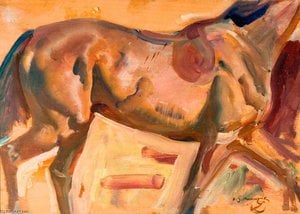
Življenje Prepleteno s Konjiško Gracioznostjo
Sir Alfred James Munnings, ime nerazdeljivo povezano z živahnimi prizori konjev in romantično privlačnostjo angleške podeželske pokrajine, zavzema ključno mesto v umetnosti 20. stoletja. Rojen leta 1878 sredi valovitih krajev Suffolk-a, je bila njegova življenjska pot globoko zaznamovana z vztrajno povezanostjo s konjskim svetom – vezjo, ki je opredelila njegovo umetniško vizijo in ga izstrelila v ospredje. Munnings ni le posnemal tega, kar je videl; ohranjal je občutek, vzdušje, svet na robu nepovratne spremembe. Ujel je minule čase, natančen prikaz Britanije, prežete s tradicijo, lovom in ritmi podeželja.
Od Skromnih Korenin do Umjetniškega Razcveta
Munningsova umetniška pot se ni začela v formalnih mejah akademije, temveč v praktičnem svetu norviške tiskarne. Ta vajeništvo je izpililo njegove veščine oblikovanja in opazovanja, hkrati pa mu omogočalo študij na Norwich School of Art. Bila je formativna doba, ki mu je všla disciplino, ki ga je vodila skozi izzive uveljavljanja kot umetnika. Zgodnji vplivi so bili impresionistični slikarji Newlyn School v Cornwallu, kjer je sprejel njihovo zavezanost zajemanju svetlobe in atmosfere neposredno iz narave. Ta potopitev v impresionistične tehnike je položila temelj za njegov značilen slog – prosto črtanje, živahna paleta barv in opazna dinamika gibanja. Njegova zgodnja dela so pogosto prikazovala podeželske prizore, zlasti scene s Cigani in konji, ki se sprehajajo po Suffolk-u, prežete z romantično občutljivostjo, ki je razkazovala njegovo rast umetniških sposobnosti. Ta slika niso bile le ponazoritve; bile so izrazi globoke naklonjenosti do zemlje in njenih prebivalcev.
Vojna, Priznanje in Zavetnik Tradicije
Prva svetovna vojna je hrupno zaznamovala tako Munningsovo umetniško perspektivo kot njegovo javno podobo. Čeprav sprva ni bil sprejet v aktivno službo, je deloval kot uradni vojni slikar z Kanadsko konjeniško brigado in dokumentiral ključno vlogo konj v konfliktu. Ta izkušnja ga je pripeljala v stik s tragičnimi resničnostmi vojne – trpljenjem, izgubami in trajno vezjo med ljudmi in živalmi. Njegova dela iz tega obdobja niso glorifikacije bitke, temveč ganljivi odsevi žrtve in odpornosti, ki zajamejo mračno lepoto sredi uničenja. Po vojni je doživela razcvet Munningsove priljubljenosti in finančne varnosti. Prestižne naloge so se kar vrstile, kar mu je omogočilo nakup Castle House v Dedhamu, Essex – posestva, ki je postalo dom in studio za preostanek njegovega življenja. Postal je cenjen portretist, ki je ujel podobo uglednih oseb iz aristokracije in dirkaške skupnosti. Njegova sposobnost, da prenese ne le fizično podobnost, temveč tudi značaj in duh, je utrdila njegov sloves kot enega vodilnih britanskih umetnikov. Munnings je bil pa tudi goreč zagovornik tradicionalnih umetniških vrednot.
Kontroverzna Glasba in Trajna Zapuščina
Munningsova umetniška filozofija je bila globoko zakoreninjena v tradiciji, zato je postal glasen kritik nastajajočih modernističnih gibanj, ki so izzvala konvencionalne predstave o umetnosti. Njegov znameniti – in pogosto kontroverzni – radijski govor za BBC leta 1949 je zaznamoval ostrino kritike na kubizem in dadaizem, ki jo je izrazil s značilno odprtostjo (in navidezno pod vplivom alkohola). Čeprav so njegove besede sprožile ogorčenje med zagovorniki moderne umetnosti, so se dotaknile tudi tistih, ki cenijo reprezentativno slikanje in trajno moč umetniških veščin. Ni le nasprotoval spremembam same po sebi; verjel je v pomembnost ohranjanja umetniških standardov in praznovanja lepote v njenih tradicionalnih oblikah. Ta prepričanje se je kronalo z njegovo izvolitvijo za predsednika Kraljeve akademije leta 1944, položajem, ki ga je zasedel do leta 1949, kar je utrdilo njegov status v britanski umetniški ustanovitvi. Postal je sir leta 1944 in bil imenovan za viteza reda kraljevih viktorijanskih redov leta 1947, kar je dodatno priznalo njegove prispevke k kulturni življenjski sili države. Sir Alfred James Munnings je zapustil za seboj obsežno in prepričljivo delo, ki še danes očara občinstvo. Njegova dela ponujajo okno v preteklost – svet konj, lova in podeželske pokrajine, ki je skoraj izginila. Munningsov muzej, ki ga je ustanovila njegova žena Violet v Castle House, služi kot priča njegovi trajni zapuščini in zagotavlja prostor za prihodnje generacije, da cenijo njegovo edinstveno vizijo.
Pomembni Dosežki
- Predsednik Kraljeve akademije: Izvoljen za predsednika Kraljeve akademije leta 1944 in služil do leta 1949.
- Vitez: Postal sir leta 1944 in imenovan za viteza reda kraljevih viktorijanskih redov leta 1947.
- Naloge uradnega vojaka: Priznan za svoje delo, ki je dokumentiral Kanadsko konjeniško brigado med prvo svetovno vojno.
- Kiparstvo: Ustvaril kipi, vključno s konjiškim kipom Edwarda Hornerja.
Njegova zapuščina živi ne le skozi njegova mojstrovita slikanja, temveč tudi kot strasten zagovornik umetniške tradicije v hitro spreminajočem se svetu.



 Preverite v realnem okolju
 Naročite ročno slikano reprodukcijo
 Pošlji kot čestitko
 Deli
Deli
 Podrobnosti
 Navodila

 Prenesi
 Podobni artefakti
 Rentgenski posnetek
 Predvajaj diaporama
 Statistika


 Preberi več






































 Možnost stekla je na voljo le za velikosti pod 110 cm