Preverite v realnem okolju Predogled v AR Naročite ročno slikano reprodukcijo Preklop na digitalno sliko Pošlji kot čestitko
Podrobnosti Priročnik Dodaj v priljubljene Prenesi Podobni artefakti Rentgenski posnetek Predvajaj diaporama Statistika

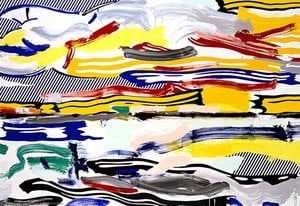
Expressionist Head 2

Inspired by Roy Lichtenstein's iconic Pop Art style, this expressive portrait captures a distorted face adorned with vibrant blue eyes and crimson lips—a bold reimagining of familiar imagery. Explore the captivating aesthetic of 1980s American art and bring home this striking piece.

Roy Lichtenstein (1923-1997): Pionir pop umetnosti znan za Ben-Day pike, navdih iz stripov in pogosto komentar o potrošnji. Raziskajte 'Whaam!' & več.

Umetniška dela, prikazana na tej strani, so zaščitena z avtorskimi pravicami, kar pomeni, da po zakonu ne moremo ustvarjati ali prodajati identičnih reprodukcij. Ta zaščita se izvaja v skladu z mednarodnimi sporazumi, kot so Bernska konvencija in po nacionalnih zakonih, vključno s tistimi, ki jih določa Zakon o avtorskih pravicah ZDA – naslov 17.

Ta način v celoti upošteva zakonodajo o avtorskih pravicah, saj ne vključuje kopiranja ali podvajanja zaščitena umetniškega dela. Namesto tega gre za kreativno preinterpretacijo – novo sliko, ki je navdihnjen rezultat originala, vendar ni z njim identična.

Giclée tisk / Umetniški tisk

Giclée ali platnati odtis muzejske kakovosti z hitro proizvodnjo in prilagodljivimi možnostmi končne obdelave. ( Naročite ročno slikano reprodukcijo Preklop na digitalno sliko)

Corner sample of the P118B picture frame: izoblit polistiren, 5 cm wide and 3 cm thick
P118B €10
Corner sample of the P118H picture frame: izoblit polistiren, 5 cm wide and 3 cm thick
P118H €10
Corner sample of the P118W picture frame: izoblit polistiren, 5 cm wide and 3 cm thick
P118W €10
Corner sample of the P438Z picture frame: izoblit polistiren, 5.5 cm wide and 3.5 cm thick
P438Z €10
Corner sample of the P508JH picture frame: izoblit polistiren, 7 cm wide and 3.5 cm thick
P508JH €12
Corner sample of the P508YH picture frame: izoblit polistiren, 7 cm wide and 3.5 cm thick
P508YH €12
Corner sample of the P805H picture frame: izoblit polistiren, 5 cm wide and 3.5 cm thick
P805H €10
Corner sample of the P805Z picture frame: izoblit polistiren, 5 cm wide and 3.5 cm thick
P805Z €10
Corner sample of the P919BZ picture frame: izoblit polistiren, 7 cm wide and 3.5 cm thick
P919BZ €10
Corner sample of the P919G picture frame: izoblit polistiren, 7 cm wide and 3.5 cm thick
P919G €10
Corner sample of the P919XJ picture frame: izoblit polistiren, 7 cm wide and 3.5 cm thick
P919XJ €10
Corner sample of the P959ZH picture frame: izoblit polistiren, 5 cm wide and 3 cm thick
P959ZH €10
Corner sample of the P968JZ picture frame: izoblit polistiren, 6 cm wide and 4 cm thick
P968JZ €12
Corner sample of the W106C picture frame: masivno drevo, 5 cm wide and 3 cm thick
W106C €8
Corner sample of the W218G picture frame: masivno drevo, 5 cm wide and 3 cm thick
W218G €10
Corner sample of the W218JH picture frame: masivno drevo, 5 cm wide and 3 cm thick
W218JH €8
Corner sample of the W218Y picture frame: masivno drevo, 5 cm wide and 3 cm thick
W218Y €10
Corner sample of the W307PJ picture frame: masivno drevo, 6 cm wide and 3 cm thick
W307PJ €10
Corner sample of the W316G picture frame: masivno drevo, 6 cm wide and 3 cm thick
W316G €10
Corner sample of the W316PJ picture frame: masivno drevo, 6 cm wide and 3 cm thick
W316PJ €8
Corner sample of the W316Y picture frame: masivno drevo, 6 cm wide and 3 cm thick
W316Y €10
Corner sample of the W398PJ picture frame: masivno drevo, 5 cm wide and 3 cm thick
W398PJ €8
Corner sample of the W4111J picture frame: masivno drevo, 6.5 cm wide and 3.5 cm thick
W4111J €10
Corner sample of the W500HY picture frame: masivno drevo, 7 cm wide and 5 cm thick
W500HY €15
Corner sample of the W500JH picture frame: masivno drevo, 7 cm wide and 5 cm thick
W500JH €15
Corner sample of the W692G picture frame: masivno drevo, 8 cm wide and 4 cm thick
W692G €12
Corner sample of the W849H picture frame: masivno drevo, 5 cm wide and 3 cm thick
W849H €8
Corner sample of the W940BG picture frame: masivno drevo, 7.5 cm wide and 4.5 cm thick
W940BG €15
Corner sample of the W953PJ picture frame: masivno drevo, 6 cm wide and 3.5 cm thick
W953PJ €8

Standardna velikost
po meri
CM
INCH

Izberite eno od naših vnaprej določenih velikosti, ki ustrezajo prvotnim proporcijam umetničkega dela.

širina
višina

Vnesite širino in višino, ki jih potrebujete za svoj okvir ali steno. Tiskanje se lahko le odreže, vendar ga ni mogoče narediti večjega od slike, zato format z drugačno obliko pomeni izgubo dela slike. Pred tiskanjem vam pošljemo digitalni predogled za potrditev. Slika, prikazana na tej strani, ne prikazuje dejanskega izrezkov — le predogled to omogoča.

Globalna dostava () v 2 tednih namesto standardnih 4/5 tednov. (21 oktober)

Brezplačna ekspresna dostava po vsem svetu
Visokokakovostno laneno platno
Popolno zavarovanje pošiljke
Garancija povračila carine in uvoznih davkov
Garancija popolnega barvnega ujemanja
Politika vračila v 100 dneh (le v primeru okvar)
Garancija 100% povračila denarja
Popust pri večjem naročilu

Skupna cena

€ 59

Expressionist Head 2

Giclée tisk / Umetniški tisk

Velikost reprodukcije

-

Skupna cena

€ 59

Hitri podatki

  • Artistic style: Abstraction
  • Medium: Painting
  • Year: 1980
  • Notable elements or techniques: Bold colors, halftone printing
  • Title: Expressionist Head 2

A Symphony of Dots and Emotion: Reimagining Lichtenstein’s Expressionist Head 2

In the vast landscape of twentieth-century art, few works possess the immediate, magnetic pull of Roy Lichtenstein’s Expressionist Head 2. Created in 1980, this masterpiece serves as a profound bridge between the detached irony of Pop Art and the raw, psychological depth of Expressionism. At first glance, the viewer is met with a striking, stylized portrait—a vibrant composition dominated by a piercing blue eye and lush, crimson lips that seem to vibrate against their backdrop. Yet, beneath this deceptively simple graphic surface lies a complex exploration of human emotion and the mechanics of visual perception. It is a piece that does not merely ask to be seen; it demands to be felt, making it an extraordinary focal point for any sophisticated collection or modern interior.

The brilliance of this work lies in Lichtenstein’s ability to manipulate the very language of mass media to convey profound intimacy. While many of his contemporaries focused on the sterile objects of consumer culture, Lichtenstein turned his gaze toward the human form, distilling it into its most essential, emotive elements. The subject matter—a fragmented, abstracted face—functions as a mirror for the viewer's own psyche. By stripping away the nuances of realistic portraiture, he achieves a universal quality, where the bold colors and distorted features evoke a sense of heightened drama and existential reflection. This tension between the mechanical and the emotional is what gives the painting its enduring power.

The Mastery of Technique: The Illusion of Depth

To truly appreciate the allure of Expressionist Head 2, one must look closer at the meticulous craftsmanship that defines Lichtenstein’s signature style. The artist famously perfected the use of Ben-Day dots, a technique borrowed from the commercial printing processes of comic books and advertisements. Through the painstaking application of these tiny, uniform points of color, Lichtenstein creates an optical illusion of shading, texture, and volume. This method transforms a flat, two-dimensional plane into a tactile experience, where light seems to dance across the surface through the rhythmic repetition of pigment.

This technical precision serves a greater symbolic purpose. The dots act as a metaphor for the fragmentation of modern identity—a mosaic of small, discrete parts that coalesce to form a singular, powerful image. For the art enthusiast or interior designer, this creates a fascinating visual texture that interacts dynamically with light in a room. Whether viewed from a distance as a bold graphic statement or up close to appreciate the intricate halftone patterns, the painting offers a continuous discovery of detail and depth.

A Legacy of Bold Innovation

Historically, Expressionist Head 2 stands as a testament to Lichtenstein’s evolution. Drawing inspiration from the haunting intensity of Edvard Munch’s The Scream, he reinterpreted the distorted perspectives of Expressionism through the lens of a post-war, media-saturated world. He took the heavy, emotive brushstrokes of the past and translated them into the clean, hard edges of the modern era. This synthesis of styles allows the artwork to resonate across different aesthetic movements, making it a timeless addition to any curated space.

For collectors and decorators seeking to infuse a room with character, this reproduction offers more than just color; it offers a conversation. It is a piece that embodies the energy of New York City, the precision of industrial design, and the enduring mystery of the human spirit. Bringing such a high-quality rendition into a home or gallery provides an instant infusion of intellectual depth and contemporary elegance, ensuring that the bold vision of Roy Lichtenstein continues to inspire generations to come.

Vprašanja in odgovori

Kje lahko vidim predogled za "Expressionist Head 2"?

Stran Predogled za delo "Expressionist Head 2" vam omogoča ogled umetnin pred naročilom.

Kje lahko najdem vodnik za "Expressionist Head 2"?

Za delo "Expressionist Head 2" avtorja Roy Lichtenstein je na voljo stran Vodnik: natisljiv informativni list o umetninah, zasnovan za uporabo v šolskih prostorih in za učence.

Kje lahko prenesem "Expressionist Head 2" avtorja Roy Lichtenstein?

Digitalno sliko dela "Expressionist Head 2" avtorja Roy Lichtenstein lahko prenesete na strani za prenos umetninine Prenos: prenos digitalne slike visoke ločljivosti.


Biografija umetnika

The Genesis of a Pop Visionary

Roy Fox Lichtenstein, born in the vibrant metropolis of New York City on October 27, 1923, indelibly altered the landscape of twentieth-century art. Emerging as a pivotal figure within the Pop Art movement, Lichtenstein didn’t simply reflect his era; he actively interrogated it, transforming commonplace imagery into compelling artistic statements. His upbringing in an upper-middle-class Jewish family fostered both a cultural awareness and an early artistic inclination. Childhood exposure to museums and concerts, coupled with a deep appreciation for jazz music, laid the groundwork for a creative spirit that would challenge conventional notions of fine art. Though initially drawn to realistic drawing and painting during his formative years, Lichtenstein’s formal training commenced at the Art Students League in 1939 under Reginald Marsh, followed by studies at Ohio State University – interrupted briefly by wartime service in the Army. These experiences provided a robust technical foundation that would later be brilliantly re-contextualized through the lens of mass culture and commercial aesthetics. The seeds of his signature style weren’t sown within the hallowed halls of artistic tradition but rather in the often-overlooked world of everyday imagery, particularly comic books and advertising.

Early Influences and Artistic Exploration

Lichtenstein's formative years witnessed a fascination with Abstract Expressionism, mirroring the dominant aesthetic currents of postwar America. Artists like Willem de Kooning and Jackson Pollock captivated him with their bold gestures and expressive brushwork—though Lichtenstein swiftly recognized that these approaches didn’t fully capture the essence of his artistic vision. He honed his drawing skills diligently at the Art Students League, absorbing techniques from Reginald Marsh who championed a more direct engagement with form and materiality. This grounding in traditional drawing proved invaluable as he transitioned towards exploring alternative stylistic avenues. His enrollment at Ohio State University offered further opportunities for experimentation, albeit briefly curtailed by military duty during World War II. These formative experiences instilled within him a disciplined artistic sensibility—a crucial element that would underpin his subsequent groundbreaking innovations.

The Birth of Pop Art: Comic Books and Appropriation

A watershed moment arrived in 1961 with Lichtenstein’s seminal work, *Look Mickey*, marking the genesis of Pop Art as he understood it. Inspired by Disney comics—specifically *Mickey Mouse Clubhouse*—he embarked on a daring act of artistic appropriation: meticulously recreating comic strip scenes using techniques mirroring commercial printing processes. This wasn't mere imitation; it was a deliberate provocation against established artistic hierarchies, elevating commonplace imagery to the status of fine art. He didn’t simply copy panels from comics; he painstakingly recreated them with meticulous attention to detail—employing Ben-Day dots—a halftone printing technique prevalent in comic books and advertising. This appropriation wasn't driven by nostalgia or sentimentality but rather by a critical examination of consumer culture and its pervasive influence on American society. Lichtenstein’s stylistic breakthrough stemmed from recognizing the expressive potential inherent within mass media—a realm previously deemed antithetical to artistic seriousness.

The Language of Ben-Day Dots and Bold Lines

Lichtenstein's artistic vocabulary is instantly recognizable: bold, primary colors, thick black outlines, and most notably, Ben-Day dots – a halftone printing technique borrowed directly from the mechanical reproduction of comic books. These dots weren’t merely decorative; they were integral to his conceptual framework—representing the very process of mass production and challenging the traditional emphasis on the artist's hand. His paintings often enlarged details from comic strips to monumental scale, forcing viewers to confront the aesthetic qualities of an art form typically dismissed as trivial. Works like *Whaam!* (1963), *Drowning Girl* (1963), and *Oh, Jeff…I Love You, Too…But…* (1964) became iconic representations of Pop Art—capturing the anxieties and desires of a rapidly changing consumer culture. These weren’t simply depictions of comic book scenes; they were commentaries on themes of war, romance, and societal expectations—filtered through the visual language of mass media. He aimed to strip away any pretense of artistic subjectivity—presenting his work as objective reflections of American society—a mirror held up to its own manufactured reality. The deliberate flatness and lack of painterly gesture further emphasized this detachment—mimicking the impersonal nature of commercial printing.

Legacy and Enduring Influence

Lichtenstein’s influence extends far beyond the realm of painting—resonating across disciplines like graphic design and illustration. His innovative use of Ben-Day dots and appropriation fundamentally reshaped artistic practice—inspiring generations of artists to explore themes of consumerism, media saturation, and cultural identity. He challenged conventional notions of originality and authorship—forcing a reconsideration of what constitutes “art” itself—and solidified his position as one of the most commercially successful American artists of all time with the sale of *Masterpiece* in 2017 for $165 million. Yet, Lichtenstein’s enduring legacy transcends monetary valuation—remaining as relevant and provocative today as it was during the height of Pop Art—a testament to his visionary artistic approach. His art continues to inspire critical dialogue about the relationship between art, culture, and commerce—serving as a powerful reminder that beauty can be found in unexpected places—and that artistic innovation often arises from embracing unconventional methodologies.
  • Major Achievements: Pioneered Pop Art style; achieved international recognition with groundbreaking exhibitions.
  • Notable Works: *Whaam!*, *Drowning Girl*, *Oh, Jeff…I Love You, Too…But…*, *Masterpiece*.
  • Teaching Career: Influenced aspiring artists at SUNY Oswego and Rutgers University.
Lichtenstein passed away on September 29, 1997—leaving behind a body of work that continues to captivate audiences worldwide. His art stands as an indelible emblem of twentieth-century artistic innovation—a celebration of appropriation, the beauty of the commonplace, and the enduring impact of a truly visionary artist.
Roy Lichtenstein

Roy Lichtenstein

1923 - 1997 , ZDA

Ključne informacije

  • Artistic Movement Or Style: Pop Art
  • Artists Who Influenced This Artist:
    • Allan Kaprow
    • Reginald Marsh
  • Date Of Birth: 27. oktober 1923
  • Date Of Death: 29. september 1997
  • Full Name: Roy Fox Lichtenstein
  • Nationality: Američan
  • Notable Artworks:
    • Whaam!
    • Drowning Girl
    • Oh, Jeff…I Love You, Too…But…
  • Place Of Birth: New York City, ZDA
Raziščite umetniška dela, razvrščena po temah, slogih in značilnostih.