Preverite v realnem okolju Predogled v AR Naročite ročno slikano reprodukcijo Preklop na digitalno sliko Pošlji kot čestitko
Podrobnosti Priročnik Dodaj v priljubljene Prenesi Podobni artefakti Rentgenski posnetek Predvajaj diaporama Statistika

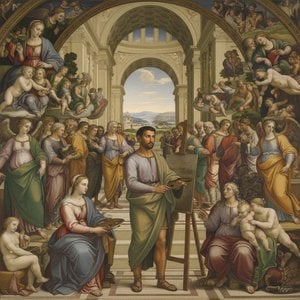
The parnassus (detail)7

Witness Raphael's mastery in 'The Parnassus (detail)'! This High Renaissance fresco captures classical mythology & musical beauty with vibrant colors & intricate detail – a Vatican masterpiece.

Rafael (1483-1520): Visokorenesančni mojster znan po umirjenih Madonnah, arhitekturni genialnosti in ikoničnih delih kot je 'Šola Atene'. Odkrijte njegovo zgodnje obdobje v Urbinu in umetniško zapuščino.

Giclée tisk / Umetniški tisk

Giclée ali platnati odtis muzejske kakovosti z hitro proizvodnjo in prilagodljivimi možnostmi končne obdelave. ( Naročite ročno slikano reprodukcijo Preklop na digitalno sliko)

Corner sample of the P118B picture frame: izoblit polistiren, 5 cm wide and 3 cm thick
P118B €10
Corner sample of the P118H picture frame: izoblit polistiren, 5 cm wide and 3 cm thick
P118H €10
Corner sample of the P118W picture frame: izoblit polistiren, 5 cm wide and 3 cm thick
P118W €10
Corner sample of the P438Z picture frame: izoblit polistiren, 5.5 cm wide and 3.5 cm thick
P438Z €10
Corner sample of the P508JH picture frame: izoblit polistiren, 7 cm wide and 3.5 cm thick
P508JH €12
Corner sample of the P508YH picture frame: izoblit polistiren, 7 cm wide and 3.5 cm thick
P508YH €12
Corner sample of the P805H picture frame: izoblit polistiren, 5 cm wide and 3.5 cm thick
P805H €10
Corner sample of the P805Z picture frame: izoblit polistiren, 5 cm wide and 3.5 cm thick
P805Z €10
Corner sample of the P919BZ picture frame: izoblit polistiren, 7 cm wide and 3.5 cm thick
P919BZ €10
Corner sample of the P919G picture frame: izoblit polistiren, 7 cm wide and 3.5 cm thick
P919G €10
Corner sample of the P919XJ picture frame: izoblit polistiren, 7 cm wide and 3.5 cm thick
P919XJ €10
Corner sample of the P959ZH picture frame: izoblit polistiren, 5 cm wide and 3 cm thick
P959ZH €10
Corner sample of the P968JZ picture frame: izoblit polistiren, 6 cm wide and 4 cm thick
P968JZ €12
Corner sample of the W106C picture frame: masivno drevo, 5 cm wide and 3 cm thick
W106C €8
Corner sample of the W218G picture frame: masivno drevo, 5 cm wide and 3 cm thick
W218G €10
Corner sample of the W218JH picture frame: masivno drevo, 5 cm wide and 3 cm thick
W218JH €8
Corner sample of the W218Y picture frame: masivno drevo, 5 cm wide and 3 cm thick
W218Y €10
Corner sample of the W307PJ picture frame: masivno drevo, 6 cm wide and 3 cm thick
W307PJ €10
Corner sample of the W316G picture frame: masivno drevo, 6 cm wide and 3 cm thick
W316G €10
Corner sample of the W316PJ picture frame: masivno drevo, 6 cm wide and 3 cm thick
W316PJ €8
Corner sample of the W316Y picture frame: masivno drevo, 6 cm wide and 3 cm thick
W316Y €10
Corner sample of the W398PJ picture frame: masivno drevo, 5 cm wide and 3 cm thick
W398PJ €8
Corner sample of the W4111J picture frame: masivno drevo, 6.5 cm wide and 3.5 cm thick
W4111J €10
Corner sample of the W500HY picture frame: masivno drevo, 7 cm wide and 5 cm thick
W500HY €15
Corner sample of the W500JH picture frame: masivno drevo, 7 cm wide and 5 cm thick
W500JH €15
Corner sample of the W692G picture frame: masivno drevo, 8 cm wide and 4 cm thick
W692G €12
Corner sample of the W849H picture frame: masivno drevo, 5 cm wide and 3 cm thick
W849H €8
Corner sample of the W940BG picture frame: masivno drevo, 7.5 cm wide and 4.5 cm thick
W940BG €15
Corner sample of the W953PJ picture frame: masivno drevo, 6 cm wide and 3.5 cm thick
W953PJ €8

Standardna velikost
po meri
CM
INCH

Izberite eno od naših vnaprej določenih velikosti, ki ustrezajo prvotnim proporcijam umetničkega dela.

širina
višina

Vnesite širino in višino, ki jih potrebujete za svoj okvir ali steno. Tiskanje se lahko le odreže, vendar ga ni mogoče narediti večjega od slike, zato format z drugačno obliko pomeni izgubo dela slike. Pred tiskanjem vam pošljemo digitalni predogled za potrditev. Slika, prikazana na tej strani, ne prikazuje dejanskega izrezkov — le predogled to omogoča.

Globalna dostava () v 2 tednih namesto standardnih 4/5 tednov. (25 oktober)

Brezplačna ekspresna dostava po vsem svetu
Visokokakovostno laneno platno
Popolno zavarovanje pošiljke
Garancija povračila carine in uvoznih davkov
Garancija popolnega barvnega ujemanja
Politika vračila v 100 dneh (le v primeru okvar)
Garancija 100% povračila denarja
Popust pri večjem naročilu

Skupna cena

€ 60

The parnassus (detail)7

Giclée tisk / Umetniški tisk

Velikost reprodukcije

-

Skupna cena

€ 60

Hitri podatki

  • Subject or theme: Classical mythology
  • Location: Vatican Museums
  • Artistic style: Neoplatonic ideals
  • Title: The Parnassus (detail)
  • Influences:
    • Piero della Francesca
    • Plato

Kviz o umetnosti

Pri vsakem vprašanju je na voljo le eden pravilen odgovor.

Vprašanje 1:
The painting ‘The Parnassus (detail)7’ primarily depicts:
Vprašanje 2:
The figure in the red hat with green leaves is most likely representing:
Vprašanje 3:
Considering Raphael’s artistic style and the context of the High Renaissance, what is a key characteristic of ‘The Parnassus (detail)7’?
Vprašanje 4:
The presence of leaves in the painting suggests:
Vprašanje 5:
Raphael’s work often drew inspiration from which classical tradition?

The Parnassus (Detail) by Raphael: A Window into Renaissance Ideals

Raphael’s “The Parnassus (detail)” offers a breathtaking glimpse into the heart of High Renaissance artistry, specifically as it manifests within the opulent setting of the Vatican Palace. This intricate fresco fragment, meticulously recreated in our hand-painted reproductions, isn't merely a depiction of mythological figures; it’s a carefully constructed allegory brimming with Neoplatonic philosophy and humanist ideals – a testament to Raphael’s mastery of composition, color, and psychological depth. The detail presented here focuses on the central figure, a man radiating an aura of serene contemplation as he gazes downwards, seemingly lost in thought amidst the vibrant chaos of the scene. His posture, his expression, immediately draws the viewer into this world of intellectual pursuit.

The painting’s genesis lies within the ambitious project commissioned by Pope Julius II to decorate the *Stanza della Segnatura* – a room intended as the papal library and a symbolic representation of the four branches of knowledge: philosophy, theology, poetry, and law. Raphael was tasked with creating a series of frescoes that would embody these disciplines, and “The Parnassus” served as the centerpiece, illustrating the realm of mythology and music, closely linked to philosophical contemplation. It’s crucial to remember that Raphael wasn't simply copying classical sources; he was actively engaging with them, imbuing them with a distinctly Renaissance sensibility – a blend of ancient wisdom and contemporary humanism.

A Symphony of Figures and Symbols

The fresco is populated by a remarkable array of figures: Apollo, the god of music and poetry, stands proudly at the center, playing his lyre; Mercury, messenger of the gods, flutes a panpipe; Thalia, goddess of comedy, holds a tympanum; and Calliope, muse of epic poetry, guides the composition with her caduceus. Each figure is rendered with exquisite detail, showcasing Raphael’s unparalleled skill in capturing human anatomy and emotion. Notice the subtle variations in their gestures, expressions, and clothing – elements that contribute to the overall dynamism and narrative complexity of the scene. The inclusion of musicians, poets, and philosophers underscores the fresco's central theme: the pursuit of knowledge and artistic inspiration.

Beyond the mythological figures, the painting is rich with symbolic details. The presence of a young man, partially obscured by Apollo, has been interpreted as representing the ideal artist – a figure dedicated to intellectual pursuits and creative expression. His downward gaze suggests introspection and a connection to the divine source of inspiration. The leaves scattered throughout the composition, particularly those visible on the right side of this detail, subtly evoke the natural world—a vital element in Renaissance thought, symbolizing harmony, growth, and the interconnectedness of all things. The use of color is equally significant; Raphael masterfully employs a vibrant palette to create depth, atmosphere, and visual interest.

Technique and Legacy

Raphael’s technique in “The Parnassus” exemplifies the High Renaissance ideal of *disegno*, emphasizing line and form over mere color. He employed meticulous layering of thin glazes of tempera paint on a gesso ground, creating surfaces that shimmer with luminosity and depth. The detail presented here highlights this careful attention to texture and modeling – particularly evident in the folds of the figures’ clothing and the intricate details of their instruments. His mastery of perspective and spatial relationships is equally impressive, drawing the viewer into the scene and creating a sense of immersive realism.

“The Parnassus” stands as one of Raphael's most celebrated works, alongside “The School of Athens,” and it profoundly influenced generations of artists. Its harmonious composition, balanced color palette, and profound symbolic content established a new standard for High Renaissance painting. The work’s enduring appeal lies in its ability to evoke a sense of intellectual curiosity, artistic inspiration, and the timeless pursuit of beauty – qualities that continue to resonate with viewers today. Our hand-painted reproductions strive to capture not just the visual appearance of this masterpiece but also the spirit and emotional depth that make it so profoundly moving.

Bringing “The Parnassus” into Your Space

Whether you’re an art enthusiast, a collector seeking a significant addition to your collection, or simply someone drawn to the beauty and elegance of Renaissance art, our hand-painted reproduction of Raphael's "The Parnassus (detail)" offers a unique opportunity to experience this iconic masterpiece firsthand. Each reproduction is created by skilled artisans using traditional techniques, ensuring that it faithfully captures the nuances of color, texture, and detail of the original fresco. Consider how this vibrant scene would complement your interior design – adding a touch of intellectual sophistication and timeless beauty to any room.

Explore Raphael’s ‘The Parnassus (detail)’ | Discover Raphael’s ‘The Parnassus’ detail – a stunning Renaissance fresco showcasing mythology & musical beauty.

Vprašanja in odgovori

Kje lahko kupim digitalno sliko dela "The parnassus (detail)7" avtorja Rafael?

"The parnassus (detail)7" je na voljo kot prenos digitalne slike visoke ločljivosti, ki ga lahko kupite neposredno na njegovi strani Digitalna slika.

Ali se lahko slika dela "The parnassus (detail)7" avtorja Rafael prosto reproducira?

"The parnassus (detail)7" avtorja Rafael je v v javni domeni – njegova avtorska pravica je zastarela. Ta status določa način, kako se lahko reproducira slika dela.

Ali je "The parnassus (detail)7" znano umetniško delo v okviru sloga High Renaissance?

V okviru gibanja High Renaissance ima "The parnassus (detail)7" Iconic stopnjo priljubljenosti.


Biografija umetnika

Rafaela Zgodnje Življenje in Formiranje: Renesančni Urbino

Raffaello Sanzio da Urbino, znan po vsem svetu kot Rafael, se je izbruhnil iz izjemno rodovitne kulturne pokrajine. Rojen leta 1483 znotraj zidov Urbana, majhnega, a intelektualno živahnega mestu-države v osrednji Italiji, so bile njegove prve leti prežete s vzdušjem, ki je cenilo tako umetniško spretnost kot humanistiko. Njegov oče, Giovanni Santi, ni bil le slikar, zaposlen pri vojvodi Federicu da Montefeltro—bil je človek, globoko vpleten v tokove renesančne misli, pesnik, ki je kronikal življenje vojvoda in aktivno iskal inovativne umetniške ideje po vsej Italiji in širše. Ta pomeh v dvorščini okolju, ki je cenilo izpoplačevanje in intelektualno razpravo, je globoko oblikoval mladostne čute Rafaela. Izguba njegovega očeta pri enajstih letih mu je naložila odgovornost, vendar mu je tudi ponudila priložnost za izboljšanje njegovih veščin znotraj družinske delavnice, kjer je absorbiral tehnike in tradicije pod vodstvom lokalnih umetnikov. Že v teh zgodnjih delih so se začele pojavljati nežna milost in skrbna pozornost do podrobnosti—odlikovale njegove zrele stilsko.

Od Umbrije do Firenc: Asimilacija Novih Vplivov

Rafaelovo umetniško potovanje je bilo ena neprekinjene evolucije, zaznamovane s obdobji intenzivnega študija in asimilacije. Njegovo začetno usposabljanje pod vodstvom Pietra Perugina v Perugi je postavilo trdno podlago v umbrijskem slogu—značilnem po svojem mehkom modeliranju, harmonijskih kompozicijah in mirnih verskih prizorih. Vendar pa je Rafael imel neusahljivo radovednost, ki ga je gonila k iskanju novih izzivov in razširitvi njegovih umetniških vplivov. Leta 1504 se je odpravil v Firence, mesto, ki je takrat pulziralo z energijo umetniške inovacije. Tukaj je srečal mojstrovine Leonarda da Vincija in Michelangela, umetnikov, ki so brezprecedentno potiskanje meja slikanja. Skrbno je študiral njihove tehnike—Leonardovo sfumato, njegove subtilne stopenjske svetlobe in sence ter Michelangelovo močno anatomsko natančnost in dramatične kompozicije. To firenško obdobje je bilo za Rafaela kovina, ki ga je prisilila, da se sooči z novimi umetniškimi možnostmi in jih sintetizira v svojo edinstveno vizijo. Vpliv je vidna v povečani dinamiki in psihološki globini njegovih del iz tega časa, zlasti v njegovi seriji Madonn.

Rimski Uspeh: Naročila in Mojstrovine

Leta 1508 je prejel klic, ki bi spremenil potek njegove kariere—vabilo papeža Julija II, da pride v Rim. To je zaznamovalo začetek njegovega najbolj produktivnega in slavnostnega obdobja. Večno mesto mu je ponudilo neprimerljivo priložnost, da razkaže svoje talente v velikem merilu, kjer je okrasil papeške apartmaje v Vatikanskem palači z dih jemajočimi freskami. Šola Aten, nedvomno njegovo najbolj znano delo, stoji kot priča njegovemu mojstrstvu kompozicije, perspektive in filozofske alegorije. Znotraj njegovega veličastnega prostora je Rafael združil figure iz klasične antike—Platon, Aristotel, Pitagora, Evklid—ustvaril živahno tablico, ki je proslavljala človeški razumnost in prizadevanje za znanje. Nadaljeval je z delom za naslednje papeže, med njimi Leona X, prevzemal pa je monumentalne projekte, kot so okrasitev Stanze della Segnatura in Stanza d'Eliodoro. Njegove freske v teh sobah niso le dekorativne; so globoke izjave o papeški moči, verskih prepričanjih in idealih renesanse.

Sinhroza Gracioznosti in Velikosti: Rafaelov Umetniški Stil

Rafaelov umetniški stil se pogosto opisuje kot harmonično mešanico gracioznosti, jasnosti in idealizirane lepote. Imel je izjemno sposobnost sinteze različnih vplivov—umbrijske tradicije, firenških inovacij, klasične antike—v edinstveno uravnoteženo estetiko. Njegove kompozicije so natančno načrtovane, kažejo na občutek reda in sorazmerja, ki odraža njegovo globoko razumevanje renesančnih principov. Njegove figure izžarevajo miren dostojanstvo in čustveno ekspresivnost, utelešujejo humanistni ideal človeške popolnosti. Bil je tudi mojster barv, ki je uporabljal bogate, svetle tone za ustvarjanje del, ki so tako vizualno očarljiva kot intelektualno stimulativna. Za razliko od Michelangelovega pogosto dramatičnega in burnega sloga izžareva Rafaelovo delo občutek miru in harmonije—kvalitete, ki je že stoletja navdušuje občinstvo.

Zapuščina in Trajna Vpliv

Rafelova zgodnja smrt leta 1520 v starosti le trideset sedem let je prekinila kariero, polno potenciala. Kljub temu njegova zapuščina vztraja kot ena najpomembnejših oseb v zahodni umetnostni zgodovini. Njegovo delo je postalo temelj visokorenesančne estetske smeri in služilo kot vzor za generacije umetnikov. Čeprav je Michelangelov vpliv kasneje prevladal v umetniški razpravi, je Rafaelova poudarjanje jasnosti, harmonije in idealizirane lepote doživelo oživitev v neoklasični dobi, ki jo so podpirali kritiki, kot je Johann Joachim Winckelmann. Danes njegove slike še vedno navdihujejo čudenje in občudovanje, očarljivo gledalce s svojo tehnično briljatnostjo, čustveno globino in trajno privlačnostjo. Njegov vpliv je mogoče videti v neshtetih delih umetnosti, ki so sledila, kar je utrdilo njegovo mesto pravega mojstra renesanse—slikarja, ki je ujel ne le fizično podobo svojih subjektov, ampak tudi bistvo človeške gracioznosti in dostojanstva.

Rafael

Rafael

1483 - 1520 , Italija

Ključne informacije

  • Datum Rojstva: 28. marec/6. april 1483
  • Datum Smrti: 6. april 1520
  • Kraj Rojstva: Urbino, Italija
  • Nacionalnost: Italijan
  • Pod Vplivom: ['Neoklasična slikarstvo']
  • Polno Ime: Rafael (Raffaello Sanzio)
  • Vplivneži:
    • Leonardo da Vinci
    • Michelangelo
    • Pietro Perugino
  • Znani Dela:
    • Atenejska šola
    • Madona Sistina
    • Transfiguracija
  • Zvrst Umetnosti: Visoka renesansa
Raziščite umetniška dela, razvrščena po temah, slogih in značilnostih.