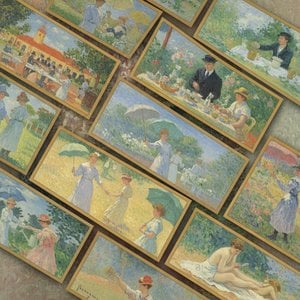
Življenje obarvano s svetlobo: Svet Pierre-Auguste Renoirja
Pierre-Auguste Renoir, rojen leta 1841 v skromnem Limogesu na jugu Francije, je začel svojo pot od mladeniča, ki je barval porcelan, do slavnega mojstra impresionizma. Njegova zgodnja izkušnja selitve z družino v živahno Pariz, kjer so iskali boljšo usodo, je globoko zaznamovala njegovo umetniško občutljivost. Mestu, s svojimi ulicami polnimi življenja in raznolikimi obrazi, je postalo navdih za številna njegova dela. Sprva zaposlen z barvanjem porcelana – praktična potreba zaradi finančnih omejitev – se je mladi Renoir pogosto zatekel v Louvrov muzej, kjer je natančno proučeval mojstre preteklosti in razvijal občudovanje za lepoto, ki je postala vodilni znak njegovega sloga. Ta zgodnja izpostavljenost je v njem prižgala strast, ki je preseganjala puko obrt; bil je poklic, da uje svetlobo in življenje na platno. Kasneje se je vpisal v Charlesove Gleyrejevo delavnico, kjer je navezal prijateljstva za vse življenje z ambicioznimi umetniki Claude Monet, Alfred Sisley in Frédéric Bazille – prelomni trenutek, ki je položil temelj impresionističnemu gibanju.
Od realizma do sijajnih vtisov
Renoirjeva umetniška pot je bila fascinantna evolucija, pod vplivom številnih mojstrov. Sprva se je nagibal k realizmu Gustava Courbeta in Édouarda Maneta, občudoval pa je njihovo zavezanost prikazovanju sodobnega življenja s poštenostjo in neposrednostjo. Vendar so ga predvsem očarale svetle palete barv in senzualne oblike Petra Paula Rubensa in Jean-Antoinea Watteaua, ki so v njegovem delu vzbudile globoko cenjenje lepote in nagnjenost k prikazovanju prizorov veselja in počitka. Te zgodnje vplive so se združile, ko je Renoir začel ustvarjati svoj edinstven slog, zaznamovan z živahnimi barvami, razbitimi potezami čopiča in poudarkom na ujetju minljivih učinkov svetlobe. Njegova udeležba na prvem impresionističnemu izstopu leta 1874 je bila prelomni trenutek, čeprav sprva srečana s kritikami tradicionalnih umetnostnih krogov. Ta pogumna poteza je signalizirala zavrnitev akademskih konvencij in sprejetje novega umetniškega videnja – ki je poskušalo ujeti ne le to, kar vidi oko, temveč tudi to, kako se določeno trenutek zazna. Slike kot
Ples na Moulin de la Galette (1876) utelešajo ta pristop in potapljajo gledalce v živahno vzdušje pariškega nočnega življenja s posutimi sončnimi žarki in veselimi figurami.
Ujetje minljivih trenutkov življenja: Ključna dela in teme
Renoirjev opus je praznik preprostih užitkov v življenju – intimnih srečanj, sončno okopane pokrajine in sijajne lepote človeške oblike.
Kosilo na čolnu (1880-81) velja morda za eno njegovih najbolj ikoničnih del, ki prikazuje družabno skupino, ki uživa v sproščenem popoldnevu na Seni. Slikanje je mojstrovina pri zajemanju svetlobe in gibanja, figure so obarvane s toplimi sončnimi žarki, odsevi pa se bleščijo na vodi.
Kopel (1885-87) prikazuje Renoirjevo izjemno spretnost v prikazovanju samega človeka, poudarja nežne barve kože in graciozne poze. Njegova dela niso le reprezentacije resničnosti; so prežeta s toplino, intimnostjo in veseljem, ki globoko odzvanjajo pri gledalcih. Ni bil zainteresiran za veličastne zgodovinske pripovedi ali dramatične alegorije; namesto tega se je osredotočil na ujetje lepote, ki je vgrajena v vsakdanje življenje in običajne trenutke povisi v umetnost.
Ples v Bougivalu, še eno slavno delo, kaže njegovo sposobnost zajemanja minljivih vtisov in atmosferskih učinkov ter ustvarjanje občutka gibanja in spontanosti.
Premik proti obliki in strukturi: Poznejša leta in zapuščina
V 1890-ih je Renoirjev slog doživel pomembno spremembo. Čeprav nikoli ni popolnoma opustil svojih impresionističnih korenin, se je začel premikati proti bolj skulpturalnemu in klasičnemu pristopu, pod vplivom potovanj v Italijo in obnove zanimanja za obliko in strukturo. Ta sprememba je bila delno posledica tudi fizičnih omejitev – artritis mu je postopoma omejeval mobilnost in ga prisiljevala, da prilagodi svojo tehniko. Kljub tem izzivom je Renoir še naprej slikal z neusahljivim posvečenjem in ustvarjal dela, ki so se odlikovala po polnejših figurah in toplejši paleti barv. Njegova kasnejša slika pogosto odraža bolj kontemplativno razpoloženje, vendar ohranja isto osnovno praznovanje lepote, ki je zaznamovalo njegovo zgodnje delo. Poleg umetniških dosežkov se Renoirjeva zapuščina nadaljuje skozi njegovo družino; njegov sin, Jean Renoir, je postal priznan filmski režiser in s tem ohranil ustvarjalnega duha med generacijami. Pierre-Auguste Renoir je umrl leta 1919 in za seboj pustil trajno zbirko del, ki še danes navdihujejo in razveseljujejo občinstvo po vsem svetu. Ostaja ena najbolj priljubljenih osebnosti v zgodovini umetnosti, proslavljena zaradi svoje sposobnosti ujeti veselje življenja in lepoto človeške izkušnje z neprimerljivo občutljivostjo in milino.
Trajna vplivnost
- Renoirjev vpliv na prihodnje generacije umetnikov je nesporna. Njegov poudarek na svetlobi, barvi in ujetju minljivih trenutkov je utiral pot številnim sodobnim umetniškim gibanjem.
- Njegovo praznovanje lepote in senzualnosti še danes odzvanja pri občinstvu, zaradi česar so njegova dela univerzalno privlačna.
- Je igral ključno vlogo pri uveljavitvi impresionizma kot pomembne sile v zgodovini umetnosti, izpodbijanju tradicionalnih konvencij in odpiranju novih možnosti za umetniško izražanje.
- Trajna priljubljenost njegovih slik – reprodukcij na neshlačah posterjev, koledarjev in drugih izdelkov – priča o brezčasovnem značaju njegovega dela.



 Predogled
 Preklop na tiskanine
 Pošlji
 Deli
Deli
 Podrobnosti o delu

 Prenesi
 Podobni izdelki
 Rentgenski posnetek
 Predvajaj diaporama
 Statistika

 Razviljaj več






































 Možnost stekla je na voljo le za velikosti pod 110 cm