Predogled v realnem okolju Predogled v AR Kupite ročno slikano delo Preklop na digitalno sliko Pošlji
Podrobnosti o delu Priročnik Dodaj v priljubljene Prenesi sliko Podobni izdelki Rentgenski posnetek Predvajaj diaporama Vprašanja in odgovori Prenosna prezentacija Statistika

Untitled (D2X65E)

Dimenzije
79.0 x 66.0 cm

Authentic Petrus Christus painting reproduction – ‘The Lamentation’ (c. 1450). Northern Renaissance masterpiece. Hand-painted replicas available in various sizes. Invest in art history.

Odkrijte Petrus Christus, pionirsko nizozemsko slikarja, znanega po linearni perspektivi in natančni tehniki oljne barve. Raziskujte njegova vplivna dela in dediščino v Brugesu.

Giclée tisk / Umetniški tisk

Giclée ali platnati odtis muzejske kakovosti z hitro proizvodnjo in prilagodljivimi možnostmi končne obdelave. ( Kupite ročno slikano delo Preklop na digitalno sliko)

Corner sample of the P118B picture frame: izoblit polistiren, 5 cm wide and 3 cm thick
P118B €10
Corner sample of the P118H picture frame: izoblit polistiren, 5 cm wide and 3 cm thick
P118H €10
Corner sample of the P118W picture frame: izoblit polistiren, 5 cm wide and 3 cm thick
P118W €10
Corner sample of the P438Z picture frame: izoblit polistiren, 5.5 cm wide and 3.5 cm thick
P438Z €10
Corner sample of the P508JH picture frame: izoblit polistiren, 7 cm wide and 3.5 cm thick
P508JH €12
Corner sample of the P508YH picture frame: izoblit polistiren, 7 cm wide and 3.5 cm thick
P508YH €12
Corner sample of the P805H picture frame: izoblit polistiren, 5 cm wide and 3.5 cm thick
P805H €10
Corner sample of the P805Z picture frame: izoblit polistiren, 5 cm wide and 3.5 cm thick
P805Z €10
Corner sample of the P919BZ picture frame: izoblit polistiren, 7 cm wide and 3.5 cm thick
P919BZ €10
Corner sample of the P919G picture frame: izoblit polistiren, 7 cm wide and 3.5 cm thick
P919G €10
Corner sample of the P919XJ picture frame: izoblit polistiren, 7 cm wide and 3.5 cm thick
P919XJ €10
Corner sample of the P959ZH picture frame: izoblit polistiren, 5 cm wide and 3 cm thick
P959ZH €10
Corner sample of the P968JZ picture frame: izoblit polistiren, 6 cm wide and 4 cm thick
P968JZ €12
Corner sample of the W106C picture frame: masivno drevo, 5 cm wide and 3 cm thick
W106C €8
Corner sample of the W218G picture frame: masivno drevo, 5 cm wide and 3 cm thick
W218G €10
Corner sample of the W218JH picture frame: masivno drevo, 5 cm wide and 3 cm thick
W218JH €8
Corner sample of the W218Y picture frame: masivno drevo, 5 cm wide and 3 cm thick
W218Y €10
Corner sample of the W307PJ picture frame: masivno drevo, 6 cm wide and 3 cm thick
W307PJ €10
Corner sample of the W316G picture frame: masivno drevo, 6 cm wide and 3 cm thick
W316G €10
Corner sample of the W316PJ picture frame: masivno drevo, 6 cm wide and 3 cm thick
W316PJ €8
Corner sample of the W316Y picture frame: masivno drevo, 6 cm wide and 3 cm thick
W316Y €10
Corner sample of the W398PJ picture frame: masivno drevo, 5 cm wide and 3 cm thick
W398PJ €8
Corner sample of the W4111J picture frame: masivno drevo, 6.5 cm wide and 3.5 cm thick
W4111J €10
Corner sample of the W500HY picture frame: masivno drevo, 7 cm wide and 5 cm thick
W500HY €15
Corner sample of the W500JH picture frame: masivno drevo, 7 cm wide and 5 cm thick
W500JH €15
Corner sample of the W692G picture frame: masivno drevo, 8 cm wide and 4 cm thick
W692G €12
Corner sample of the W849H picture frame: masivno drevo, 5 cm wide and 3 cm thick
W849H €8
Corner sample of the W940BG picture frame: masivno drevo, 7.5 cm wide and 4.5 cm thick
W940BG €15
Corner sample of the W953PJ picture frame: masivno drevo, 6 cm wide and 3.5 cm thick
W953PJ €8

Standardna velikost
po meri
CM
INCH

Izberite eno od naših vnaprej določenih velikosti, ki ustrezajo prvotnim proporcijam umetničkega dela.

širina
višina

Vnesite širino in višino, ki jih potrebujete za svoj okvir ali steno. Tiskanje se lahko le odreže, vendar ga ni mogoče narediti večjega od slike, zato format z drugačno obliko pomeni izgubo dela slike. Pred tiskanjem vam pošljemo digitalni predogled za potrditev. Slika, prikazana na tej strani, ne prikazuje dejanskega izrezka — le predogled to omogoča.

Globalna dostava () v 2 tednih namesto standardnih 4/5 tednov. (8 november)

Brezplačna ekspresna dostava po vsem svetu
Visokokakovostno laneno platno
Popolno zavarovanje pošiljke
Garancija povračila carine in uvoznih davkov
Garancija popolnega barvnega ujemanja
100-dnevna politika vračil (le v primeru okvar)
Garancija 100% povračila denarja
Popust pri večjem naročilu

Skupna cena

€ 62

Untitled (D2X65E)

Giclée tisk / Umetniški tisk

Velikost reprodukcije

-

Skupna cena

€ 62

Ključni podatki

  • Location: WahooArt.com
  • Influences:
    • Van Eyck
    • Rogier van der Weyden
  • Movement: Northern Renaissance
  • Year: 1445
  • Artistic style: Linear perspective, meticulous
  • Medium: Oil on panel

Umetniški kviz

Pri vsakem vprašanju je na voljo le eden pravilen odgovor.

Vprašanje 1:
What is the primary subject depicted in Petrus Christus’s ‘Untitled (D2X65E)’?
Vprašanje 2:
The painting ‘Untitled (D2X65E)’ is considered an example of which artistic movement?
Vprašanje 3:
According to the provided text, what is a key innovation demonstrated in ‘Untitled (D2X65E)’?
Vprašanje 4:
What material is the painting ‘Untitled (D2X65E)’ executed on?
Vprašanje 5:
Petrus Christus was active in which city during a significant period of his career?

Petrus Christus’s “Head of Christ (Ecce Homo)” – A Window into Early Renaissance Devotion

The image before us—Petrus Christus’s “Head of Christ (Ecce Homo),” painted circa 1445—isn't merely a portrait; it’s a profound meditation on sacrifice, suffering, and the very essence of Christian faith. Often considered a precursor to the more fully realized depictions of Christ’s Passion that would emerge later in the Renaissance, this intimate panel offers a remarkably direct and emotionally resonant experience for the viewer. It’s a work born from a specific historical context—the burgeoning influence of oil painting in Bruges, a city rapidly becoming a center for artistic innovation—and imbued with a deeply personal devotional purpose.

The genesis of this piece is fascinating. Tradition holds that it was created as a copy of a lost “Holy Face” image by Jan van Eyck, the master who had tragically died just three years before Christus began his career. This foundational image—a depiction of Christ’s face after the crucifixion—was believed to possess miraculous powers and was frequently used in private prayer. Christus's version retains the core elements of this prototype: the stark realism of Christ’s features, the visible wounds inflicted during his ordeal, and the solemnity of his gaze. However, Christus subtly transforms the image, imbuing it with a palpable sense of anguish and vulnerability that transcends mere replication.

A Masterclass in Oil Technique and Linear Perspective

Christus’s skill as a painter is immediately apparent in the meticulous detail he applies to every aspect of the work. The oil paint, relatively new to Northern European art at this time, allows for an unprecedented level of luminosity and depth—a far cry from the tempera paints favored by earlier artists. Notice how the light catches on Christ’s brow, highlighting the lines etched by pain, and how the folds of his garment subtly suggest texture and volume. This isn't a flat, idealized representation; it’s a remarkably lifelike portrayal of human suffering.

Crucially, Christus employs a technique known as “linear perspective,” a revolutionary approach to depicting space that he likely learned from Italian artists who were increasingly influencing the Northern Renaissance. The framing device—a meticulously rendered architectural setting—creates an illusion of depth, drawing the viewer’s eye directly to Christ's face and intensifying the emotional impact of the image. This innovative use of perspective was groundbreaking for its time, demonstrating Christus’s forward-thinking approach to artistic representation.

Symbolism and Emotional Resonance

Beyond the technical mastery, “Head of Christ (Ecce Homo)” is rich in symbolic meaning. The crown of thorns, a potent symbol of suffering and sacrifice, dominates the composition, immediately conveying the gravity of Christ’s fate. The drops of blood streaming down his face are not merely depictions of physical wounds; they represent the shedding of his blood for humanity's sins—a central tenet of Christian theology. Christ’s furrowed brow and downward gaze communicate a profound sense of sorrow and resignation, inviting contemplation on themes of redemption and forgiveness.

The choice to depict only Christ’s head—a cropped portrait—further intensifies the emotional impact. It forces the viewer to confront the image directly, fostering a sense of intimacy and personal connection with the subject. This was likely intended for private devotion, a silent prayer offered in contemplation of Christ's sacrifice.

A Timeless Testament to Faith

“Head of Christ (Ecce Homo)” is more than just a beautiful painting; it’s a powerful testament to the enduring themes of faith, suffering, and redemption. Christus’s masterful technique, combined with his profound understanding of symbolism and emotional resonance, creates an image that continues to move viewers centuries after its creation. It stands as a pivotal work in the development of Northern Renaissance art—a window into the spiritual world of 15th-century Bruges and a timeless reminder of the sacrifice at the heart of Christian belief.

Vprašanja in odgovori

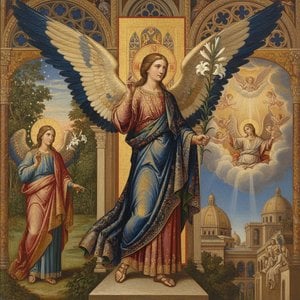
Kaj prikazuje "Untitled (D2X65E)" avtorja Petrus Christus?

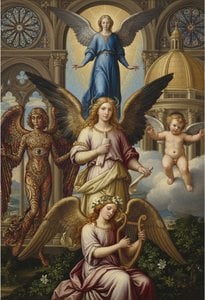
"Untitled (D2X65E)" avtorja Petrus Christus prikazuje: mary and angel gabriel, religious scene artwork, medieval european art, brick wall composition, devotional painting style, renaissance religious art, angel figure depiction.

Kako lahko ogledam "Untitled (D2X65E)" avtorja Petrus Christus v obliki diorama?

Delo "Untitled (D2X65E)" avtorja Petrus Christus si lahko ogledate v obliki diaporame na strani Slidešov za to umetniško delo.

Kje lahko najdem statistične podatke o "Untitled (D2X65E)" avtorja Petrus Christus?

Statistika za "Untitled (D2X65E)" avtorja Petrus Christus je na strani Statistika pregledov umetninine: vključuje mesečne obiske umetninine, obiske umetninikovih del ter razdelitev nedavnih obiskovalcev po državah in jezikih.

Biografija umetnika

Mojster iz Bruga: Življenje in umetnost Petrusa Christusa

Petrus Christus, ime, ki je morda manj takoj prepoznavno kot imena njegovih sodobnikov, Jan van Eycka ali Rogierja van der Weydena, vendar vseeno zavzema ključno vlogo v razvoju zgodnje nizozemske slikarstva. Rodjen okoli leta 1465 v Baarle-Hertogu, majhnem vojvodstvu na meji med Belgijo in Nizozemsko, je Christus izstopil kot eden vodilnih umetnikov v Brugu v obdobju nepregledanih umetniških inovacij. Čeprav so biografski podatki redki – kar je bil običajen uspeh za mnoge slikarje tistega časa – njegova preživa imena govorijo volja o njegovi tehnični dovršenosti, intelektualni radovednosti in globokem razumevanju tako religijske simbolike kot razvijajočih se možnosti oljne barve. Ni bil zgolj sledil stopinjama Van Eycka; bil je inovator, ki je na subtilen, a pomemben način premaknil meje realizma in perspektive ter pustil neizbrisno sled v umetniški pokrajini 15. stoletja.

Zgodnja kariera in umetniške temelji

Christus se prvič pojavi v zgodovinskih zapisih leta 1444 kot mojster slikar v Brugu, kar nakazuje, da je opravil temeljito usposabljanje – čeprav identiteta njegovega učitelja ostaja neznana. Jasno je le, da se je hitro uveljavil znotraj cvetočega umetniškega okolja mesta. Po smrti Jan van Eycka leta 1441 je Christus zapolnil nastali praznin, s čimer je postal eden najbolj iskanih umetnikov v Brugu. Njegovo zgodnje del kaže ostre zavedanje Van Eyckovih tehnik – natančno dovršenost, svetlobnost oljne barve in simbolno bogastvo, zakloženo v videz navadnih predmetov. Vendar pa ni le imitiral svojega predhodnika. Christus je začel razvijati lasten slog, ki ga je odlikovala večja poudarjenost jasnosti, arhitekturnih okolij in vse bolj izpopolnjeno razumevanje linearne perspektive. Vpojil je tudi vplive Rogierja van der le Weydena, zlasti v svoji sposobnosti prenosa čustvene globine in duhovne intenzivnosti.

Inovacije v perspektivi in realizmu

Najpomembnejši prispevek Christusa leži v njegovi mojstrovski uporabi linearne perspektive. Čeprav je Van Eyck v svojem delu uporajal določeno mero prostorne umikanja, je Christus to stopinjo povečal, s čimer je ustvaril slike z izjemno prepričljivo občutkom globine in trodimenzionalnosti. To je še posebej očitno v delih, kot je Devica Marija z otrokom, ki je zdaj v Nacionalni galeriji, kjer se arhitekturna kulisa umika v daljavo z matematično natančnostjo. Ni le ustvarjal realističnih prostorov; uporabil je perspektivo, da bi gledalca privabil *v* samo sceno, s čim bolj intimno povezavo z motivom. To ni bila le tehnična vežba; služilo je povečanju duhovnega učinka slike, ki je vabilo k razmišlčenju in pobožnosti. Njegova natančna tehnika – plastenje tankih glacov oljne barve za doseganje neprepodobne svetlobnosti in podrobnosti – je še dodatno izboljšala ta občutek realizma. Vsaka tekstura, od gnil v tkanine do sijaja kovine, je prikazana z osupljivo natančnostjo.

Pomembna dela in simbolni jezik

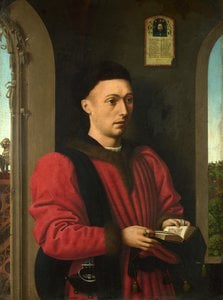
Poleg Device Marije z otrokom je Christus ustvaril številna druga izstopajoča dela, ki prikazujejo njegovo umetniško znanje in intelektualno globino. Portret mladeniča, ki se trenutno nahaja v Museo Thyssen-Bornemisza, je posebej prepričljiv primer njegove sposobnosti zajeti človeški karakter. Pogled modela je neposreden in privabljiv, ter izraža občutek inteligence in samozavedanja. Slika razkriva tudi Christovo subtilno uporabo simbolike – samostojna prižgana sveča lahko predstavlja Krista kot svetlobo sveta, medtem ko lahko rožica na okenski polici nakazuje na čistost in vrlinost. Takšne simbolne elemente je pogosto vključeval v svoje slike, s čimer je njihove pomen presegal zgolj vizualno doživljanje. Drugo pomembno del je Poslednji sod, kompleksna kompozicija, ki dokazuje njegovo veščino pri prikazovanju več figur v dinamičnem prostoru.

Dediščina in zgodovinski pomen

Petrus Christus je v Brugu umrl leta 1476 in za seboj pustil relativno majhen, a globoko vpliven korpus del. Njegove inovacije z linearno perspektivo in natančna tehnika so imele trajen vpliv na naslednje generacije slikarjev. Čeprav ni ustanovil velike ateljeja ali privabil številne sledilce, so njegove sloge prevzeli drugi umetniki v regiji, kar je prispevalo k širšemu razvoju slikarske severne renesanse. Premostil je vrzel med slogom mednarodne gotike in bolj naturalističnimi tendencami 15. stoletja ter s tem pavedal pot umetnikom, kot sta Hans Memling in Hugo van der Goes. Danes je Petrus Christus prepoznan kot ključna figura v zgodnji nizozemski umetnosti – mojster krtnik, katerega slike še vedno očarajo gledalce s svojo lepoto, realizmom in intelektualno globino. Njegovo del ponuja edinstven pogled v umetniški in verski svet Brugu 15. stoletja ter nas opominja na moč slikarstva, da lahko odraža in oblikuje naše razumevanje realnosti.
Petrus Christus

Petrus Christus

1465 - 1476 , Belgija

Hitri podatki

  • Artistic Movement Or Style: Early Netherlandish Art
  • Artists Or Movements Influenced By This Artist:
    • Jan van Eyck
    • Rogier van der Weyden
  • Artists Who Influenced This Artist:
    • Jan van Eyck
    • Rogier van der Weyden
  • Date Of Birth: 1465
  • Date Of Death: 1476
  • Full Name: Petrus Christus
  • Nationality: Belgijec
  • Notable Artworks:
    • Devica Marija z otrokom
    • Portret mladeniča
  • Place Of Birth: Baarle-Hertog, Belgija