BREZPLAČNO POSVETOVANJE O UMETNOSTI


x

 Kupi tiskanino Kupi digitalno sliko
 Pošlji
 Details
 Dodaj v priljubljene
 Prenesi
 Podobni izdelki
 X-Ray
X-Ray
 Predvajaj diaporama
Ročno slikano olje na platnu v vaši izbiri velikosti in okvirja, izdelano po naročilu naših umetnikov.





























Izberite eno od naših vnaprej določenih velikosti, ki ustrezajo prvotnim proporcijam umetničkega dela.

Svoje dimenzije lahko vnesete tako, da se prilagodite določenemu okvirju ali prostoru. Če izbrana velikost ne ustreza razmerjem originalne slike, bomo umetniško delo obrezali ali sliko dopolnili z dodatnimi ročno naslikanimi elementi. Pred začetkom proizvodnje vam bo poslan digitalni osnutek v odobritev.
Upoštevajte, da predogled na zaslonu ne odraža dejanskega obrezovanja ali podaljšanja. Le osnutek bo natančno prikazal končno kompozicijo.
Čeprav so na voljo velikosti po meri, priporočamo izbiro dimenzije s preddefiniranega seznama, da ohranimo originalne razmere.
Svetska dostava () za 3/4 nedelje umesto uobičajenih 5 nedelja. (1 julij). Bez kompromisa po pitanju kvaliteta.


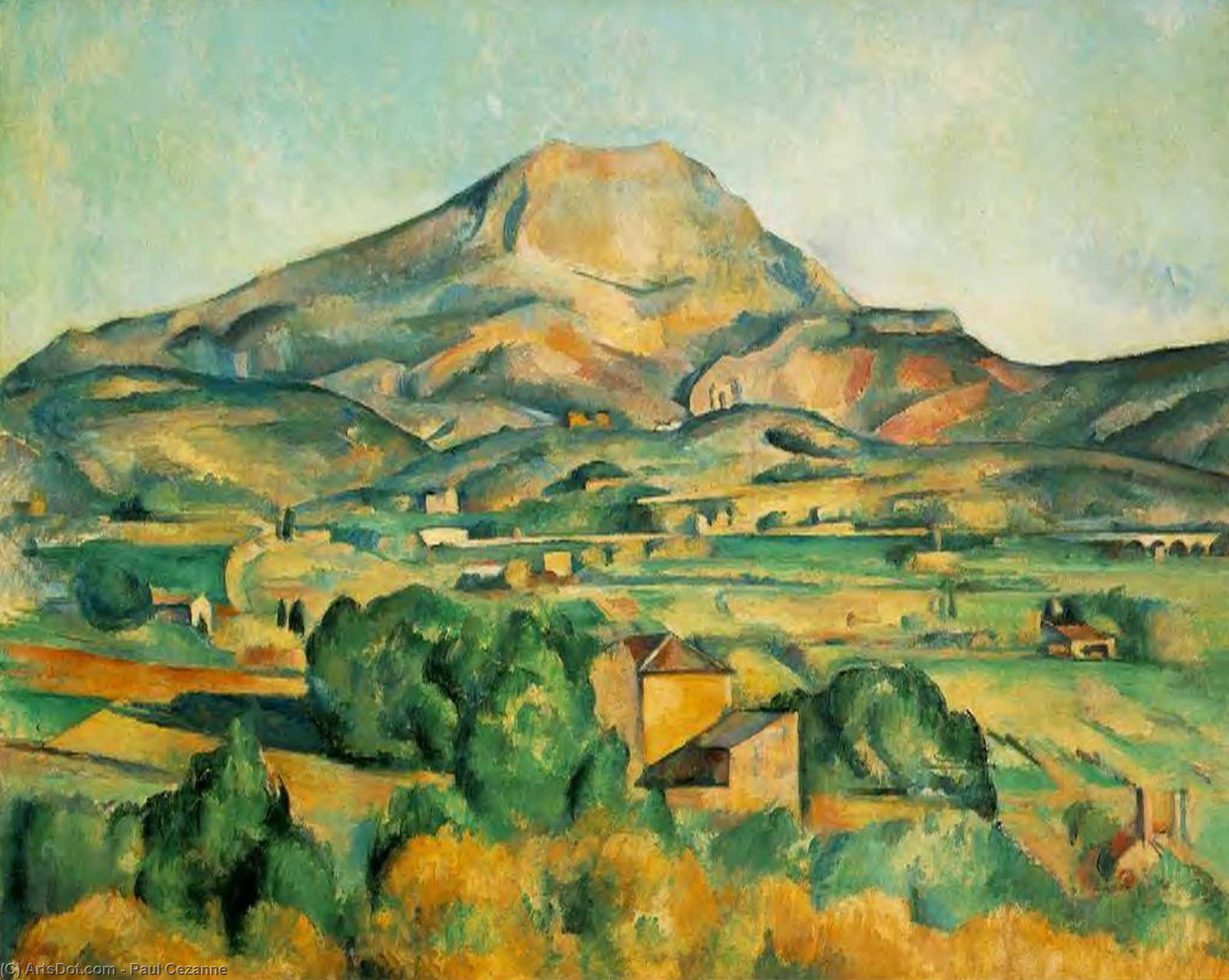
Mont Sainte Victoire
Velikost reprodukcije
Paul Cézanne’s “Mont Sainte-Victoire” isn't merely a landscape painting; it’s an invitation into the artist’s mind, a meticulously constructed exploration of perception and form. Completed in 1902-04, this iconic work resides within The Barnes Foundation in Philadelphia, a testament to Cézanne’s profound connection with the Provençal mountain that dominated his artistic vision for decades. More than simply depicting a geographical feature, Cézanne sought to capture the *essence* of Mont Sainte-Victoire – its underlying structure, its relationship to space and light, and ultimately, its emotional resonance.
Cézanne’s approach shattered traditional landscape conventions. He rejected the academic pursuit of realistic representation, instead prioritizing a more subjective and geometric interpretation. The painting isn't a snapshot of a single moment in time; it’s a carefully orchestrated composition built from interlocking planes of color and subtly distorted forms. Notice how the mountain itself seems to emerge from the canvas, constructed with a series of parallel lines and overlapping shapes – a deliberate departure from the smooth, continuous contours favored by earlier generations of landscape painters. This fragmentation isn't haphazard; it’s a conscious effort to reveal the underlying structure of the scene, as if Cézanne were peeling back layers to expose its essential geometry.
"Mont Sainte-Victoire" firmly establishes Cézanne as a pivotal figure in the transition from Impressionism to Cubism. While influenced by the Impressionists’ focus on capturing fleeting moments of light and color, Cézanne moved beyond mere observation, delving into the formal elements of his subject. He employed techniques that would later be adopted by Picasso and Braque – breaking down objects into geometric shapes, flattening perspective, and presenting multiple viewpoints simultaneously. This wasn't a rejection of Impressionism entirely; rather, it was an evolution—a bold step toward a new way of seeing and representing the world.
The painting’s historical context is crucial to understanding its significance. Cézanne spent his later years in the hills overlooking Aix-en-Provence, returning repeatedly to Mont Sainte-Victoire as a source of inspiration. He painted it from numerous vantage points – near his brother's property, at the quarry, and on the slopes of Les Lauves – each iteration offering a slightly different perspective and contributing to a complex understanding of the mountain’s form. This sustained engagement with the subject resulted in a series of paintings that are both deeply personal and remarkably consistent in their underlying principles.
Beyond its formal innovations, “Mont Sainte-Victoire” is rich in symbolic meaning. The mountain itself has long been associated with spirituality and contemplation – it’s the subject of numerous legends and religious pilgrimages. Cézanne imbues the landscape with a sense of timelessness and serenity, inviting the viewer to lose themselves in its vastness. The muted palette—dominated by blues, greens, and browns—contributes to this atmosphere of quietude, while the carefully placed trees and houses suggest a connection between humanity and nature.
The painting’s unfinished quality – visible brushstrokes and areas where the canvas is exposed – adds another layer of complexity. It suggests that Cézanne was never entirely satisfied with his representation of Mont Sainte-Victoire, constantly striving to capture its elusive essence. This sense of perpetual exploration reflects the artist's own intellectual curiosity and his unwavering commitment to pushing the boundaries of artistic expression. It’s a painting that rewards repeated viewing, revealing new details and nuances with each encounter.
At WahooArt, we are dedicated to preserving the integrity and beauty of Paul Cézanne's “Mont Sainte-Victoire.” Our hand-painted reproductions capture not only the painting’s visual details but also its emotional depth and artistic spirit. Each reproduction is meticulously crafted by skilled artists using traditional oil painting techniques, ensuring a faithful recreation of Cézanne’s original vision. We offer this masterpiece in various sizes to suit your individual needs and preferences.
Explore the legacy of Paul Cézanne and own a piece of art history with WahooArt's stunning reproduction of “Mont Sainte-Victoire.” Learn more about Paul Cézanne or browse our collection: View the Original Artwork.


1839 - 1906 , Francija

Odkrijte 25 mojstrovin Paula Cézanna – od impresionističnih krajin do revolucionarnih tihožitij. Preberite zgodbe za vsako sliko, tehnike in navdih. Kvalitetne reprodukcije slik na WahooArt.com!

Explore the captivating art of Franz Bischoff, a pivotal figure bridging Tonalism & California Impressionism. Discover his stunning landscapes, floral works, and lasting legacy with WahooArt.

Journey through Impressionism's heart with 10 iconic paintings by Monet, Renoir & Degas. Explore light, color & the stories behind these masterpieces. Find museum-quality art reproductions and elevate your home decor on WahooArt.com.

Odkrijte subtilne razlike med impresionizmom in postimpresionizmom z WahooArt.com. Strokovni vodič za izbirčne zbiralce, reprodukcije vrhunskih del in investicijski potencial umetnin.

Odkrijte 10 postimpresionističnih mojstrovin, ki so definirale umetnost! Van Gogh, Cézanne & Seurat – spoznajte zgodbe in tehniko za kulte umetnine. Najboljša zbirka slik na platnu in reprodukcij za vaš dom. Raziščite polno kolekcijo na WahooArt.com!


Bodite na sešte, s najnovejšimi novicami iz sveta umetnosti, ekskluzivnimi ponudbami in idejami za dekoracijo.
Povejte nam o svojem projektu in naši strokovnjaki za umetnost vam bodo pripravili 3 prilagojene predloge umetniških del.
Naj vam izberemo 3 možnosti – popolnoma brezplačno!
 Deli
Deli









 Preberi več
 Možnost stekla je na voljo le za velikosti pod 110 cm