Venecijanski Vizionar: Življenje in Umetnost Paola Veroneza
Paolo Caliari, znan svetu kot Paolo Veroneze, se je iz živahnega umetniškega okolja 16. stoletne Benetke pojavil kot mojster barve, kompozicije in veličastnih spektaklov. Rojstnik v Veroni leta 1528, sin kamnoseka, je bilo njegovo zgodnje življenje prežeto z vizualno bogatvom okolice – klasično arhitekturo, klesanimi oblikami in razvijajočimi se humanističnimi ideali, ki so značilne za to območje. Njegova prvotna izobrazba pod vodstvom Antonia Badileja in Giovannija Francesca Carota je postavila temelj tradicionalnim tehnikam, a je bilo njegovo preseljevanje v Benetke v petdesetih letih 16. stoletja tisto, kar je resnično sprožilo njegov umetniški genij. Mesto samo je postalo njegova muza, živahna tržnica, veličastne palače in bleščeči vodotoki pa so oblikovali obseg in dramo njegovega dela. Hitro je absorbiral vplive uveljavljenih beneških mojstrov, kot je Titian, katerega obvladovanje barve je globoko vplivalo na Veronezevo paleto, vendar je izklesal značilen slog, za katerega je bila značilna neprimerljiva teatralnost in veličina.
Slikar Gostij in Velikih Pripovedi
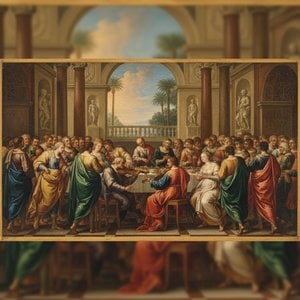
Veronezev ugled temelji na njegovih monumentalnih slikah, zlasti tistih, ki prikazujejo razkošne gostije in biblične prizore, spremenjene v osupljive prikaze beneškega življenja. *Poroka v Kani*, končana leta 1563 za benediktinski samostan San Giorgio Maggiore, je dokaz njegove spretnosti. Ta kolosalno platno ni le ilustracija čudeža; to je živahna panorama družbe 16. stoletja, prežeta z elegantno oblečenimi figurami, glasbeniki in arhitektonskimi detajli, upodobljenimi z dih jemajočo natančnostjo. Slika ni samo o tem, kaj se je zgodilo v Kani, ampak *kako* bi to izgledalo, če bi se to zgodilo v Benetkah med Veronezevim časom. Podobno je *Gostija v hiši Levia*, prvotno naslovljena *Zadnja večerja*, povzročila kontroverze z inkvizicijo zaradi vključitve sodobnih figur in navideznega ne spoštovanja atmosfere. Veroneze se je branil svoje umetniške licence, trdil pa je, da imajo slikarji enako ustvarjalno svobodo kot pesniki in šaljivci – drzava izjava, ki odraža njegovo prepričanje v moč umetnosti interpretirati in ponovno domisliti svete pripovedi. Ta dela niso bila zgolj verski prikazi; to so bili proslavljanja življenja, bogastva in veličine same Benetke. Ni ga zanimala strogost duhovnosti, ampak je želel ujeti veselje in obilje obstoja.
Vplivi in Umetniški Razvoj
Čeprav je Titianov vpliv na Veronezevo barvitost nesporna, je bil njegov umetniški razvoj kompleksen preplet različnih vplivov. Arhitektonska natančnost, ki jo je prinesel v svoje kompozicije, dolguje veliko klasični tradiciji, prevladujoči v Veroni med oblikovalnimi leti, zlasti delu arhitektov, kot je Michele Sanmicheli. Absorbiral je tudi elemente osrednjeitalijanskih mojstrov, kot sta Raphael in Parmigianino, kar se kaže v gracioznih linijah in harmoničnih aranžmajih znotraj njegovih slik. Vendar Veroneze ni preprosto posnemal teh vplivov; sintetiziral jih je v edinstven beneški slog, za katerega so bile značilne dramatična uporaba svetlobe, živahne barvne palete in natančna pozornost do podrobnosti. Odlično se je izkazal pri ustvarjanju iluzij prostora in globine, uporabljal perspektivne tehnike za privlačitev gledalcev v srce svojih zapletenih prizorov.
Njegovo obvladovanje oljnega slikanja mu je omogočilo doseganje neprimerljive svetlobe in bogastva teksture. Vodil je tudi veliko delavnico, s prispevki brata Benedetta in sinov Gabriela in Carla, kar je zagotovilo nadaljevanje njegovega sloga celo po njegovi smrti leta 1588.
Zapuščina in Zgodovinski Pomen
Veronezev vpliv sega daleč onkraj področja renesančne umetnosti. Njegovo delo je odmevalo skozi stoletja, navdihovalo pa je umetnike na različnih področjih. Njegove dramatične kompozicije in živahne barvne sheme so bile omenjene kot vplivi na vse, od baročnega slikanja do modernega filma – celo našle odmeve v vizualni estetiki špagetijevskih westernov. Bil je del “velike trojice” beneških slikarjev—poleg Titiana in Tintoretta—ki so vsak edinstveno prispevali k mestnemu umetniškemu izročilu, vendar Veroneze pogosto izstopa zaradi svoje čistega veselja in proslavljanja zemeljskih užitkov. Njegove slike še vedno očarajo občinstvo s svojo veličino in spektaklom ter ponujajo vpogled v razkošno svet 16. stoletne Benetke.
- Ponovno je opredelil zgodovinsko slikarstvo z vključitvijo sodobnega življenja.
- Njegova uporaba barve ostaja vplivna za umetnike danes.
- Njegovo delo uteleša duh renesančnega humanizma in proslavljanja zemeljske lepote.
Veronezeva zapuščina je dokaz njegovega umetniškega genija, sposobnosti ujeti bistvo dobe in trajnega prispevka k zgodovini umetnosti.



 Predogled
 Preklop na tiskanine
 Pošlji
 Deli
Deli
 Podrobnosti o delu

 Prenesi
 Podobni izdelki
 Rentgenski posnetek
 Predvajaj diaporama
 Statistika


 Razviljaj več






































 Možnost stekla je na voljo le za velikosti pod 110 cm