
Umetniška dela, prikazana na tej strani, so zaščitena z avtorskimi pravicami, kar pomeni, da po zakonu ne moremo ustvarjati ali prodajati identičnih reprodukcij. Ta zaščita se izvaja v skladu z mednarodnimi sporazumi, kot so Bernska konvencija in po nacionalnih zakonih, vključno s tistimi, ki jih določa Zakon o avtorskih pravicah ZDA – naslov 17.
Ta način v celoti upošteva zakonodajo o avtorskih pravicah, saj ne vključuje kopiranja ali podvajanja zaščitenga umetniškega dela. Namesto tega gre za kreativno preinterpretacijo – novo sliko, ki je navdihnjen rezultat originala, vendar ni z njim identična.
Giclée ali platnati odtis muzejske kakovosti z hitro proizvodnjo in prilagodljivimi možnostmi končne obdelave. ( Kupite ročno slikano delo Preklop na digitalno sliko)





























Izberite eno od naših vnaprej določenih velikosti, ki ustrezajo prvotnim proporcijam umetničkega dela.

Vnesite širino in višino, ki jih potrebujete za svoj okvir ali steno. Tiskanje se lahko le odreže, vendar ga ni mogoče narediti večjega od slike, zato format z drugačno obliko pomeni izgubo dela slike. Pred tiskanjem vam pošljemo digitalni predogled za potrditev. Slika, prikazana na tej strani, ne prikazuje dejanskega izrezka — le predogled to omogoča.
Globalna dostava () v 2 tednih namesto standardnih 4/5 tednov. (31 oktober)
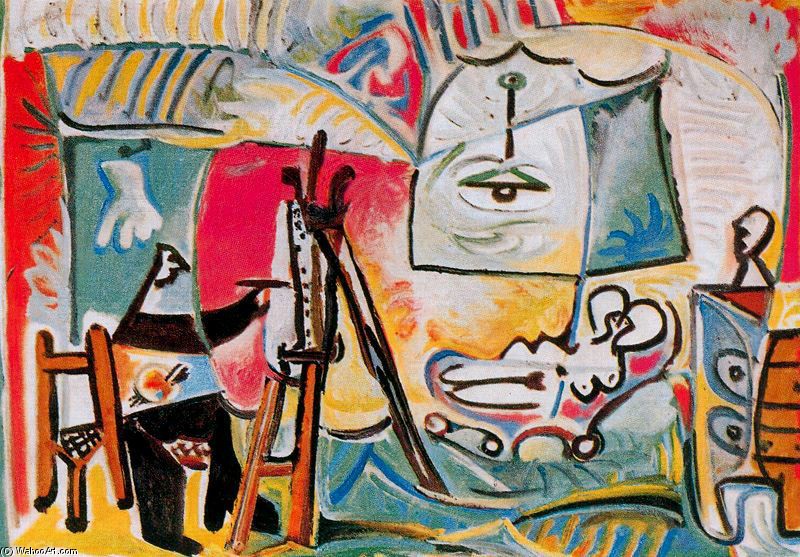
The painter and his model 12
Velikost reprodukcije
Pablo Picasso’s “The Painter and His Model,” painted in 1929-30 during his prolific Parisian period, is far more than a simple portrait; it's a meticulously constructed exploration of the relationship between artist and subject, rendered through the fractured logic of Cubism. This work, housed at The Art Institute of Chicago, offers a captivating glimpse into Picasso’s evolving artistic language and his profound interest in capturing not just appearances but also the underlying dynamics of human interaction.
The scene unfolds within a modestly sized studio – a space deliberately devoid of grandiosity, suggesting an intimate setting rather than a formal atelier. A man, presumed to be Picasso himself, sits on a chair, holding a camera or perhaps a paintbrush, his gaze directed towards the woman standing behind him. She is not presented as a passive object of observation but as an active participant in the creative process, her presence subtly challenging the traditional role of the model. The composition isn’t about capturing a single, unified image; instead, Picasso employs multiple viewpoints simultaneously, presenting fragmented perspectives of both figures. This deliberate distortion creates a sense of dynamism and movement, suggesting that reality itself is inherently complex and multifaceted.
Picasso's masterful use of Cubism is immediately apparent. The figures are broken down into geometric shapes – triangles, rectangles, and cylinders – which are then reassembled in a way that defies conventional perspective. This technique isn’t merely an aesthetic choice; it represents Picasso’s attempt to capture the essence of his subjects by analyzing them from multiple angles at once. Notice how the man's body is dissected into sharp planes, while the woman’s form is similarly fragmented, yet retains a recognizable human shape. The interplay between these geometric elements creates a visual tension that mirrors the complexities of their relationship.
The color palette is restrained – primarily consisting of muted browns, grays, and ochres – contributing to the painting's overall sense of quiet contemplation. However, subtle hints of blue and green peek through, adding depth and richness to the composition. The background, rendered in a darker tone, further emphasizes the figures and draws attention to their interaction. The careful balance between form and color is characteristic of Picasso’s mature Cubist style.
Beyond its formal qualities, “The Painter and His Model” is rich in symbolic meaning. The presence of the camera – or potential paintbrush – suggests the act of recording and documenting reality. It raises questions about the nature of representation and the role of the artist as a witness to the world. The woman’s posture—leaning slightly towards the man, her hand resting on his arm—hints at a connection that transcends mere observation. She is not simply posing for him; she appears engaged in a collaborative dialogue.
Furthermore, the eye-like shape located near the top right corner has been interpreted as a symbol of vision and perception. It could represent Picasso’s own artistic gaze, or perhaps the shared perspective of both figures. The painting, therefore, becomes a meditation on the creative process itself – a visual exploration of how ideas are formed, communicated, and ultimately captured on canvas.
“The Painter and His Model” is more than just a portrait; it’s a profound statement about the nature of art, relationships, and perception. Picasso's innovative use of Cubism, combined with his subtle symbolic gestures, creates a work that continues to resonate with viewers today. It invites us to contemplate the complexities of human interaction and the transformative power of artistic expression. Reproductions of this iconic piece offer an exceptional opportunity to bring this captivating vision into your home, adding a touch of intellectual depth and visual intrigue to any space.
Delo "The painter and his model 12" avtorja Pablo Picasso si lahko ogledate v obliki diaporame na strani Slidešov za to umetniško delo.
Reprodukcija dela "The painter and his model 12" avtorja Pablo Picasso je priporočljiva za Statement. Ta predlog temelji na tematiki, vzdušju in barvni paleti dela.
Amber to Saffron odtenek prežema celotno skladbo "The painter and his model 12" avtorja Pablo Picasso.


1881 - 1973 , Španija
Explore the profound evolution of Cubism through an expert analysis of Pablo Picasso's revolutionary works. From Analytical to Synthetic Cubism, discover the techniques that redefined modern art and learn how to curate these iconic masterpieces for your private collection.

Embark on a journey through the revolutionary world of Cubism. Discover how masters like Picasso redefined perspective through Analytical and Synthetic techniques in this expert-led guide for art enthusiasts and collectors.

Unveil the radical revolution of Cubism. Explore how masters like Picasso and Braque redefined modern art through fragmented forms and geometric abstraction, offering profound insights for discerning collectors of fine art history and masterpieces.
 Predogled v realnem okolju
 Pošlji
 Deli
Deli
 Podrobnosti o delu
 Priročnik

 Prenesi sliko
 Podobni izdelki
 Rentgenski posnetek
 Predvajaj diaporama
 Q&A
Q&A Statistika

 Preberi več









 Možnost stekla je na voljo le za velikosti pod 110 cm


