
Umetniška dela, prikazana na tej strani, so zaščitena z avtorskimi pravicami, kar pomeni, da po zakonu ne moremo ustvarjati ali prodajati identičnih reprodukcij. Ta zaščita se izvaja v skladu z mednarodnimi sporazumi, kot so Bernska konvencija in po nacionalnih zakonih, vključno s tistimi, ki jih določa Zakon o avtorskih pravicah ZDA – naslov 17.
Ta način v celoti upošteva zakonodajo o avtorskih pravicah, saj ne vključuje kopiranja ali podvajanja zaščitenga umetniškega dela. Namesto tega gre za kreativno preinterpretacijo – novo sliko, ki je navdihnjen rezultat originala, vendar ni z njim identična.
Giclée ali platnati odtis muzejske kakovosti z hitro proizvodnjo in prilagodljivimi možnostmi končne obdelave. ( Kupite ročno slikano delo Preklop na digitalno sliko)





























Izberite eno od naših vnaprej določenih velikosti, ki ustrezajo prvotnim proporcijam umetničkega dela.

Vnesite širino in višino, ki jih potrebujete za svoj okvir ali steno. Tiskanje se lahko le odreže, vendar ga ni mogoče narediti večjega od slike, zato format z drugačno obliko pomeni izgubo dela slike. Pred tiskanjem vam pošljemo digitalni predogled za potrditev. Slika, prikazana na tej strani, ne prikazuje dejanskega izrezka — le predogled to omogoča.
Globalna dostava () v 2 tednih namesto standardnih 4/5 tednov. (31 oktober)
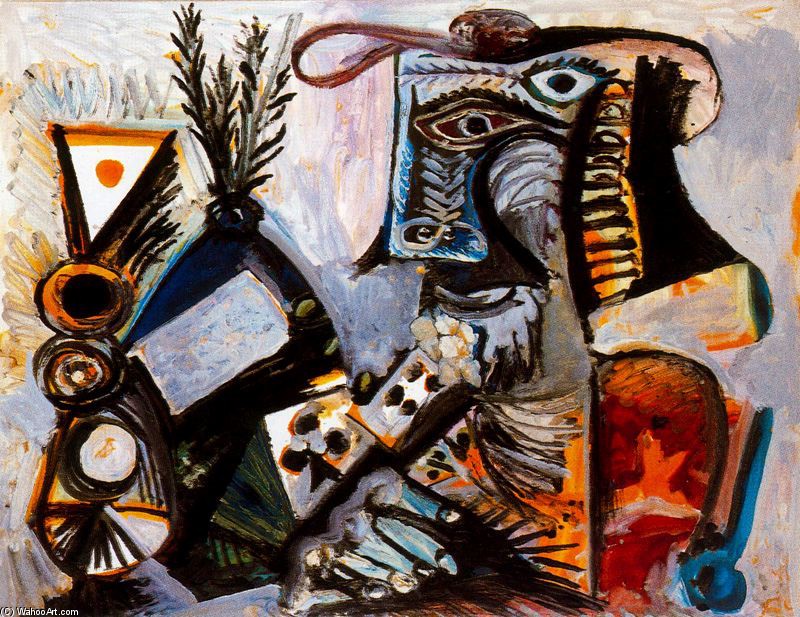
The Card-Player 1
Velikost reprodukcije
Pablo Picasso's "The Card Player," painted in 1913-14 during the formative years of his artistic breakthrough, stands as a pivotal work embodying the nascent principles of Cubism. Created amidst the turbulent backdrop of European intellectual ferment—the rise of Dada and Surrealism challenging established conventions—this painting transcends mere representation; it delves into psychological complexity and interrogates the very nature of perception.
The mask itself serves as a potent symbol of concealment and identity—a motif recurrent throughout Picasso’s oeuvre. It speaks to themes of repression, hidden emotions, and the difficulty of achieving genuine self-awareness. The inclusion of objects like the vase, clock, and bowl adds layers of significance. These items represent time passing, stillness, and domesticity – elements juxtaposed against the figure's isolation, highlighting the tension between internal experience and external reality.
Painted during a period marked by political instability—the escalating tensions leading up to World War I—"The Card Player" reflects Picasso’s engagement with intellectual currents of his time. Cubism emerged as a reaction against Impressionism and Post-Impressionism, rejecting their emphasis on capturing fleeting impressions of light and color. Instead, Picasso sought to represent objects from multiple viewpoints simultaneously, challenging viewers to reconsider their understanding of visual space.
"The Card Player" transcends its formal innovations to convey a profound emotional resonance. The figure’s solitary posture evokes feelings of vulnerability, contemplation, and perhaps even despair. Picasso's masterful manipulation of form and color invites viewers into a dialogue about the complexities of human experience—the struggle for self-expression amidst societal pressures and the inescapable awareness of mortality.
Stopnja priljubljenosti za delo "The Card-Player 1" avtorja Pablo Picasso znaša Iconic.
"The Card-Player 1" avtorja Pablo Picasso odlikuje Subtle Color saturacija in Balanced intenzivnost barv.
"The Card-Player 1" avtorja Pablo Picasso združuje mask, poker, chessboard, reflection, geometric, psychology, symbolism, portraiture z Dramatic vzdušjem.


1881 - 1973 , Španija

Unveil the radical revolution of Cubism. Explore how masters like Picasso and Braque redefined modern art through fragmented forms and geometric abstraction, offering profound insights for discerning collectors of fine art history and masterpieces.

Embark on a journey through the revolutionary world of Cubism. Discover how masters like Picasso redefined perspective through Analytical and Synthetic techniques in this expert-led guide for art enthusiasts and collectors.
Embark on a profound journey through the world's most iconic mask artworks. Explore the spiritual depth, intricate craftsmanship, and rich cultural heritage of global traditions, from Chhau to Gomira, in this expert-led exploration of ancestral artistry and symbolic beauty.

Explore the profound evolution of Cubism through an expert analysis of Pablo Picasso's revolutionary works. From Analytical to Synthetic Cubism, discover the techniques that redefined modern art and learn how to curate these iconic masterpieces for your private collection.
 Predogled v realnem okolju
 Pošlji
 Deli
Deli
 Podrobnosti o delu
 Priročnik

 Prenesi sliko
 Podobni izdelki
 Rentgenski posnetek
 Predvajaj diaporama
 Q&A
Q&A Statistika
 Preberi več









 Možnost stekla je na voljo le za velikosti pod 110 cm


