

Umetniška dela, prikazana na tej strani, so zaščitena z avtorskimi pravicami, kar pomeni, da po zakonu ne moremo ustvarjati ali prodajati identičnih reprodukcij. Ta zaščita se izvaja v skladu z mednarodnimi sporazumi, kot so Bernska konvencija in po nacionalnih zakonih, vključno s tistimi, ki jih določa Zakon o avtorskih pravicah ZDA – naslov 17.
Ta način v celoti upošteva zakonodajo o avtorskih pravicah, saj ne vključuje kopiranja ali podvajanja zaščitenga umetniškega dela. Namesto tega gre za kreativno preinterpretacijo – novo sliko, ki je navdihnjen rezultat originala, vendar ni z njim identična.
Giclée ali platnati odtis muzejske kakovosti z hitro proizvodnjo in prilagodljivimi možnostmi končne obdelave. ( Kupite ročno slikano delo Preklop na digitalno sliko)





























Izberite eno od naših vnaprej določenih velikosti, ki ustrezajo prvotnim proporcijam umetničkega dela.

Vnesite širino in višino, ki jih potrebujete za svoj okvir ali steno. Tiskanje se lahko le odreže, vendar ga ni mogoče narediti večjega od slike, zato format z drugačno obliko pomeni izgubo dela slike. Pred tiskanjem vam pošljemo digitalni predogled za potrditev. Slika, prikazana na tej strani, ne prikazuje dejanskega izrezka — le predogled to omogoča.
Globalna dostava () v 2 tednih namesto standardnih 4/5 tednov. (2 november)
Man with a Guitar 1
Velikost reprodukcije
In the transformative landscape of early twentieth-century modernism, few works capture the radical restructuring of reality quite like Pablo Picasso’s “Man with a Guitar.” Painted in 1913, this masterpiece serves as a profound cornerstone of Synthetic Cubism, marking a decisive departure from the more analytical, monochromatic explorations that had previously defined the movement. The painting presents us with a man seated in profile, his form intertwined with the instrument he holds across his shoulder. Yet, this is no mere portrait; it is an intricate tableau where the boundaries between the human figure and the surrounding space begin to dissolve. Alongside the central subject, two indistinct figures linger in the background, creating an atmosphere that feels simultaneously intimate and unsettling, as if we are peering into a fractured dream of social interaction.
The technique employed by Picasso in this period was nothing short of revolutionary. Moving away from the shattered, glass-like shards of his earlier work, he embraced the concept of layering and superimposition. In “Man with a Guitar,” we see fractured planes of color stacked upon one another to present multiple perspectives at once. The palette is masterfully restrained, dominated by earthy, grounded tones that are suddenly interrupted by deliberate splashes of vibrant blues and reds. This contrast is not merely decorative; it is a structural tool used to heighten the visual impact and guide the eye through the geometric labyrinth of the composition. The guitar itself is stripped of its realistic curves, instead being reimagined through a series of essential geometric shapes that mirror the fragmentation of the man’s own form.
To gaze upon this work is to confront the anxieties of a world in flux. Created during an era of rapid industrialization and urban expansion, the painting reflects Picasso's engagement with the disintegration of traditional values. The guitar serves as a potent symbol of musical expression—a sanctuary of rhythm and melody amidst the chaos of modernity. However, because the instrument is rendered in a broken, deconstructed state, it suggests that even our most cherished forms of refuge are being reshaped by the pressures of a changing society. There is a palpable sense of isolation within the piece; the man’s enigmatic gaze invites deep introspection, suggesting a soul caught between the internal world of thought and the external world of observation.
For the discerning collector or interior designer, this artwork offers more than just aesthetic brilliance; it provides a profound emotional anchor. The blurred figures in the background represent an external reality that feels distant and incomprehensible, emphasizing the solitary nature of the human experience. Whether displayed in a contemporary gallery setting or as a focal point in a sophisticated residential space, a high-quality reproduction of this piece brings with it a sense of intellectual depth and historical gravity. It is a conversation starter that bridges the gap between the turbulent history of the 1910s and the refined elegance of modern decor, making it an essential acquisition for those who appreciate art that challenges the eye and stirs the spirit.
Tehnika za delo "Man with a Guitar 1" avtorja Pablo Picasso je Oil. Različice imajo za namen natančno prikazati videz te tehnike.
Tematika v delu "Man with a Guitar 1" avtorja Pablo Picasso vključuje guitar, portraiture, cubism, fragmented forms, geometric shapes, musical instrument, multiple perspectives, spanish painter, ki skupaj predstavljajo vsebino umetninškega dela.
Stran Predogled dela za delo "Man with a Guitar 1" vam omogoča ogled umetnin pred naročilom.

1881 - 1973 , Španija

Embark on a journey through the revolutionary world of Cubism. Discover how masters like Picasso redefined perspective through Analytical and Synthetic techniques in this expert-led guide for art enthusiasts and collectors.

Explore the profound evolution of Cubism through an expert analysis of Pablo Picasso's revolutionary works. From Analytical to Synthetic Cubism, discover the techniques that redefined modern art and learn how to curate these iconic masterpieces for your private collection.
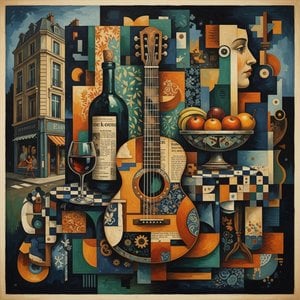
Master the vibrant world of Synthetic Cubism with our expert guide. Explore the revolutionary techniques of Picasso and Braque, from collage to color, and discover how this movement redefined modern art for collectors and connoisseurs alike.
 Predogled v realnem okolju
 Pošlji
 Deli
Deli
 Podrobnosti o delu
 Priročnik

 Prenesi sliko
 Podobni izdelki
 Rentgenski posnetek
 Predvajaj diaporama
 Q&A
Q&A Statistika

 Preberi več









 Možnost stekla je na voljo le za velikosti pod 110 cm


