Biografija umetnika
Pablo Picasso: Revolucija v umetnosti in neusahljiv vir navdiha
Pablo Ruiz y Picasso, ime, ki je sinonimno za umetniško revolucijo, se je rodil v Málagi, Španiji, 25. oktobra 1881. Že njegovo rojstvo je kazalo na usodo ustvarjalnega genija; legenda pravi, da so bile njegove prve izgovorjene besede “piz, piz,” poskus reči ‘svinčnik’. Ta zgodnja nagnjenost je gojil njegov oče, José Ruiz y Blasco, slikar in učitelj risanja, ki je mlademu Pablu nudil osnovno usposabljanje. A učenec je hitro presegel mojstra, pokazal pa je izjemno nadarjenost za naravnost prikazovanje, kar je napovedovalo izjemen talent v njem. Družinina kasnejša preselitev – najprej v A Coruño, nato v Barcelono – sta bila zaznamovana z osebno tragedijo, izgubo sestre, doživetji, ki so subtilno preželi njegovo poznejše delo s temami melanholije in smrtnosti. Že med formalnim študijem na Šoli za lepe umetnosti v Barceloni in kratkim obiskom Kraljeve akademije San Fernando v Madridu se je Picasso upiral strogim akademskim omejitvam, raje pa se je potapljal v dela mojstrov, kot sta Velázquez in Goya, koval svojo lastno pot umetniške inovacije.
Od modrih žalosti do rožnatega optimizma
Zgodnja leta 20. stoletja sta priča nastanku dveh izrazitih obdobij v Picassojevem opusu: Modre dobe (približno 1901-1904) in Rožnate dobe (1904-1906). Modra doba, rojena iz osebne stiske in zavedanja družbenih trpljenj, je zaznamovana s slikami, prepojenimi s temnimi odtenki modre in modro-zelene barve. Te slike so poseljene z marginaliziranimi figurami – prosjakov, slepih, prostitutk – upodobljenimi z strahospolnim empatijem, ki govori o temah izolacije in obupa. La Vie (1903) in Stari kitarist (1903-1904) sta ganljiva primera te čustveno nabojene faze. Prehod v Picassojevem osebnem življenju, skupaj s preselitvijo v Pariz, je napovedal prihod Rožnate dobe. Paleta se je znatno ogrela, sprejela roza, oranžne in rdeče barve, kar odraža bolj optimističen pogled na svet. V tem obdobju je vladala fascinacija cirkuskimi izvajalci – klauni, akrobati in družinskimi skupinami – figurami, ki utelešajo krhkost in odpornost. Družina saltimbanques (1905) lepo zajame ta prehod, nakazuje pa tudi na stilistične raziskave, ki so bile pred njim.
Razbitje perspektive: Kubizem in naprej
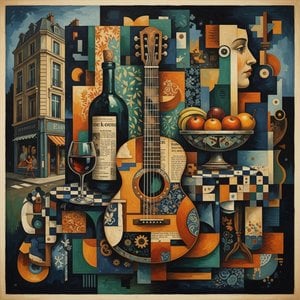
Leto 1907 je zaznamovalo ključni trenutek v zgodovini umetnosti z nastankom Les Demoiselles d'Avignon (Gospodične iz Avignona). Pod vplivom iberijske skulpture in afriških mask Picasso s tem revolucionarnim delom razbija tradicionalne poglede na perspektivo in predstavitev. To je bila radikalna odstopanja, namenjena zavrženju stoječih konvencij, ki je utrla pot kubizmu. V tesnem sodelovanju z Georgesom Braquom je Picasso soustanovil to revolucionarno smer, ki je temeljito spremenila način, na katerega umetniki dojemajo in prikazujejo realnost. Analitični kubizem (1909-1912) je vključeval fragmentacijo predmetov v geometrijske oblike, upodabljene v umirjenih barvah, kot da bi razčlenili samo obliko. To se je razvilo v sintetični kubizem (1912-1919), ki je vključeval elemente kolaža – izrezke časopisov, kosce tkanin – dodal teksturo in nove vizualne sloje kompleksnosti. Picasso ni želel le predstaviti sveta; hotel ga je dekonstruirati in rekonstruirati po svojih pravilih.
Neusahljiv raziskovalec: Neoklasicizem, surrealizem in vojna
Dvadeseta leta so prinesle kratko obdobje, ko se je Picasso ukvarjal s neoklasičnimi slogi, ustvaril pa je monumentalne figure, ki so odsevljale klasične oblike, hkrati pa ohranjale izrazito moderno občutljivost. Hkrati se je spoprijateljil z nastajajočo surrealistično gibanjem, čeprav se ni nikoli popolnoma ujedinil z njegovimi načeli. Njegovo delo v tem obdobju je združevalo zgodnje stilistične vplive s surrealističnimi podobe in izkrenimi perspektivami, kar je dokazovalo njegovo neusahljivo raziskovanje. Groza španske državljanske vojne je globoko prizadel Picassa, ki je ustvaril Guernico (1937), visceralno in čustveno uničujočo odziv na bombardiranje Guernice. To monumentalno delo je postalo trajno znamenje grozot vojne, s katerim je Picasso utrdil svojo vlogo ne le kot umetnika, temveč tudi kot močnega glasa za mir in družbeno pravičnost. V petdesetih in šestdesetih letih prejšnjega stoletja je še naprej izzival meje, raziskoval keramiko, kiparstvo in grafike z neomajno radovednostjo in spretnostjo. Poroka z Jacqueline Roque leta 1961 je prinesla novo dimenzijo v njegovo osebno življenje in umetniško ustvarjanje.
Neizmerljiv vpliv
Pablo Picasso je umrl 8. aprila 1973 v Mouginsu, Franciji, za seboj pustil osupljivo količino dela – ocenjeno na več kot 50.000 del - ki še naprej očara in navdihuje. Njegovo umetniško razvijanje je oblikovalo pestra paleta vplivov, od španskih mojstrov, kot sta Velázquez in Goya, do iberijske skulpture, afriške umetnosti in živahnih barvnih palet Henrija Matissa. Njegov vpliv na umetnost 20. stoletja je neizmeren. Soustanoval je kubizem, pionirsko ustvaril kolaž in konstruktivno skulpturo ter dosledno izzival umetniške konvencije. Picassojeva neusahljiva raziskovanja so ponovno definirala moderno umetnost, pustila pa neizbrisov pečat na generacije umetnikov in utrdili njegovo mesto kot enega najpomembnejših in najbolj vplivnih likov v zgodovini. Njegova zapuščina sega onkraj platna, odziva pa se v neshlačnem številu vidikov sodobne kulture in nas spominja na transformativno moč umetniškega vida.



 Predogled
 Kupi ročno naslikano sliko
 Pošlji
 Deli
Deli
 Podrobnosti o delu

 Prenesi
 Podobni izdelki
 Rentgenski posnetek
 Predvajaj diaporama
 Statistika

 Razviljaj več






































 Možnost stekla je na voljo le za velikosti pod 110 cm