Preverite v realnem okolju Predogled v AR Preklop na tiskanine Preklop na digitalno sliko Pošlji kot čestitko
Podrobnosti Priročnik Dodaj v priljubljene Prenesi Podobni artefakti Rentgenski posnetek Predvajaj diaporama Statistika

The Last Supper

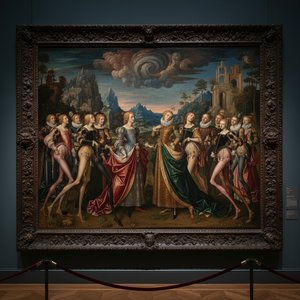
A dramatic Northern Renaissance masterpiece by Maarten de Vos capturing the tension of The Last Supper through rich oil textures and golden light, inviting you to bring this profound biblical moment into your collection.

Discover Maarten de Vos: Flemish painter of history & portraits (1532-1603). Known for Venetian influence, Italian travels, & significant works in the Spanish Netherlands.

Ročno izdelana oljna reprodukcija

Ročno slikano olje na platnu v vaši izbiri velikosti in okvirja, izdelano po naročilu naših umetnikov. ( Preklop na tiskanine Preklop na digitalno sliko)

Corner sample of the P118B picture frame: izoblit polistiren, 5 cm wide and 3 cm thick
P118B €10
Corner sample of the P118H picture frame: izoblit polistiren, 5 cm wide and 3 cm thick
P118H €10
Corner sample of the P118W picture frame: izoblit polistiren, 5 cm wide and 3 cm thick
P118W €10
Corner sample of the P438Z picture frame: izoblit polistiren, 5.5 cm wide and 3.5 cm thick
P438Z €10
Corner sample of the P508JH picture frame: izoblit polistiren, 7 cm wide and 3.5 cm thick
P508JH €12
Corner sample of the P508YH picture frame: izoblit polistiren, 7 cm wide and 3.5 cm thick
P508YH €12
Corner sample of the P805H picture frame: izoblit polistiren, 5 cm wide and 3.5 cm thick
P805H €10
Corner sample of the P805Z picture frame: izoblit polistiren, 5 cm wide and 3.5 cm thick
P805Z €10
Corner sample of the P919BZ picture frame: izoblit polistiren, 7 cm wide and 3.5 cm thick
P919BZ €10
Corner sample of the P919G picture frame: izoblit polistiren, 7 cm wide and 3.5 cm thick
P919G €10
Corner sample of the P919XJ picture frame: izoblit polistiren, 7 cm wide and 3.5 cm thick
P919XJ €10
Corner sample of the P959ZH picture frame: izoblit polistiren, 5 cm wide and 3 cm thick
P959ZH €10
Corner sample of the P968JZ picture frame: izoblit polistiren, 6 cm wide and 4 cm thick
P968JZ €12
Corner sample of the W106C picture frame: masivno drevo, 5 cm wide and 3 cm thick
W106C €8
Corner sample of the W218G picture frame: masivno drevo, 5 cm wide and 3 cm thick
W218G €10
Corner sample of the W218JH picture frame: masivno drevo, 5 cm wide and 3 cm thick
W218JH €8
Corner sample of the W218Y picture frame: masivno drevo, 5 cm wide and 3 cm thick
W218Y €10
Corner sample of the W307PJ picture frame: masivno drevo, 6 cm wide and 3 cm thick
W307PJ €10
Corner sample of the W316G picture frame: masivno drevo, 6 cm wide and 3 cm thick
W316G €10
Corner sample of the W316PJ picture frame: masivno drevo, 6 cm wide and 3 cm thick
W316PJ €8
Corner sample of the W316Y picture frame: masivno drevo, 6 cm wide and 3 cm thick
W316Y €10
Corner sample of the W398PJ picture frame: masivno drevo, 5 cm wide and 3 cm thick
W398PJ €8
Corner sample of the W4111J picture frame: masivno drevo, 6.5 cm wide and 3.5 cm thick
W4111J €10
Corner sample of the W500HY picture frame: masivno drevo, 7 cm wide and 5 cm thick
W500HY €15
Corner sample of the W500JH picture frame: masivno drevo, 7 cm wide and 5 cm thick
W500JH €15
Corner sample of the W692G picture frame: masivno drevo, 8 cm wide and 4 cm thick
W692G €12
Corner sample of the W849H picture frame: masivno drevo, 5 cm wide and 3 cm thick
W849H €8
Corner sample of the W940BG picture frame: masivno drevo, 7.5 cm wide and 4.5 cm thick
W940BG €15
Corner sample of the W953PJ picture frame: masivno drevo, 6 cm wide and 3.5 cm thick
W953PJ €8

Standardna velikost
po meri
CM
INCH

Izberite eno od naših vnaprej določenih velikosti, ki ustrezajo prvotnim proporcijam umetničkega dela.

širina
višina

Vnesite širino in višino, ki jih potrebujete, da se slika prilega vašemu okviru ali steni. Ker je delo ročno slikano, lahko umetnik pri različnih oblikih slik pri robovih doda malo več barve ali pa jih malo odreže — izberite sami. Pred začetkom slikanja vam pošljemo digitalni predogled za potrditev. Slika, prikazana na tej strani, ni končni rezultat — le predogled prikazuje dejansko podobo.

Primeri možnih sprememb: Zamenjava obraza s fotografijo stranke; Dodajanje hišnega ljubljenčka (npr. zamenjava mačke s psom); Vključitev skritega sporočila v ozadje; Sprememba pokrajine ali elementov v ozadju.
Po oddaji naročila bo ekipa WahooArt.com stranki po e-pošti poslala navodila in predogled digitalnega predogleda.

Mednarodna dostava () v 3/4 tednih namesto običajnih 5 tednov. (24 oktober). Brez kompromisov pri kakovosti.

Brezplačna ekspresna dostava po vsem svetu
Visokokakovostno laneno platno
Popolno zavarovanje pošiljke
Garancija povračila carine in uvoznih davkov
Garancija popolnega barvnega ujemanja
Politika vračila v 100 dneh (le v primeru okvar)
Garancija 100% povračila denarja
Popust pri večjem naročilu

Skupna cena

€ 502

The Last Supper

Tehnika reprodukcije

Velikost reprodukcije

-

Skupna cena

€ 502

Hitri podatki

  • Artistic style: Northern Renaissance realism
  • Medium: Oil on panel
  • Influences: Flemish school, Venetian influence
  • Notable elements or techniques: Dramatic lighting, chiaroscuro, detail

Kviz o umetnosti

Pri vsakem vprašanju je na voljo le eden pravilen odgovor.

Vprašanje 1:
Who is the artist of 'The Last Supper' described in the text?
Vprašanje 2:
In which artistic style is this painting categorized?
Vprašanje 3:
Where is the original painting of 'The Last Supper' by Maarten de Vos located?
Vprašanje 4:
What material was used to create this artwork?
Vprašanje 5:
Which figure is described as being placed directly in front of Christ and turning to avoid his gaze?

A Moment of Trembling Silence

Step closer to the table. There is a particular tension held within this room, a weight that seems to press against the very air between the figures. In this depiction of the biblical event, we find Christ at the center of a long, horizontal arrangement, his presence anchoring a scene of sudden, sharp movement. The light enters from a window on the right, casting deep shadows that pull the faces of the disciples into relief. It is a quiet sort of drama. You can almost hear the hushed whispers and the clatter of bread being moved as the news of betrayal ripples through the group. De Vos has captured that precise second where the announcement has been made, but the full weight of the consequence has not yet settled.

The composition relies on a careful arrangement of bodies to guide your eye. While many of the apostles are caught in mid-conversation or looking toward Christ with startled expressions, one figure is set apart. Judas sits directly in front of Jesus, turning his face away, physically attempting to evade the gaze of the man he intends to betray. This subtle movement creates a psychological pull that keeps you anchored to the center of the table.

The Language of Light and Oil

Observe the way the oil interacts with the wooden panel. There is a certain luster here, a pearl-like quality in the skin tones and the heavy folds of the drapery that speaks to the Northern Mannerist tradition. The palette is grounded in warm, earthy tones—ochres, deep reds, and browns—which lend the room an opulent, almost heavy atmosphere. This warmth is contrasted by the sharp, directional light that defines the architectural details of the setting, suggesting a space that is both Roman and Byzantine in its grandeur.

The technique allows for a meticulous attention to texture. You can see the weight of the fabrics and the rougher surfaces of the objects resting upon the table. These elements are not merely decorative; they ground the spiritual narrative in a tangible, physical reality. The bread and wine, central to the Eucharist, are rendered with a clarity that makes them feel present in the room with us. Through this careful layering of light and shadow, the artist achieves a sense of depth that brings the figures forward, making the betrayal feel less like a distant historical event and more like a lived, breathing moment.

Vprašanja in odgovori

Katere barve prevladujejo v delu "The Last Supper" avtorja Maarten De Vos?

"The Last Supper" zaznamja barvna paleta Earthy, ki ji prevladuje Rosy Brown (#a69c83)."

Kako znano je delo "The Last Supper" avtorja Maarten De Vos?

"The Last Supper" avtorja Maarten De Vos ima Recognized stopnjo priljubljenosti. Ta razvrstitev odraža, kako široko je del prepoznano.

Katera so priporočena prostora za izpostavo dela "The Last Supper", glede na njegovo barvno paleto?

Z考慮 na njegove Earthy barve je za Restaurant priporočljivo delo "The Last Supper".


Biografija umetnika

Early Life and Training in Antwerp

Maerten de Vos, born in the bustling artistic hub of Antwerp in 1532, emerged from a family deeply rooted in the city’s painting tradition. His father, Pieter de Vos, originally hailing from Leiden, had established himself as a respected painter after an apprenticeship with Jeroom Scuelens. Young Maerten, alongside his brother Pieter, initially received his foundational training within their father's workshop, absorbing the techniques and sensibilities of the mid-16th century Flemish school. While speculation suggests a possible tutelage under the prominent Frans Floris—the leading history painter of the time—documentary evidence remains elusive. This early period undoubtedly instilled in him a solid understanding of composition, draftsmanship, and the prevailing artistic currents of Antwerp.

The Italian Sojourn and Venetian Influences

As was common for ambitious Flemish artists seeking to broaden their horizons, Maerten de Vos embarked on an extended journey to Italy between 1550 and 1558. This transformative experience proved pivotal in shaping his artistic style. He likely sojourned in major centers like Rome, Florence, and Venice, immersing himself in the masterpieces of the Italian Renaissance and Mannerism. The vibrant colors and dynamic compositions of Venetian painters—particularly Paolo Veronese and Jacopo Tintoretto—left an indelible mark on his work. Carlo Ridolfi, a 17th-century art biographer, even claimed that de Vos studied directly under Tintoretto in Venice, though this assertion requires careful consideration. Regardless, the influence is palpable: a newfound richness of hue, a heightened sense of drama, and a more fluid approach to form characterize his paintings following his return to Antwerp.

A Prolific Draftsman and Rise to Prominence

Upon his return to Antwerp in 1558, de Vos quickly integrated into the city’s artistic community, joining the Guild of Saint Luke. He married Joanna le Boucq, a woman from Valenciennes, and together they raised a large family. The art world of Antwerp was competitive; Frans Floris dominated the scene with his expansive workshop. De Vos initially faced challenges securing commissions but proved fortunate in 1564 when he received patronage from Gillis Hooftman, a wealthy merchant who commissioned several significant works. However, it was the tumultuous period following the Beeldenstorm of the 1560s—the wave of iconoclasm that swept through the Netherlands—that truly propelled de Vos to prominence. Floris, deeply shaken by the destruction of his art, retreated from active painting, creating a void in the market for history paintings. De Vos skillfully stepped into this breach, becoming one of the leading figures in the Spanish Netherlands.

History Paintings and Religious Commissions

De Vos distinguished himself as a prolific painter of history and allegorical scenes, often imbued with moral or religious themes. His work reflects both his earlier Flemish training and the Italian influences he absorbed during his travels. He was particularly adept at depicting complex narratives filled with numerous figures, showcasing his mastery of composition and anatomical detail. In 1570, he received a prestigious commission to decorate the palatine chapel of William, Duke of Brunswick-Lüneburg in Celle, Germany—a project that involved creating a Lutheran scheme of decoration. This demonstrates his adaptability and willingness to cater to diverse religious patrons. Later in his career, as Antwerp experienced a resurgence of Catholic fervor, de Vos became a leading producer of altarpieces, effectively paving the way for the rise of Peter Paul Rubens.

Legacy and Historical Significance

Maerten de Vos’s impact extended beyond his own paintings. He was an exceptionally prolific draftsman, creating hundreds of designs that were widely circulated through Antwerp printing workshops. These prints served as models for tapestries, stained glass windows, and other decorative arts, disseminating his style throughout Europe and the Spanish colonies. His influence can be seen in the works of numerous artists who followed him. He left a lasting legacy not only as a skilled painter but also as an important innovator in printmaking and a key figure in the transition from Mannerism to Baroque art in the Netherlands. He died in Antwerp on December 4, 1603, leaving behind a rich artistic heritage that continues to captivate and inspire.

Maarten De Vos

Maarten De Vos

1532 - 1603

Ključne informacije

  • Full Name: Maerten de Vos
  • Nationality: Flemish
  • Date Of Birth: 1532
  • Date Of Death: 1603
  • Place Of Birth: Antwerp, Belgium
  • Artistic Movement Or Style: History painting, Portraiture
  • Artists Who Influenced This Artist:
    • Frans Floris
    • Paolo Veronese
  • Artists Or Movements Influenced By This Artist: ['Peter Paul Rubens']