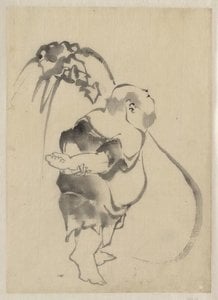
Življenje v znamenju črt in valov: Katsushika Hokusai
Katsushika Hokusai, ime tesno povezano z japonsko umetnostjo in ikonično podobo *Velikega vala pred obalo Kanagave*, je bil mnogo več kot le rezalnik lesenih plošč. Rojen okoli leta 1760 v Eda (danes Tokio), je njegovo življenje zaznamovala neusahljiva želja po umetniški odličnosti, nenehno evolucijo in neizčrpna radovednost. Od skromnih začetkov kot sin izdelovalca ogledal se je Hokusai vztrajno izpopravljal svoje veščine, pri čemer so govorice o tem, da je začel risati že pri šestih letih, pričale o globoki predanosti svojemu poklicu. Ta oddanost je definirala kariero, ki se je raztezala skoraj devetdeset let in za sabo pustila dediščino, ki še danes odzvanja po vsem svetu. Njegov oče, Nakajima Ise, čeprav sam ni bil umetnik, je prepoznal in morda celo gojil to začetno nadarjenost, kar je ustvarilo podlago za potovanje, ki je spremenilo japonsko vizualno kulturo. Hokusaijeva zgodnja leta niso bila zaznamovana z privilegiji, temveč s strmim vzponom, ki ga je gonila ambicija in globoka strast do zajemanja bistva sveta okoli njega.
Učenec in inovator: Razcvet sloga
Hokusaijeva formalna umetniška izobrazba se je začela pri dvanajstih letih, ko je vstopil v delavnico Katsukawa Shunshōja, vodilnega mojstra *ukiyo-e* – "slike plavajočega sveta". Ta žanr, priljubljen v obdobju Edo, je prikazoval scene iz vsakdanjega življenja: igralce kabuki gledališča, gejše, pokrajine in vpoglede v živahno urbano kulturo. Pod vodstvom Shunshōja je Hokusai obvladal tehniko lesoreza, zahtevnega procesa, ki je zahteval natančnost in umetnost. Vendar pa ni bil zadovoljen s preprostim posnemanjem sloga svojega učitelja. Že v svojih zgodnjih delih je bila očitna nemirna duša, želja po premikanju meja in raziskovanju novih oblik izražanja. Eksperimentiral je z različnimi temami, od ilustracij knjig do posameznih listov, nenehno izboljševal svoje veščine in razvijal edinstven vizualni jezik. Ta čas je zaznamovalo tudi več sprememb imena – pogosta praksa med *ukiyo-e* umetniki, ki so simbolizirale obdobja umetniške prenove ali pripadnosti različnim šolam. Sprva se je osredotočal na ilustriranje knjig, kar mu je zagotavljalo stabilno zaposlitev in omogočalo razvoj kompozicijskih sposobnosti. A šele s prehodom k posameznim listom se je resnično sprostila njegova ustvarjalna pot.
Mount Fuji in plavajoči svet: Definiranje mojstrovin
Hokusaijev umetniški izkorodnost je bila neverjetno velika; na njem nosi podpis več tisoč lesorezov, slik in ilustriranih knjig. Čeprav je raziskoval širok spekter tem, so njegova serija *Trideset šest pogledov na goro Fudži* (okoli leta 1831) utrdila njegov sloves. Ta zbirka, ki vključuje ikonični *Veliki val pred obalo Kanagave*, ni bila le prikaz pokrajine; temveč je bil mojstrski raziskovalni del perspektive, kompozicije in moči narave. Sam val, visoka sila, ki se pripravlja na sunek na majhne čolne, uteleša tako lepoto kot grozo morja. Poleg *Fudžija* so dela, kot je *Vesel ogenj na mostu Ryōgoku* (1790), pokazala njegovo sposobnost zajeti dinamične scene vsakdanjega življenja z izjemno energijo in podrobnostmi. Njegov *Hokusai Manga* – zbirka skic in študij, ki obsega ljudi, živali, pokrajine in fantastične bitje – je bil pionirski po svoji obseg in vplivu, napovedujoč razvoj sodobnega manga kot umetniške oblike. Ta dela niso bila izolirana dosežka; temveč so bile mejniki neprekinjene umetniške poti, vsak je gradil na prejšnjem in ustvarjal korpus del, ki je globoko zakorenjen v japonski tradiciji in hkrati izjemno inovativen.
Dediščina brez meja: Hokusaijev trajni vpliv
Hokusaijev vpliv se je razširil daleč onkraj Japonske. Kmalu po tem, ko se je Japonska odprla Zahodu sredi 19. stoletja, so *ukiyo-e* lesorezi preplavili evropske trge in sprožili fenomen, znan kot *Japonizem*. Umetniki, kot sta Claude Monet, Edgar Degas in Vincent van Gogh, so bili očarani nad Hokusaijevimi krepkimi kompozicijami, živahnimi barvami in nekonvencionalnimi perspektivami. Van Gogh je bil še posebej pod vplivom *Velikega vala*, celo poskušal ga ponazoriti v svojih lastnih slikah. Hokusaijev vpliv se ni omejeval na impresionizem; prežemal je različne moderne umetniške gibanja in oblikoval način, kako so umetniki pristopali k kompoziciji, barvi in temi. Njegov poudarek na zajemanju minljivih trenutkov, dinamična uporaba linij in sposobnost najti lepoto v vsakdanjem življenju je odzvenel pri generaciji umetnikov, ki so iskala nove oblike izražanja. Celotna dela Hokusaija še danes navdihujejo in izzivajo umetnike po vsem svetu ter utrjujejo njegovo mesto kot ene najpomembnejših osebnosti v zgodovini umetnosti. Nenehno je slikal do svoje smrti leta 1849, ko je dopolnil 89 let, za sabo pa pustil obsežno delo, ki ostaja priča njegovi neomajni predanosti in umetniški genialnosti.
- Glavni vplivi: Ukiyo-e tradicija, kitajsko slikanje pokrajin, življenje v Eda.
- Ključne značilnosti: Krepke linije, žive barve, dinamične kompozicije, ostra opazovalnost narave.



 Predogled
 Kupi ročno naslikano sliko
 Pošlji
 Deli
Deli
 Podrobnosti o delu

 Prenesi
 Podobni izdelki
 Rentgenski posnetek
 Predvajaj diaporama
 Statistika
 Razviljaj več






































 Možnost stekla je na voljo le za velikosti pod 110 cm