


Giclée ali platnati odtis muzejske kakovosti z hitro proizvodnjo in prilagodljivimi možnostmi končne obdelave. ( Kupite ročno slikano delo Preklop na digitalno sliko)





























Izberite eno od naših vnaprej določenih velikosti, ki ustrezajo prvotnim proporcijam umetničkega dela.

Vnesite širino in višino, ki jih potrebujete za svoj okvir ali steno. Tiskanje se lahko le odreže, vendar ga ni mogoče narediti večjega od slike, zato format z drugačno obliko pomeni izgubo dela slike. Pred tiskanjem vam pošljemo digitalni predogled za potrditev. Slika, prikazana na tej strani, ne prikazuje dejanskega izrezka — le predogled to omogoča.
Globalna dostava () v 2 tednih namesto standardnih 4/5 tednov. (10 november)
Grapes
Velikost reprodukcije
“Grapes,” painted in 1916 by Juan Gris, isn't merely a still life; it’s a meticulously constructed exploration of form, color, and the very nature of perception. Emerging from the heart of early Cubism, this work represents a pivotal moment in Gris’s artistic evolution, showcasing his burgeoning mastery of geometric abstraction while retaining a profound sensitivity to light and texture. The painting depicts a simple arrangement – a bowl overflowing with plump grapes, a newspaper partially obscured by a hand, and a glass reflecting the scene—yet within this apparent simplicity lies a complex interplay of visual elements that demand careful observation.
Gris’s approach during this period leaned heavily into Synthetic Cubism, a style characterized by its incorporation of collage elements – in this case, fragments of newspaper – alongside meticulously rendered geometric shapes. Unlike the Analytical Cubism of Picasso and Braque, which sought to dissect objects into their constituent parts, Gris employed a more integrated approach, building his compositions from interlocking planes and facets. The newspaper, strategically placed, isn’t merely an added element; it actively disrupts the traditional representation of space, introducing a sense of dynamism and fragmentation that mirrors the artist's own evolving worldview.
The color palette of “Grapes” is remarkably restrained yet profoundly evocative. Gris utilizes muted tones – ochres, browns, and deep blues – to create a sense of quiet intimacy. However, these seemingly simple colors are carefully modulated, layered upon one another to generate subtle shifts in value and hue. The reflective surface of the glass introduces a crucial element: light itself becomes a subject of the painting. Gris masterfully captures the way light bounces off the grapes, the newspaper, and the bowl, creating an illusion of depth and volume that defies traditional perspective. Notice how the shadows are not dark voids but rather areas of subtle color variation, contributing to the overall sense of luminosity.
Gris’s technique is characterized by a remarkable precision and control. He employs a pointillist approach – using small, distinct dots of color – to build up surfaces with incredible texture and vibrancy. This method allows him to capture the subtle nuances of light and shadow with astonishing accuracy. The meticulous application of paint creates a shimmering effect, as if the grapes themselves are radiating warmth and vitality.
“Grapes” was created during a period of immense social and artistic upheaval in Europe. The rise of industrialization, urbanization, and technological advancements were fundamentally altering people’s perceptions of reality. Cubism, with its fragmented forms and rejection of traditional representation, reflected this sense of disorientation and uncertainty. Gris's work can be interpreted as an attempt to grapple with these changes, offering a new way of seeing the world—one that is both intellectually stimulating and emotionally resonant.
The inclusion of the newspaper – a ubiquitous symbol of modern life – further underscores this theme. It suggests a blurring of boundaries between art and everyday experience, inviting the viewer to consider the role of media in shaping our understanding of reality. The painting’s quiet intimacy contrasts sharply with the frenetic pace of urban life, offering a moment of contemplative stillness.
Owning a reproduction of “Grapes” is more than simply acquiring a beautiful image; it's an opportunity to bring a piece of art history into your home. TOPofART’s hand-painted reproductions meticulously recreate Gris’s original techniques, capturing the subtle nuances of color, texture, and light with unparalleled fidelity. Each reproduction is created by experienced European artists trained in academic painting methods, ensuring that every detail—from the delicate brushstrokes to the shimmering reflections—is faithfully reproduced. The canvas is stretched on a high-quality linen surface, providing a timeless and elegant presentation.
Consider this artwork not just as decoration, but as a window into the mind of a visionary artist – a testament to the power of geometric abstraction and the enduring beauty of light and color.
Barvna zasičenost dela "Grapes" znaša Subtle Color, njegova intenzivnost pa je Monochromatic.
"Grapes" pripada Early Cubism v karieri umetnika Juan Gris. Ta razvrstitev povezuje delo z umetnikovim razvojnim obdobjem.
Delo "Grapes" lahko raziščete plast za plast na strani Rentgenski pregled, ki vključuje preglednik navdihnjen s svetilno mizo konservatorja z enajstimi optičnimi odtisi slike.

1887 - 1927 , Španija
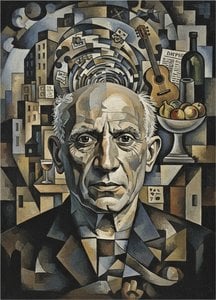
Explore the profound evolution of Cubism through an expert analysis of Pablo Picasso's revolutionary works. From Analytical to Synthetic Cubism, discover the techniques that redefined modern art and learn how to curate these iconic masterpieces for your private collection.

Unveil the radical revolution of Cubism. Explore how masters like Picasso and Braque redefined modern art through fragmented forms and geometric abstraction, offering profound insights for discerning collectors of fine art history and masterpieces.
 Predogled v realnem okolju
 Pošlji
 Deli
Deli
 Podrobnosti o delu
 Priročnik

 Prenesi sliko
 Podobni izdelki
 Rentgenski posnetek
 Predvajaj diaporama
 Vprašanja in odgovori
 Statistika


 Preberi več









 Možnost stekla je na voljo le za velikosti pod 110 cm


