


Pridobite datoteko, pripravljeno za tiskanje, ki presega kakovost spletnega predogleda. Vsaka digitalna slika v naši ponudbi izvira iz visoko ločljive izvirne datoteke v naši bazi — običajno široke od 5.000 do 15.000 pikselov — zato lahko z zaupanjem tiskate v večji format, tesno izrezujete ali reproducirate fine podrobnosti.
Nobena datoteka ne zapusti našega studia nedotiknjena. Digitalni strokovnjak preveri barve v primerjavi z izvirno sliko in jih po potrebi popravi, nato pa s profesionalnimi orodji za retuširanje izboljša jasnost in podrobnosti — pri čemer vedno ostaja zvest umetnikovim potezam in slogu. Rezultat je slika, ki izgleda kot samo slikarstvo, ne pa kot le filtriran sken.
Potrditev pred dokončanjem dela: naš strokovnjak vam v roku 72 ur pošlje sliko po e-pošti na pregled. Niste zadovoljni? Zahtevajte izboljšave ali popravke ali prosite za povračilo denarja, če kakovost ni v skladu z pričakovanimi standardi.
To je kakovost, po kateri temeljijo založniki, oblikovalni studii, galerije in tiskarne.
Prenesite datoteko visoke ločljivosti za osebno uporabo, tiskanje in kreativne projekte. ( Preklop na tiskanine Kupite ročno slikano delo)
Z izbiro WahooArt.com ne prejmete le slike – prejmete profesionalno urejeno digitalno umetniško delo, izdelano z največjo natančnostjo in zavestno podprto z garancijo za zadovoljstvo. Tukaj je vse, kar bo z vašim naročilom samodejno priloženo:
Vaša digitalna slika visoke ločljivosti bo na vaš e-naslov poslana v roku 72 ur od zaklopa naročila – pripravljena za takojšnjo uporabo.
Vaše umetniško delo je strokovno optimizirano z uporabo naprednih orodij umetne inteligence in ročne obdelave, kar zagotavlja največjo stopnjo podrobnosti, jasnosti in barvne natančnosti.
Ste datoteko zaradi nespremietne napake izgubili ali izbrisali? Ni težav – vam jo bomo ponovno poslali kadar koli in brezplačno.
Svoje umetniško del uživajte takoj, brez carin, davkov ali stroškov dostave – digitalni prenosi so vedno brezdavčni.
Z uporabo profesionalnih orodij in procesov upravljanja barv zagotavljamo, da vaša digitalna slika čim bolj natančno odraža prvotne barve.
Če niste zadovoljni s svojo digitalno sliko, jo bomo uredili ali vam v 100 dneh povrnili 100% denarja – brez kakršnih koli vprašanj.
Niste zadovoljni? Zagotavljamo vam popoln povračilo sredstev v 100 dneh po prejemu digitalne datoteke – brez dodatnih vprašanj.
Kupite 3 slike, prihranite 10% - Kupite 5 slik, prihranite 15% - Kupite 10+ slik, prihranite 20%. Odlično za kreativne projekte, galerije in agencije.
Behold this evocative vision of Rainbow Falls at Manitou, a scene rendered through the delicate yet powerful lens of 19th-century photography. This image transports the viewer directly to a moment where raw geological power meets ethereal beauty. The composition is utterly dominated by the cascading waterfall, which seems less like mere water and more like liquid silk unraveling over ancient stone. One cannot help but feel the cool mist rising from the plunge pool, an almost palpable sensation that speaks of untouched wilderness. The artist, or rather, the pioneering photographer who captured this moment in 1874, possessed a remarkable ability to freeze not just light, but the very dynamism of nature itself.
Technically speaking, this piece is a superb example of the albumen print process, a medium that allowed photographers of the era to achieve incredible tonal depth. Observe how the diffused daylight has treated the surrounding rock face; every jutting edge, every patch of clinging vegetation, is rendered with painstaking detail. The contrast between the smooth, almost milky flow of the water and the jagged, imposing texture of the cliffside creates a visual rhythm that is deeply satisfying to the eye. The palette itself—a restrained symphony of browns, greys, and muted earth tones—lends the work an undeniable patina of history. It is a monochromatic meditation on form, where light and shadow become the primary subjects.
While this photograph captures a natural spectacle, its aesthetic resonance connects it to the grand tradition of landscape art championed by masters like Joseph John Collier. Though Collier was a painter, his dedication to meticulously documenting the dramatic vistas of the British countryside mirrors the spirit found here. This print speaks to the Victorian fascination with exploration and the sublime—that feeling of awe mixed with slight terror when confronted by nature's overwhelming scale. It serves as a tangible link to an era when capturing such grand scenes required immense technical skill, turning scientific documentation into high art.
For the discerning collector or designer, this reproduction offers more than just wall decor; it offers an emotional anchor. Imagine placing this piece where natural light can graze its surface, allowing the viewer to contemplate the relentless, beautiful cycle of water over stone. It introduces a sense of depth and quiet drama into any interior space, whether it be a study needing intellectual gravitas or a living area yearning for a touch of untamed romance. It is an enduring reminder that even in our most structured lives, the wild heart of the world continues to flow.
CLASSIFICATION: LandscapeJoseph John Collier je delo "Rainbow Falls, Manitou" ustvaril v starostih 59 let. Umetnik se je rodil leta 1815, delo pa je datirano v leto 1874.
Digitalno sliko dela "Rainbow Falls, Manitou" avtorja Joseph John Collier lahko kupite na njegovi strani Visokoresolucijska digitalna slika: prenos digitalne slike visoke ločljivosti.
"Rainbow Falls, Manitou" prikazuje waterfall landscape, mountain scenery”, “natural beauty”, “19th century nature”, “detailed photography”, “american wilderness”, “dramatic terrain”, medtem ko so v romantic landscape influence, victorian naturalism focus, american frontier imagery", detailed observation, documenting nature's power", early photographic style" zabeležene teme umetnika Joseph John Collier. Primerjava obeh razkriva, kako se to delo povezuje z običajnimi motivi umetnika.

Born in London in 1815, Joseph John Collier emerged as a significant figure within the British art scene during the mid-19th century. His life and career were inextricably linked to his family’s prominent standing – his grandfather was a Quaker merchant and member of Parliament, and his father followed in that tradition. This lineage undoubtedly provided him with opportunities and connections, yet Collier forged his own distinct path as a landscape painter, renowned for his meticulous detail and evocative depictions of the natural world, particularly the dramatic vistas of Scotland and the Lake District.
Collier’s early life was marked by both artistic training and practical experience. He began his formal education at the Royal Academy in London, honing his skills in traditional techniques. However, he quickly distinguished himself as a drawing master, instructing students at several schools throughout the city – a role that undoubtedly sharpened his observational abilities and understanding of form. This dual existence—artist and educator—shaped his approach to painting, fostering a deep appreciation for technique alongside a commitment to sharing his knowledge.
Collier’s artistic style is often categorized within the broader context of the Pre-Raphaelite movement, though he never formally identified with its manifestos. The influence of this influential group—known for their reverence for medieval art and a rejection of academic conventions—is evident in Collier's meticulous rendering of detail, his use of rich color palettes, and his tendency to explore themes of mythology and legend. Like his Pre-Raphaelite contemporaries, Collier sought to capture the beauty and drama of nature with an almost photographic realism, prioritizing observation and emotional response over purely representational accuracy.
However, Collier’s work possesses a unique character that sets it apart from the more overtly romanticized depictions often associated with the Pre-Raphaelites. His landscapes are imbued with a quiet dignity and a sense of timelessness, reflecting a deep connection to the land itself. He was particularly drawn to the rugged beauty of the Scottish Highlands and the serene majesty of the Lake District, capturing their atmospheric qualities with remarkable skill.
Collier’s most celebrated works include “Rainbow Falls, Manitou,” a stunning albumen print showcasing the power and beauty of a cascading waterfall – now housed in the J. Paul Getty Museum in Los Angeles. This image exemplifies his mastery of tonal range and his ability to convey both the grandeur and the delicate intricacies of natural phenomena. Other significant paintings depict dramatic mountainscapes, dense forests, and serene lakes, each rendered with painstaking detail and a keen eye for light and shadow.
His technique involved extensive sketching in situ – directly observing and documenting the landscapes he intended to paint. This commitment to direct observation is reflected in the remarkable realism of his work, particularly in the depiction of foliage, water surfaces, and geological formations. Collier’s use of color was equally deliberate, employing a rich palette of hues to create atmospheric effects and evoke specific moods.
During his lifetime, Joseph John Collier enjoyed considerable recognition within the British art world. He exhibited his work at prestigious institutions such as the Royal Academy, the British Institution, and the Society of British Artists, solidifying his reputation as a leading landscape painter. His paintings are now held in prominent collections worldwide, including the Tate Gallery in London and the Metropolitan Museum of Art in New York – testament to the enduring appeal of his art.
Collier’s legacy extends beyond his individual works; he represents a pivotal moment in British landscape painting, bridging the gap between traditional academic training and the emerging aesthetic sensibilities of the Victorian era. His meticulous technique, coupled with his deep appreciation for the beauty of the natural world, continues to inspire artists and captivate viewers today. Further exploration can be found on WahooArt.com and through resources like Wikipedia and the Victorian Web.
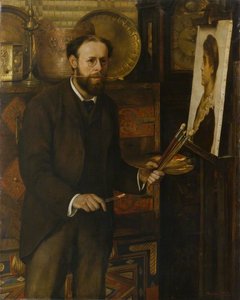
1815 - 1896
 Pošlji
 Deli
Deli
 Podrobnosti o delu
 Priročnik

 Prenesi sliko
 Podobni izdelki
 Predvajaj diaporama
 Vprašanja in odgovori
 Statistika


 Preberi več


